
The Specialty Pharmacy's Guide to Compliant Waste Disposal
A plain-English reference to every regulated waste stream your specialty pharmacy handles — reverse distribution on high-cost biologics, hazardous drugs, controlled substances, and cold-chain product — and how to handle each right.
What’s inside
- High-cost biologics: returnable vs. destroy-only
- Hazardous & oncology drugs (RCRA / USP 800)
- Controlled substances: Form 222/41, non-retrievable
- A specialty pharmacy checklist, cheat sheet & FAQ
Who it’s for: Owners, PICs, and compliance leads at specialty pharmacies.
P-listed, U-listed and characteristic hazardous drugs, destroyed to EPA rules. Certificate of Destruction on every order. No contract.
High-Cost Inventory Deserves Better Than the Burn Box
Specialty pharmacies sit on some of the most expensive inventory in healthcare: biologics, oncology agents, injectable specialty therapies, and cold-chain product. Destroying a returnable high-cost drug before your returns company sees it wastes money, while mishandling a hazardous or chemotherapy agent creates real EPA exposure and staff-safety risk. The stakes cut both ways, needless waste on one side and regulatory violation on the other, often inside the same medication room. Because a single vial can carry a four-figure acquisition cost, the discipline of checking returnability before anything is destroyed matters far more here than at a general pharmacy. The goal is simple: let your returns company take what it can, and send everything else to a DEA-registered destruction company, with documentation that stands up to audit.
Where Specialty Waste Gets Complicated
Specialty product concentrates the hard cases. Many oncology and immunosuppressant agents are hazardous drugs that fall under USP <800> handling and, in a number of cases, RCRA hazardous-waste listings. Cold-chain therapies that fail a temperature excursion become waste on short notice and still have to be routed correctly rather than tossed. Limited-distribution drugs and REMS products carry their own return restrictions. And controlled specialty medications, from certain pain and neurology therapies, add a DEA layer on top of everything else. Sorting these into returnable, hazardous, controlled, and general-pharmaceutical lanes before anything ships is what prevents an expensive biologic from being destroyed unnecessarily or a hazardous agent from landing in the wrong container.
The Regulations Layered on Specialty Product
Hazardous drugs are regulated under EPA's RCRA rules in 40 CFR, with pharmaceutical-specific handling in Subpart P at 40 CFR 266, while USP <800> governs the safe handling of hazardous and oncology drugs across receipt, storage, compounding, and disposal. Controlled substances fall under DEA 21 CFR 1317, ordered via Form 222 where required and destroyed non-retrievably with Form 41 documentation. Non-hazardous specialty Rx follows standard pharmaceutical-waste practice, which under Subpart P still bars drain disposal. Trace-contaminated chemotherapy materials and PPE are segregated from bulk hazardous drug, because the two follow different disposal paths. Knowing which of your fast-moving specialty SKUs are hazardous under RCRA, rather than assuming, is the difference between a clean program and a citation.
Sorting Biologics and Limited-Distribution Drugs
Reverse distribution is where specialty pharmacies recover the most, because the per-unit value is so high that even a modest return rate protects real margin. Some expired, overstock, and discontinued biologics are returnable through a returns company, and the rest has to be destroyed with documentation. The mistake is pre-sorting high-cost product into the destroy pile out of caution: items you assumed were worthless are frequently still eligible. Opened, adulterated, or patient-owned product is destroy-only, but sealed, in-package stock should be evaluated for return first. Because manufacturer return policies vary by product and distributor, working the returnable lane through a registered reverse distributor rather than case by case is what keeps recovery consistent and the chain-of-custody intact.
Cold-Chain Failures and Short-Dated Product
Cold-chain product creates a disposal problem unique to specialty pharmacies. A refrigerator excursion, a shipping failure, or a power loss can turn thousands of dollars of biologics into waste with no warning, and once potency is compromised the product still has to be routed correctly rather than tossed. Some failed cold-chain drugs are still returnable under the manufacturer's excursion policy, so check with your returns company before sending them to destruction. Short-dated inventory deserves the same forward planning: flag it while there is still time to return sealed product, rather than letting it expire on the shelf. Handling these events with a documented process, instead of ad hoc destruction, protects both margin and your audit trail when high-value product goes to waste.
How Easy Rx Cycle Protects Margin and Compliance
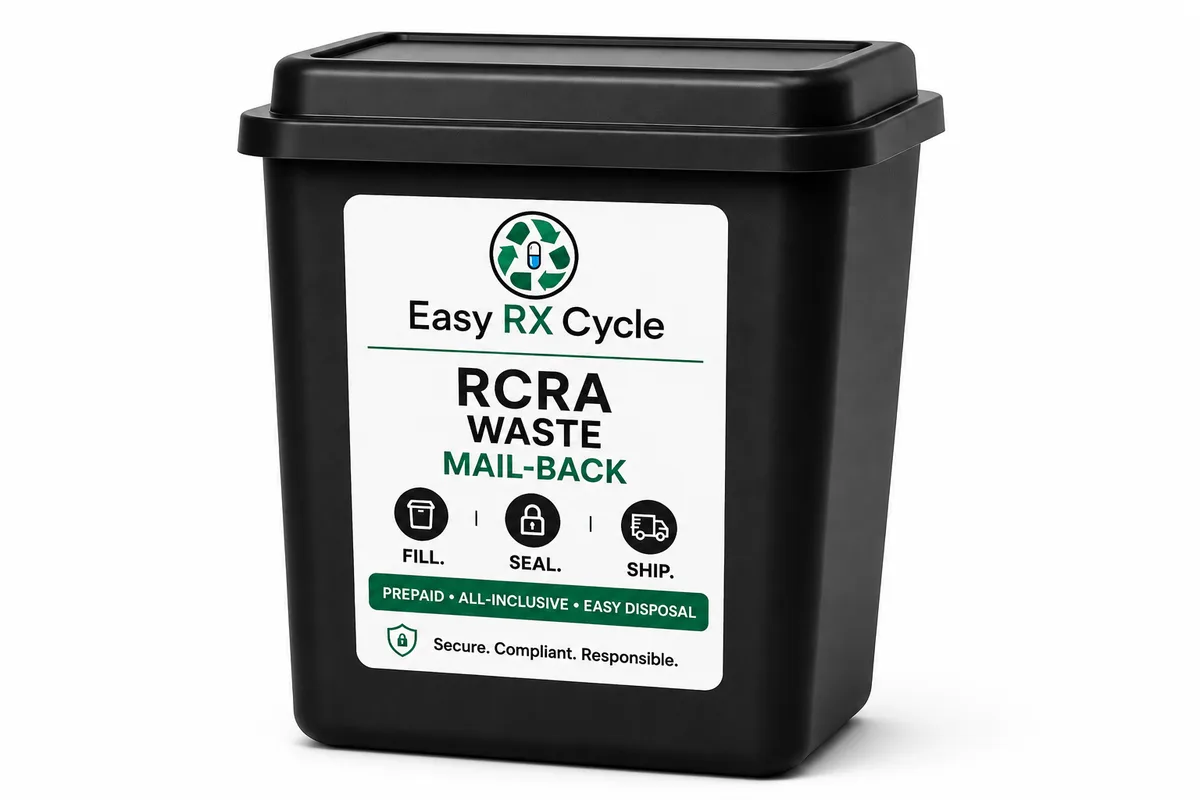
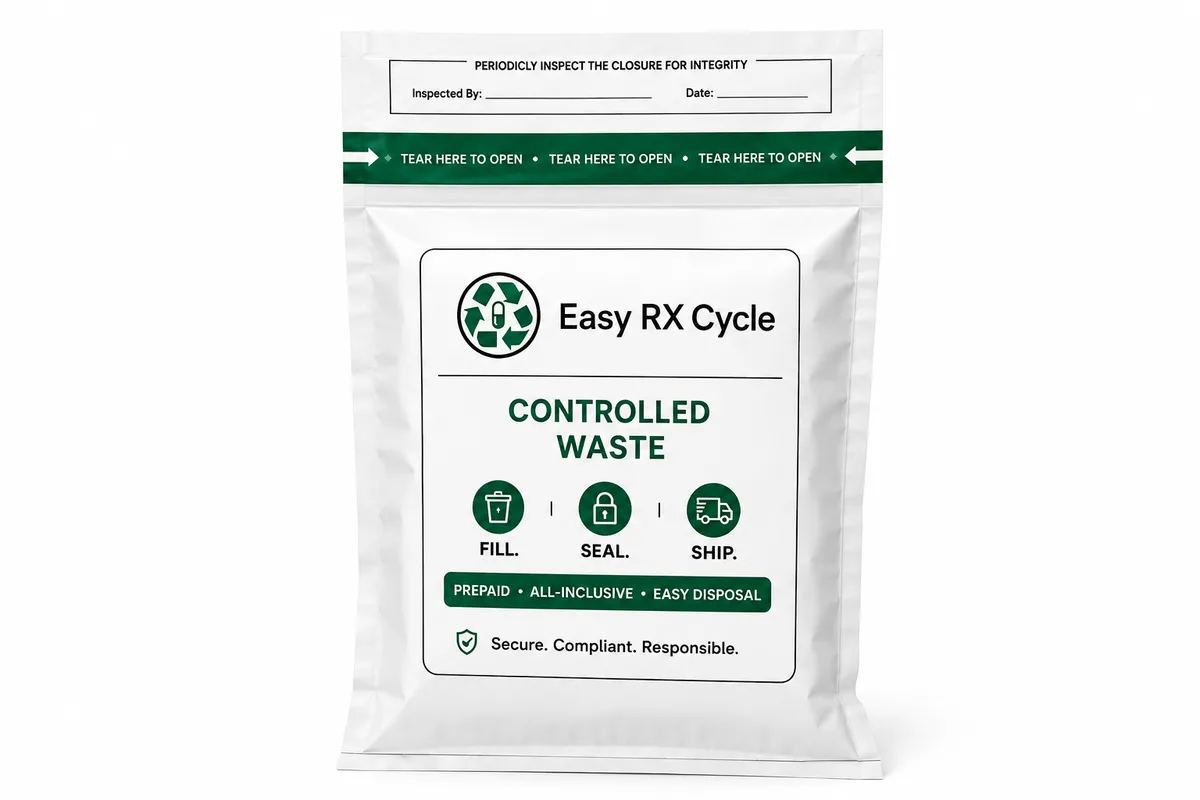
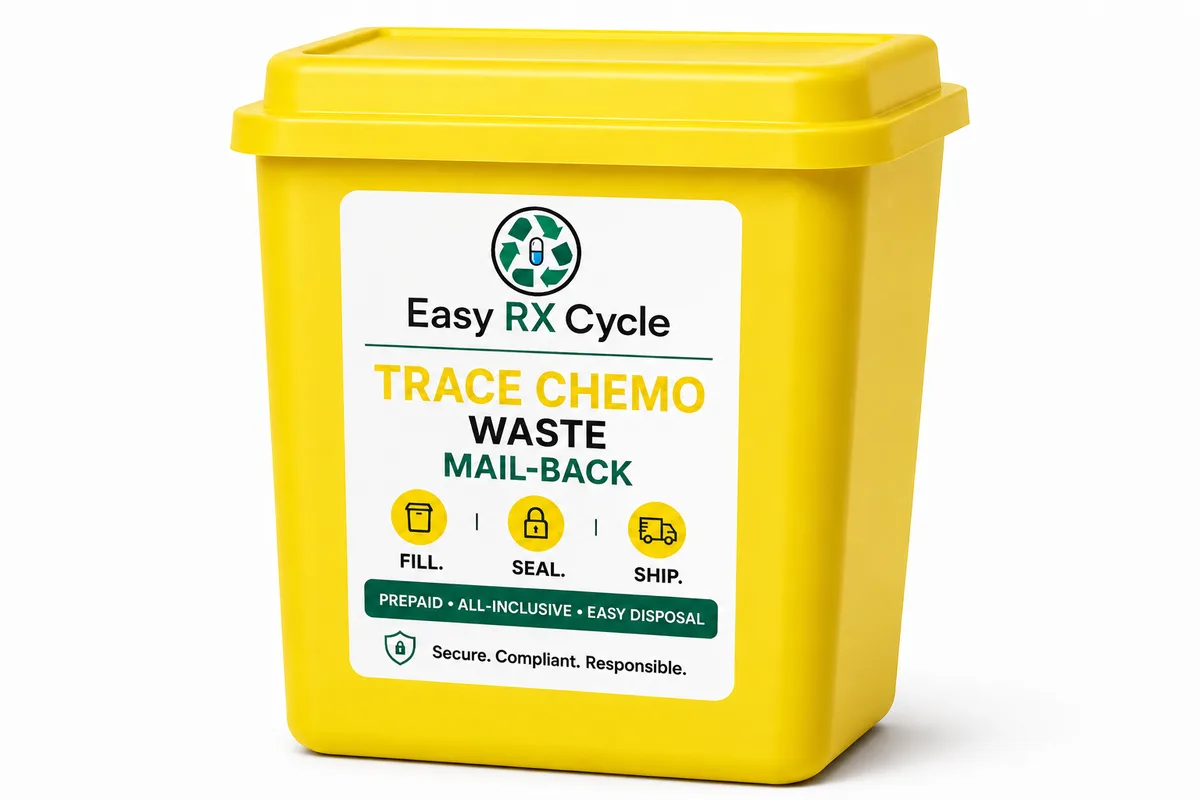
We are destruction only: keep your returns company for credit, and we destroy everything that can't be returned. As a DEA-registered destroyer we document controlled-substance destruction on Form 41, we manifest RCRA-hazardous and USP <800> drugs on their own hazardous waste paths, and we handle trace chemotherapy waste in its own container. Every order returns a Certificate of Destruction with full chain-of-custody, archived for audits. Start by separating returnable stock, hazardous drugs, and controlled substances at the point of use, and we handle the routing from there, by scheduled pickup for higher volumes or prepaid mail-back where it fits, with no contract. One registered destruction vendor covering every stream is what keeps a high-value specialty operation compliant.
P-listed, U-listed and characteristic hazardous drugs, destroyed to EPA rules. Certificate of Destruction on every order. No contract.
DEA, EPA and state rule changes that affect disposal, plus seasonal reminders. No spam, unsubscribe anytime.
Kits for specialty pharmacies
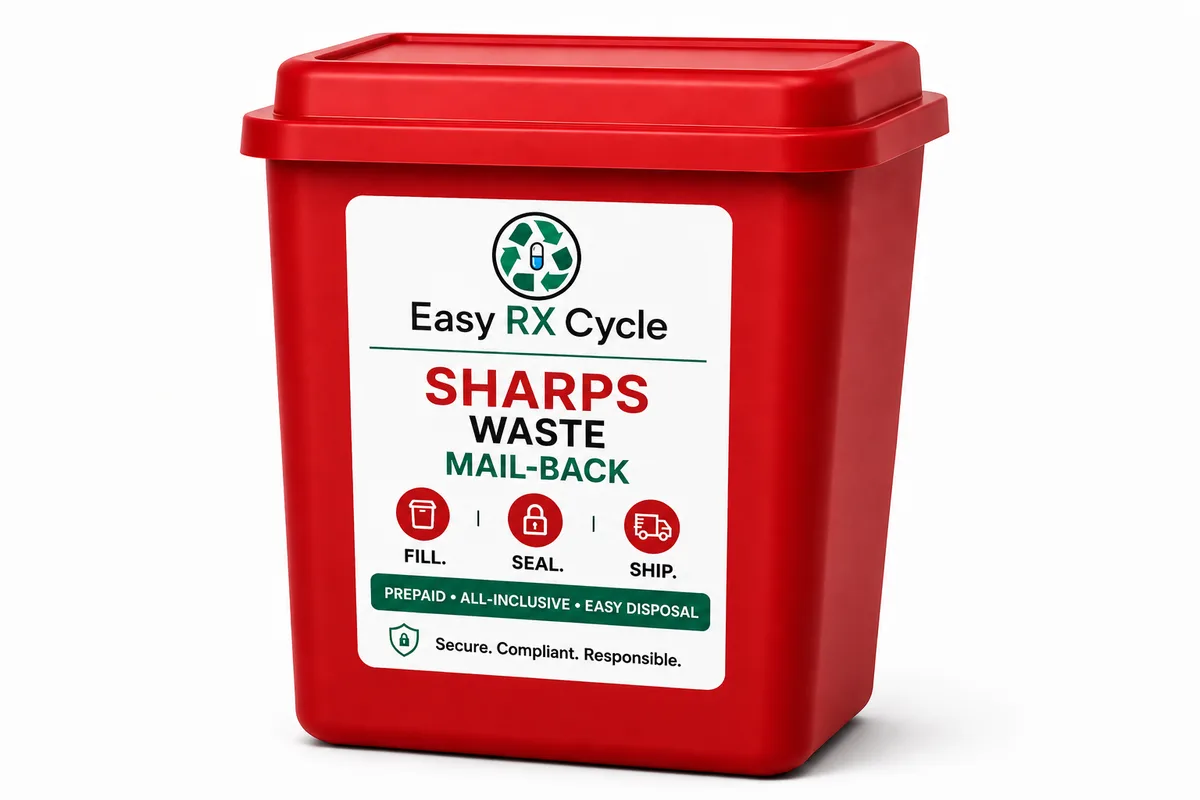
Prepaid both ways, one waste stream per kit, with a Certificate of Destruction on every mail-back order.
Ready to hand it off entirely?
Easy Rx Cycle handles every regulated waste stream — mail-back or pickup, with a Certificate of Destruction every time.