
Rx & controlled substance disposal for retail pharmacies.
Expired Rx, controlled substances, and returnable stock from a retail or independent pharmacy — DEA-compliant destruction through a registered reverse distributor, and a Certificate of Destruction every time.
Questions? Talk to a specialist · 501-904-2929
Kits for retail & independent pharmacies
Order online. Each kit ships with a prepaid return label and a Certificate of Destruction.
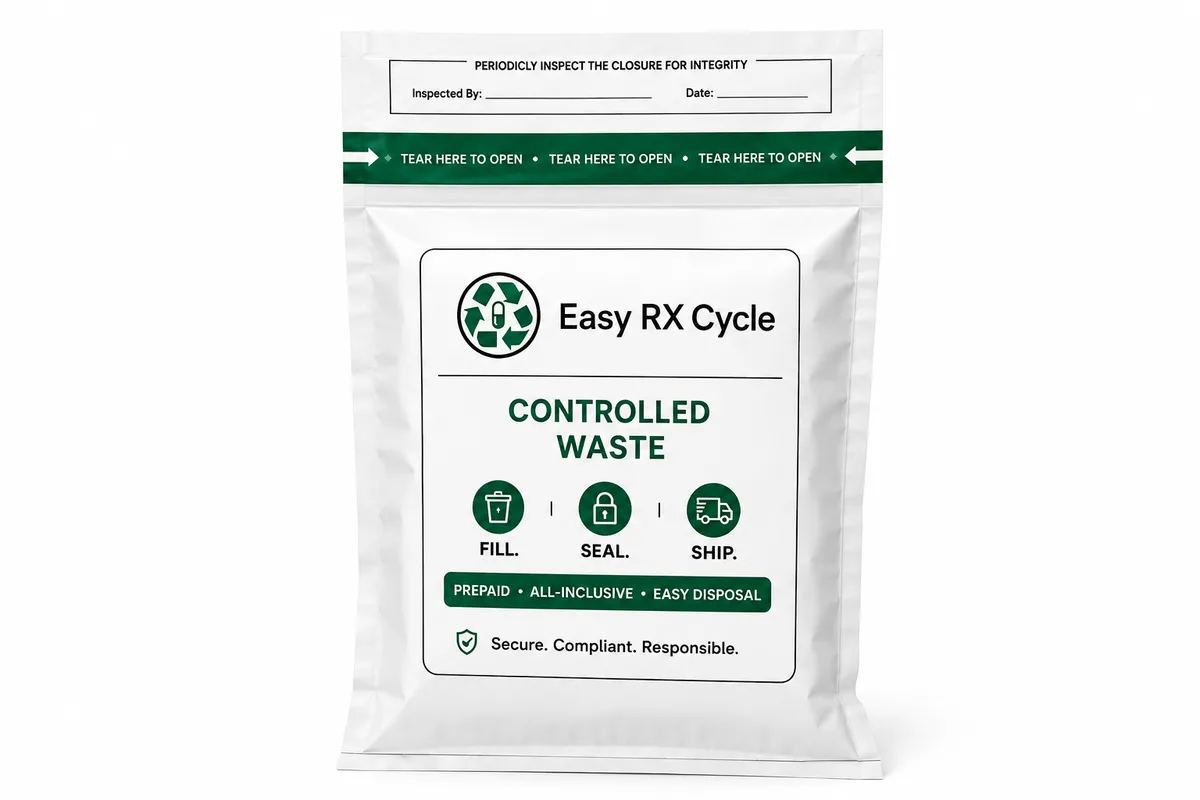
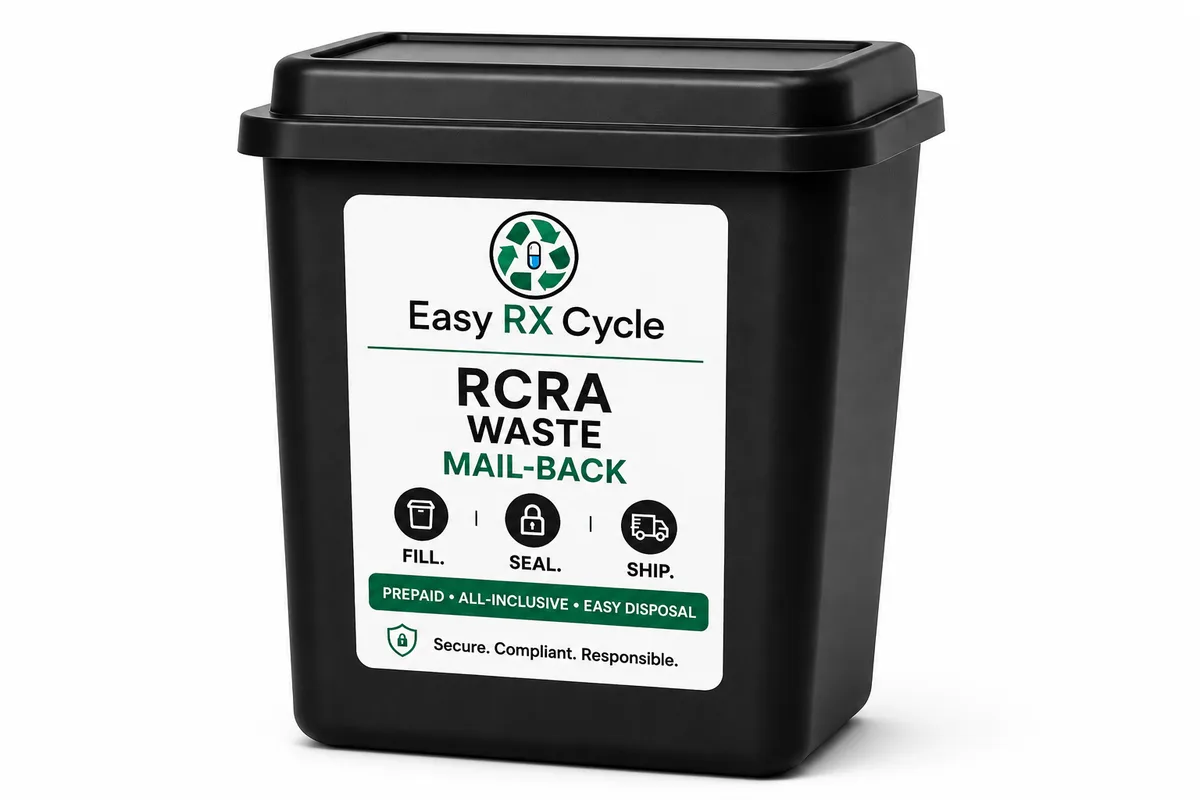
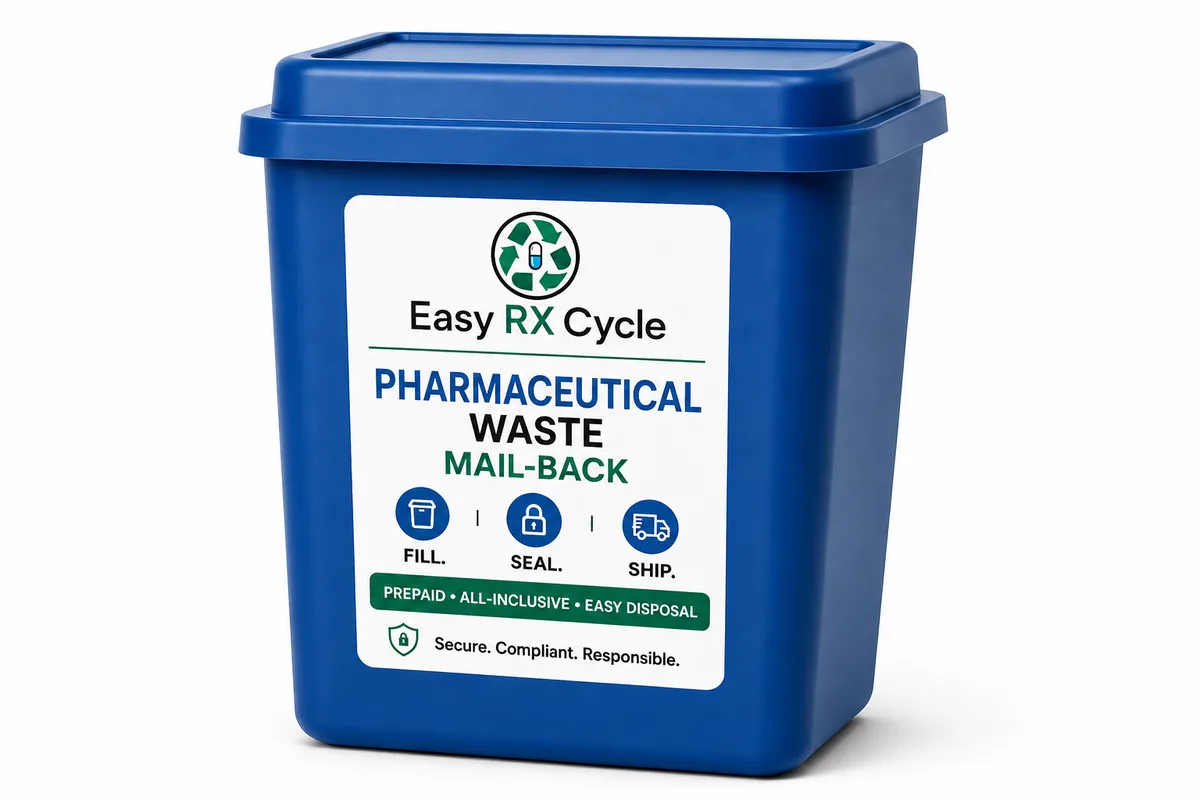
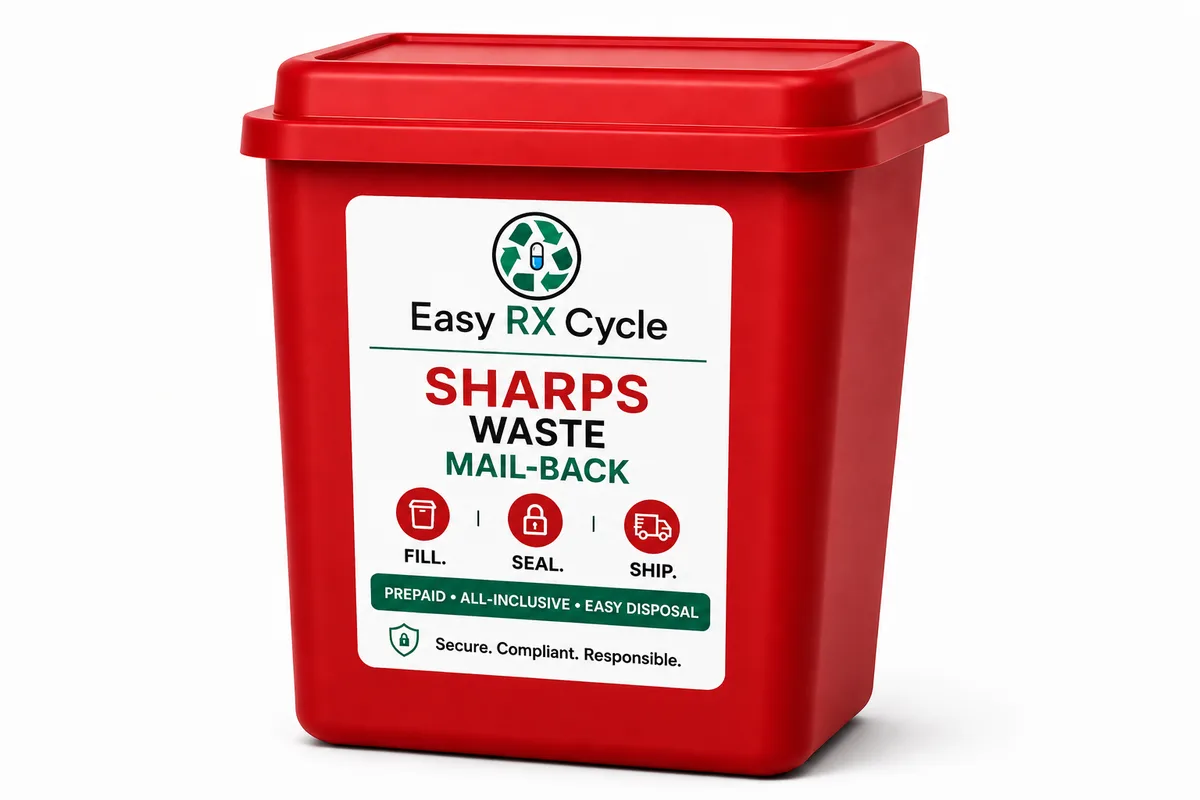
Returns, expireds, and controls — sorted.
A pharmacy’s waste is really three streams: non-hazardous, hazardous, and controlled.
- Expired & unsellable Rx
- Controlled substances (Schedules II–V)
- Stock your returns company won't take
- RCRA-hazardous drugs (segregated)
- DEA Form 222 & 41 handled
- Dispensing sharps & take-back
Every pharmacy waste stream, explained.
Pharmacies handle the widest drug-waste mix of any business — expired inventory, patient returns, controlled substances, and RCRA-hazardous drugs. Handled well, it's a routine: one registered destruction company for every stream. This guide covers every stream, the DEA paperwork, and how to sort returnable stock from what has to be destroyed.
Reverse distribution & returns
Returnable expired and unused Rx can go back to the manufacturer through a returns company for credit; everything else has to be destroyed. We are destruction only: keep your returns company, and send us the rest.
- Expired / unused Rx your returns company won't take
- Overstock & discontinued inventory
- Manufacturer recalls
- Both brand & generic stock
- Opened / adulterated product (destroy only)
- Patient-owned meds
- Sharps
Controlled substances
Schedule I–V expired stock, returns, and wasted product. The DEA governs both the transfer and the destruction.
- Expired / unused Schedule I–V stock
- Patient returns of controls (per program)
- Partial & wasted doses
- Non-controlled meds (pharmaceutical kit)
- Sharps
RCRA-hazardous drugs
A surprising number of common drugs are federally hazardous waste — and can't go in normal pharmaceutical waste.
- P-listed (warfarin ≥0.3%, nicotine, epinephrine, physostigmine)
- U-listed drugs
- Characteristic waste (ignitable, toxic)
- Certain chemotherapy agents
- Non-hazardous pharmaceuticals
- Controlled substances (own path)
Pharmaceutical waste (non-hazardous)
Everyday expired non-controlled, non-hazardous medications.
- Expired non-controlled, non-hazardous Rx
- OTC & compounded non-haz product
- Samples
- Controlled substances
- RCRA-hazardous drugs
- Sharps
Sharps
From immunizations and point-of-care testing.
- Immunization needles & syringes
- Lancets
- Point-of-care testing sharps
- Non-sharp meds
- Glass vials without needles (per policy)
As a DEA-registered reverse distributor, we destroy expired and unusable Rx — controlled and non-controlled — with the DEA paperwork prepared by us and a Certificate of Destruction every time. No contract. Get the full guide (free PDF) →
The Pharmacy's Guide to Compliant Waste Disposal
Reverse distribution, controlled-substance returns, hazardous drugs & sharps — destroyed and DEA/EPA compliant. Plus a checklist, cheat sheet & FAQ.
One partner for the whole pharmacy waste stream.
Every stream you generate, routed to the right compliant process.
Simple, documented, on your schedule.
Send us your inventory
Mail-back kit or scheduled pickup for expired and returnable stock.
Fill & seal
Use the labeled containers; segregate each stream at the point of use.
Ship or pickup
Prepaid mail-back label or a scheduled pickup — whatever fits your volume.
Get your COD
We destroy it and email your Certificate of Destruction, archived to your account.
DEA & EPA compliance for pharmacies.
- DEA-registered reverse distribution & destruction
- DEA Form 222 (Schedule II) & Form 41 handled
- RCRA-hazardous drugs segregated & manifested
- Certificate of Destruction for every order
Related industries, solutions & guides.
Related industries
Solutions you’ll use
Retail pharmacy disposal questions.
How does a retail pharmacy dispose of expired controlled substances?
Through a DEA-registered reverse distributor: controls are rendered non-retrievable with DEA Form 41 (and Form 222 for Schedule II transfers), and a Certificate of Destruction is issued. We are destruction only; keep your returns company for credit.
Do you process returns for manufacturer credit?
No — we are destruction only. Keep your returns company for credit; we destroy everything else.
Do you handle RCRA-hazardous drugs?
Yes. Hazardous pharmaceuticals (P-, U-, and D-listed) are segregated and manifested to a permitted facility, separate from your non-hazardous and controlled streams.
Is this compliant with DEA rules for pharmacies?
Yes — we're a DEA-registered reverse distributor and handle Form 222 and Form 41, with chain-of-custody documentation and Certificates of Destruction retained for audits.
Do independent pharmacies get the same service as chains?
Yes. There are no high-volume minimums — single-location and independent pharmacies get the same compliant, documented service.
What is reverse distribution?
It is how expired and unused Rx leaves a pharmacy: returnable items can go back for credit through a returns company, and everything else is destroyed by a DEA-registered reverse distributor like us. Done right, it recovers real money you'd otherwise write off.
How do we handle controlled-substance returns?
Through a DEA-registered reverse distributor — that's us. We handle Form 222 for Schedule II transfers and Form 41 for surrendered controls, with non-retrievable destruction.
Which drugs are RCRA-hazardous?
P-listed (e.g., warfarin ≥0.3%, nicotine, epinephrine), U-listed, and characteristic wastes. They must be segregated from normal pharmaceutical waste — we'll help you identify them.
Do you handle both brand and generic returns?
We destroy brand and generic alike. For credit on returnable stock, keep using your returns company.
Expired Rx, destroyed and documented.
Reverse distribution plus controlled and hazardous destruction, all documented.