
RCRA-hazardous drug waste, managed by the book.
P-listed, U-listed, and characteristic (D-code) pharmaceutical waste disposed of under EPA’s RCRA Subpart P rule — properly identified, manifested, and destroyed, with a Certificate of Destruction and hazardous-waste documentation for your files.
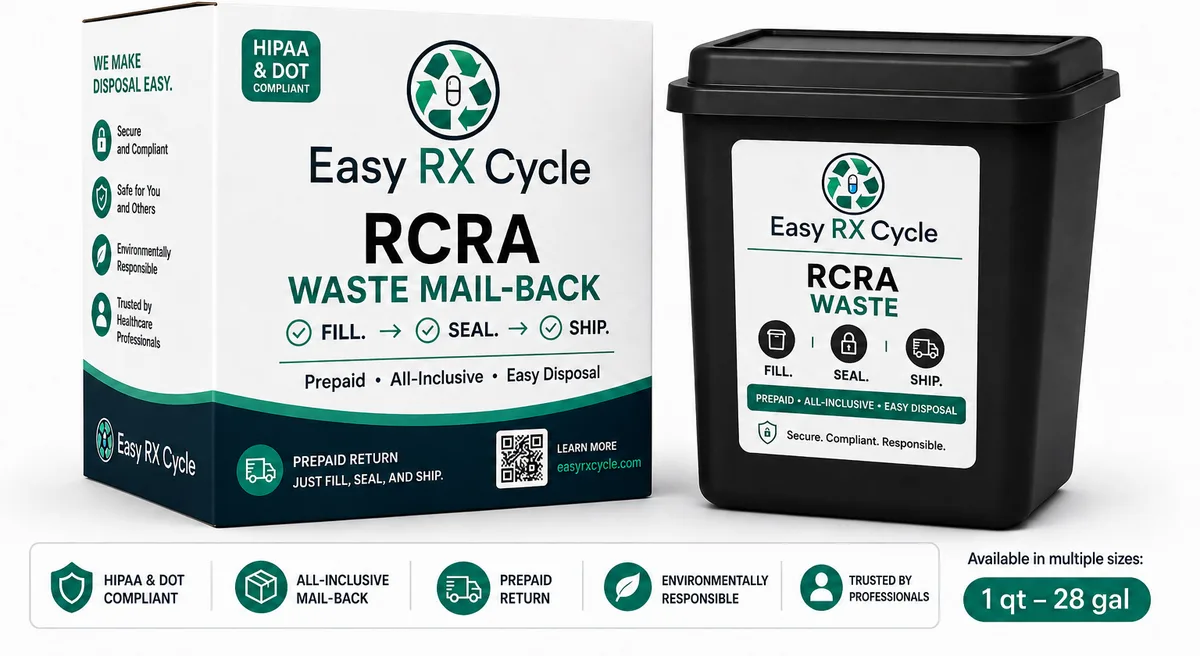
The drugs the EPA regulates.
Certain common medications are federally hazardous waste. Put them in the wrong bin and you have a violation.
- P-listed (e.g. warfarin, nicotine, epinephrine)
- U-listed pharmaceuticals
- Ignitable (D001) & corrosive (D002)
- Toxicity-characteristic (D-codes)
- Hazardous formulary items
- Empty hazardous containers
Hazardous drugs, identified.
P-listed, U-listed, and characteristic drug waste, the Subpart P management standard, and the absolute sewer ban.
P-listed (acutely hazardous) drugs
The strictest category — acutely hazardous, with low quantity thresholds and even the empty container regulated.
- Warfarin >0.3%
- Nicotine (e-liquid, prescription nicotine)
- Epinephrine base
- Physostigmine, arsenic trioxide
- Epinephrine salts in most formulations (commonly excluded)
- Non-listed, non-characteristic drugs
U-listed & characteristic drugs
Toxic and characteristic wastes — the largest slice of hazardous drug waste.
- U-listed (many chemo agents, e.g. cyclophosphamide, mercury compounds)
- Ignitable (D001) — many alcohol-based liquids
- Toxic (D-codes) — e.g. certain preservatives, chromium, selenium
- Non-hazardous pharmaceutical waste
- Trace chemo (RCRA-empty) — its own yellow stream
Subpart P & the sewer ban
The 2019 rule that reshaped how healthcare manages hazardous drug waste.
- A Subpart P management program
- Trained staff & labeled containers
- A hazardous-drug list mapped to your formulary
- Any hazardous waste pharmaceutical down a drain — a hard prohibition
- Counting these toward your generator status (they're excluded under Subpart P)
The RCRA Hazardous Drug Waste Guide
The P-list, U-list, and characteristic wastes, what Subpart P changed, the sewer ban, and how to identify and destroy hazardous drug waste — plus a checklist and FAQ.
Identified, manifested, destroyed.
Profile your waste
We help identify which of your drugs are P-, U-, or D-listed under RCRA Subpart P.
Compliant containers
Segregate hazardous pharmaceutical waste into the correct labeled containers.
Manifested transport
Shipped on a hazardous-waste manifest to a permitted destruction facility.
Destroyed + documented
Incinerated at a permitted facility — Certificate of Destruction and manifest copies returned.
RCRA Subpart P
Managed under EPA’s current hazardous-waste pharmaceuticals rule (40 CFR Part 266 Subpart P).
Correct classification
We keep P- and U-listed drugs out of red-bag and sewer disposal — where the fines live.
Manifested & permitted
Cradle-to-grave manifesting to a permitted hazardous-waste facility.
Full documentation
Certificate of Destruction plus manifest copies, archived and audit-ready.
What hazardous drug disposal costs.
One flat price per kit: the container, shipping both ways, destruction to EPA standards, and your Certificate of Destruction. No hauler stop, no route fees, no contract.
| Kit size | Price | Per gallon | Usually fits |
|---|---|---|---|
| 2 Gallon | $145 | $72.50 | A single clinic or pharmacy |
| 8 Gallon | $350 | $43.75 | A busy pharmacy or multi-provider clinic |
| 18 Gallon | $475 | $26.39 | A hospital unit or high-volume formulary |
Small clinic? You may be a VSQG.
EPA sorts hazardous waste generators by how much they produce in a calendar month. A very small quantity generator (VSQG) makes no more than 100 kg (about 220 lb) of hazardous waste and no more than 1 kg (about 2.2 lb) of acute (P-listed) hazardous waste per month. Many clinics, dental offices, and small pharmacies fall under that line.
- The sewer ban still applies. Subpart P prohibits flushing or draining hazardous waste pharmaceuticals at every healthcare facility, VSQGs included.
- Watch the acute limit. The 1 kg acute threshold is low. Keep P-listed drug waste separate and track it, so you know which category you are in.
- Your state may be stricter. States adopt Subpart P on their own schedules, and some set lower thresholds or extra rules for VSQGs.
For a VSQG, the practical answer is a mail-back kit sized to your real volume. Kits start at $145 for 2 gallons, with no hauler stop to schedule. Larger or multi-site? Get a quote.
For hospitals, pharmacies & LTC.
RCRA hazardous waste questions.
What is RCRA hazardous pharmaceutical waste?
It’s pharmaceutical waste the EPA regulates as hazardous under RCRA — P-listed acutely toxic drugs (like warfarin, nicotine, and epinephrine), U-listed drugs, and medications that exhibit a hazardous characteristic such as ignitability, corrosivity, or toxicity (D-codes).
What is RCRA Subpart P?
Subpart P (40 CFR Part 266) is the EPA’s Management Standards for Hazardous Waste Pharmaceuticals. It governs how healthcare facilities and reverse distributors must handle hazardous pharmaceutical waste, and it prohibits sewering these drugs.
How much does RCRA hazardous pharmaceutical waste disposal cost?
Our RCRA hazardous mail-back kits run $145 to $475, depending on size. Each price includes the container, prepaid shipping both ways, destruction to EPA standards, and a Certificate of Destruction. No hauler stop and no contract.
Is my clinic a very small quantity generator (VSQG)?
If you generate no more than 100 kg (about 220 lb) of hazardous waste and no more than 1 kg (about 2.2 lb) of acute hazardous waste in a calendar month, EPA classifies you as a very small quantity generator. Many single-location clinics fall in this category. The Subpart P sewer ban still applies, and your state may set stricter rules.
Is nicotine really hazardous waste?
Yes — nicotine is P075, an acutely hazardous P-listed waste. Nicotine products such as e-liquids and prescription nicotine must be managed as RCRA-hazardous waste. EPA’s 2019 Subpart P rule excluded FDA-approved over-the-counter nicotine replacement (gum, lozenges, and patches) from P075, but not every state has adopted that change, so check your state.
Do you provide hazardous waste manifests?
Yes. RCRA-hazardous pharmaceutical waste ships on a hazardous-waste manifest to a permitted destruction facility, and we return signed manifest copies along with your Certificate of Destruction.
Can you handle both hazardous and non-hazardous drug waste?
Yes. Use one kit per stream: RCRA-hazardous drugs go in the hazardous kit and travel on the hazardous waste manifest, and non-hazardous pharmaceuticals go in their own kit. We manifest and destroy each — all documented.
Learn more about hazardous drug waste.
Hazardous pharma waste guide
RCRA, P/U/D lists, Subpart P, disposal & cost.
P-listed & U-listed drugs
The EPA lists, explained.
RCRA Subpart P
The management standard & sewering ban.
Is nicotine hazardous waste?
A common P-listed surprise.
NIOSH hazardous drug list
How it relates to RCRA and USP 800.
Hazardous vs. non-hazardous
Telling the two streams apart.
Rcra Hazardous Pharmaceutical Waste in all 50 states.
Mail-back to any U.S. address and scheduled pickup nationwide — pick your state:
Get RCRA-hazardous waste off your bench.
Request a quote for compliant RCRA hazardous pharmaceutical waste disposal — identified, manifested, destroyed.