
The Chain / Retail Pharmacy's Guide to Compliant Waste Disposal
A plain-English reference to every regulated waste stream a chain or retail pharmacy generates — controlled returns, hazardous drugs, expired stock, and take-back kiosks — standardized across locations.
What’s inside
- Controlled destruction at scale (Form 41)
- One hazardous-drug standard, chain-wide
- Take-back kiosk servicing (DEA collector rules)
- Unified documentation across every store
Who it’s for: Pharmacy operations, compliance, and EH&S leaders at chains and retail pharmacy groups.
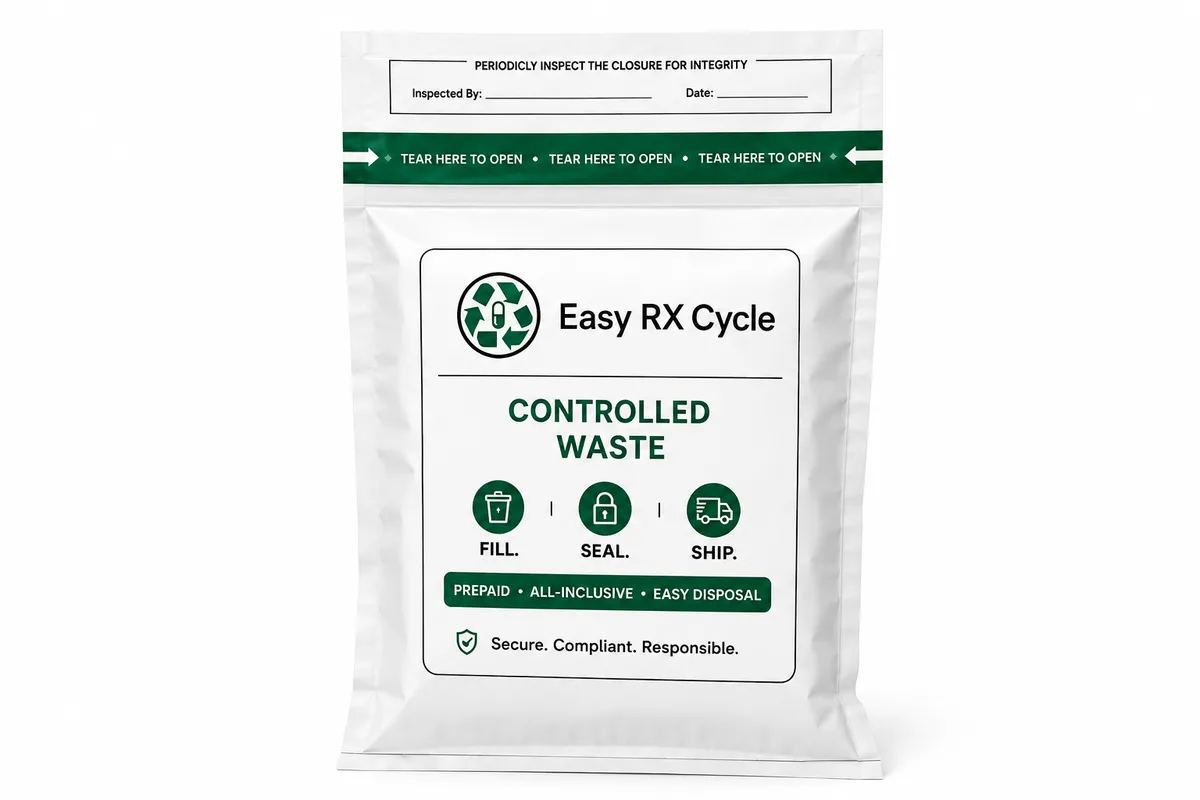
Schedules I–V, sized by weight. We do all the DEA paperwork and destroy it non-retrievably. Certificate of Destruction on every order. No contract.
At Scale, Inconsistency Is the Real Risk
A chain does not fail compliance one store at a time; it fails when practices drift between locations. A hazardous-drug bin filled correctly in one store and wrong in another, or a controlled destruction documented three different ways across the district, turns a single audit into a chain-wide finding. The waste streams are the same as any pharmacy's, but the exposure multiplies with every storefront, because an inspector who finds a gap at one location has reason to assume the same gap exists at forty. Standardization is therefore not a nicety but the core control: the goal is that documentation looks identical whether the inspector visits store 4 or store 40. Achieving that means one written standard, not forty local habits, applied to every stream at every site.
The Standards You Have to Enforce Everywhere
Controlled returns must be destroyed non-retrievably under DEA 21 CFR 1317 and recorded on a Form 41 the same way in every store, with witnessed logs for surrendered stock. RCRA-hazardous drugs are governed by EPA 40 CFR, including Subpart P for healthcare, and cover warfarin, nicotine, P-listed and U-listed drugs, certain hormones, and chemotherapy agents that must be segregated identically chain-wide. Take-back kiosks must be serviced under the DEA collector rules that authorized them, with airtight liner-change and destruction records. Immunization sharps fall under OSHA 29 CFR 1910.1030. Each of these frameworks is unforgiving of variation, and the enforcement question at a chain is never whether one store can comply but whether every store complies the same way, which is a management problem as much as a regulatory one.
Controlled Destruction That Looks the Same Everywhere
Controlled substances are where inconsistency is most dangerous, because the DEA reconstructs a paper trail and any store that documents differently stands out. Expired and returned Schedule I to V stock, damaged and recalled controlled product, and surrendered stock must all be rendered non-retrievable with a Form 41 and witnessed logs, and the format of those records should be identical at every location. When one store logs a wasted dose one way and another logs it another, the discrepancy itself invites scrutiny even if both destroyed the drug properly. The value of a single DEA-registered partner is that the controlled-destruction workflow, the forms, and the chain-of-custody are unified, so an auditor sees one consistent process rather than a patchwork that varies by district manager or pharmacist on duty.
Standardizing Hazardous Drugs and Take-Back Kiosks
Two streams reward standardization the most. RCRA-hazardous drugs require one segregation list applied at every store, because if the same P-listed or U-listed drug goes in the hazardous bin at one location and the pharmaceutical bin at another, compliance genuinely varies by storefront, which is exactly what an EPA inspector looks for. Take-back kiosks add a second layer: collected patient medications and kiosk inner liners must be handled and destroyed only by authorized parties under DEA collector rules, and the liner-change and destruction paperwork has to be logged consistently. Store retail waste and non-pharmaceutical trash must stay out of the kiosk stream. A chain that unifies the hazardous-drug list and the kiosk collector paperwork removes the two most common sources of location-to-location variance.
How Easy Rx Cycle Standardizes Across Locations
As a DEA-registered destruction company, we apply one hazardous-drug standard and one controlled-destruction workflow across your footprint, so documentation looks identical whether the inspector visits store 4 or store 40. Destroy-only stock at each site is destroyed non-retrievably, RCRA-hazardous drugs are segregated and manifested to a permitted facility, and take-back kiosks are serviced under the collector rules with unified paperwork. Form 222, Form 41, chain-of-custody, and Certificates of Destruction are archived per location for DEA and state audits, and the program scales across a large store count with no contract or minimums. Give us your store list and current segregation practices, and we will align them to a single defensible standard.
Consistent Sorting Across Every Location
Standardization protects compliance, but reverse distribution is where a chain recovers money that inconsistent stores routinely throw away. The trap at scale is stores that sort inconsistently, so returnable stock, destroy-only stock and hazardous drugs end up in the wrong place. Multiplied across a footprint, that habit discards real value on every cycle. Running one destruction process at every site means the same rules apply whether a store manager is diligent or rushed, and the paperwork lands in one audit-ready archive. The larger the store count, the more a consistent approach matters.
Schedules I–V, sized by weight. We do all the DEA paperwork and destroy it non-retrievably. Certificate of Destruction on every order. No contract.
DEA, EPA and state rule changes that affect disposal, plus seasonal reminders. No spam, unsubscribe anytime.
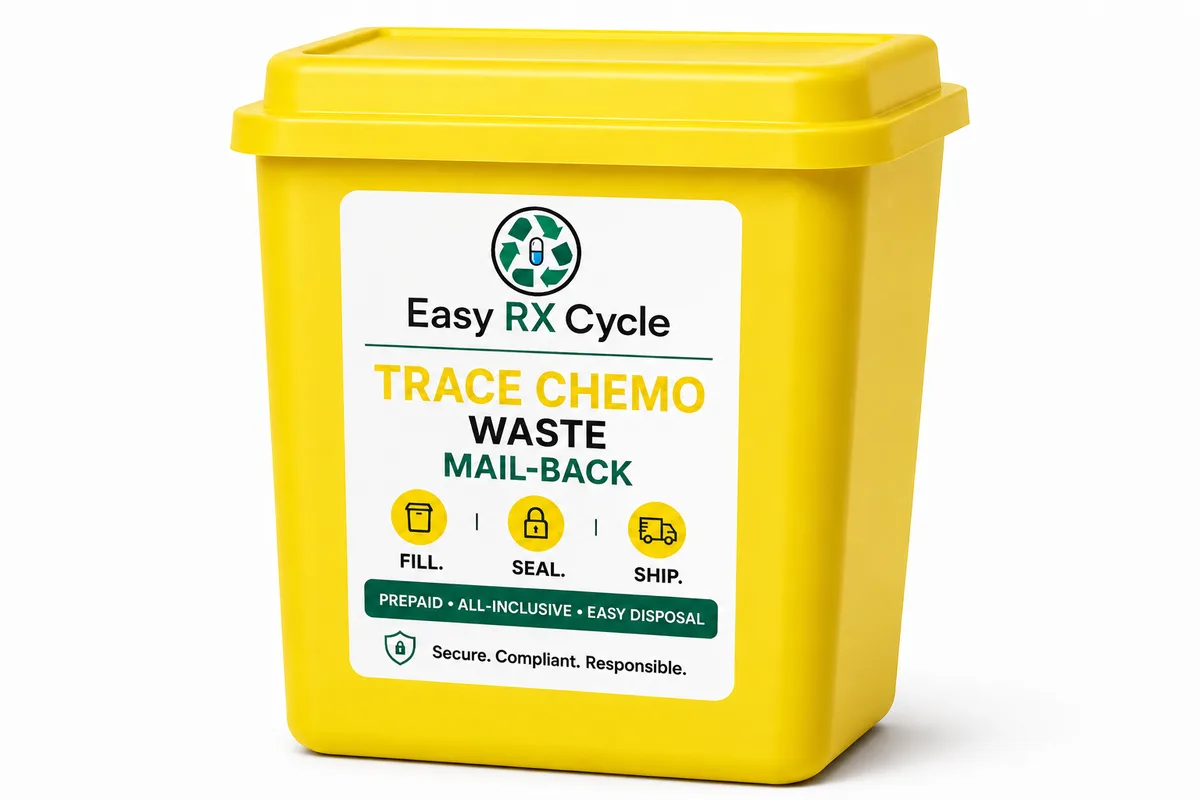
Kits for chain pharmacies
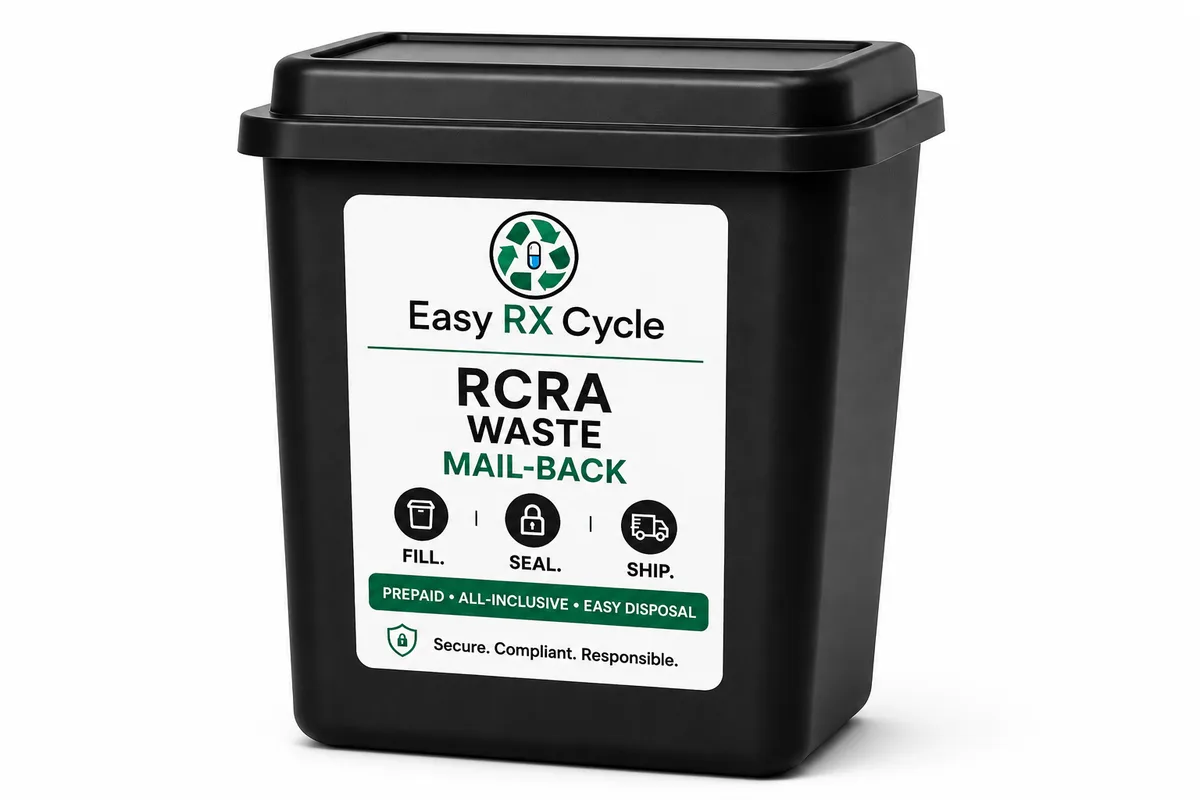
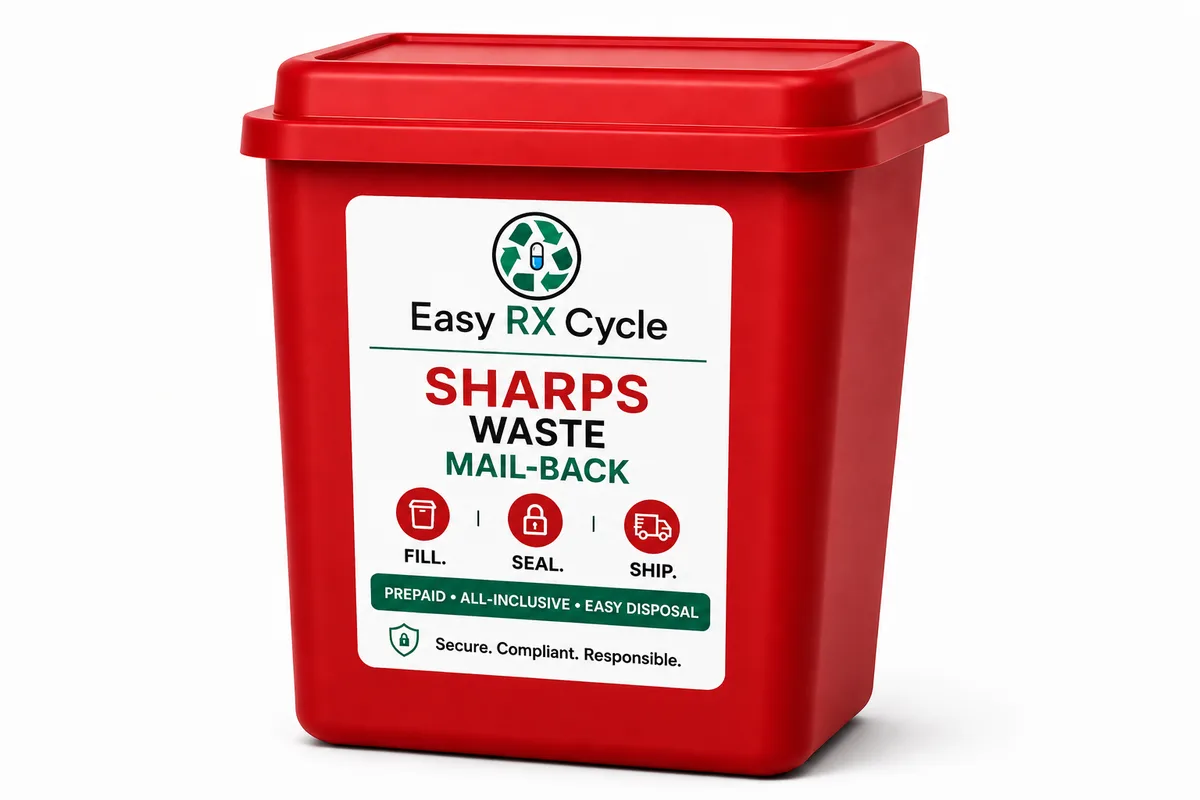
Prepaid both ways, one waste stream per kit, with a Certificate of Destruction on every mail-back order.
Ready to hand it off entirely?
Easy Rx Cycle handles every regulated waste stream — mail-back or pickup, with a Certificate of Destruction every time.