
Controlled drug & medication disposal for hospice.
Hospice care means managing strong controlled substances — and safely disposing of a patient’s unused opioids and medications after care ends. We provide DEA-compliant destruction and mail-back kits, with a Certificate of Destruction every time.
Questions? Talk to a specialist · 501-904-2929
Kits for hospice care
Order online. Each kit ships with a prepaid return label and a Certificate of Destruction.
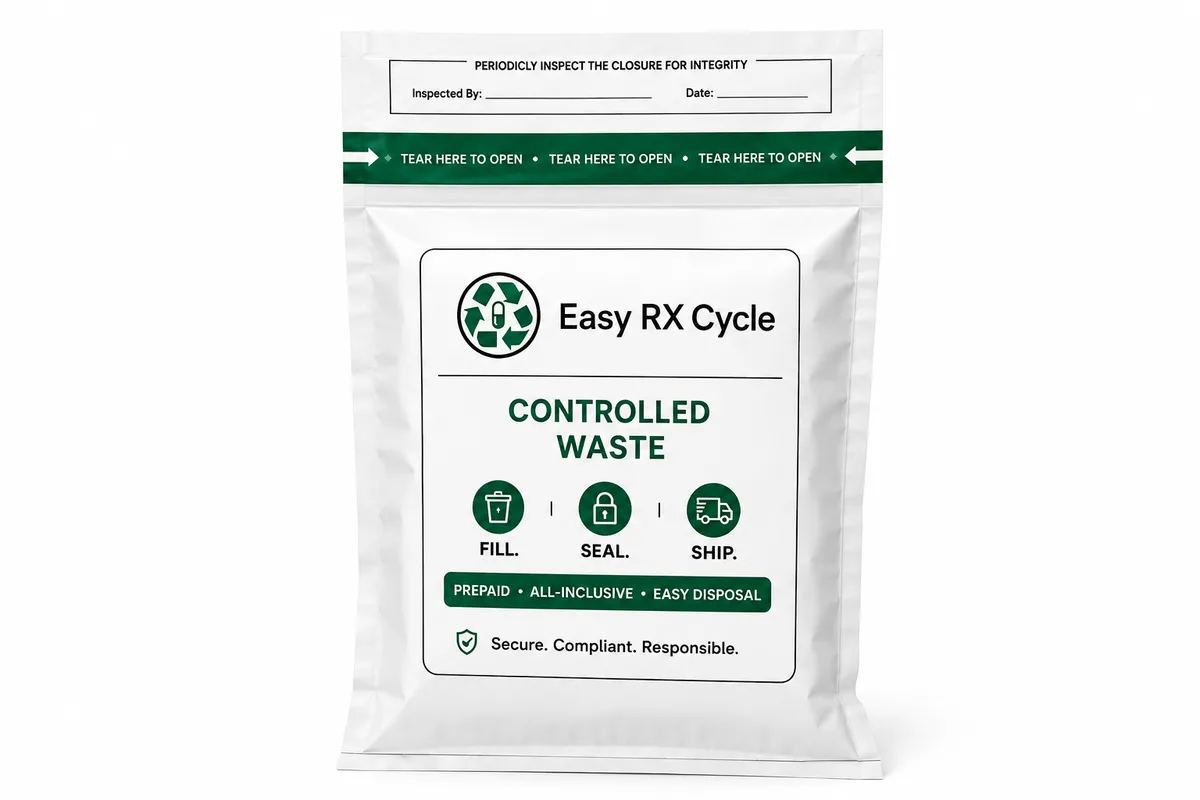
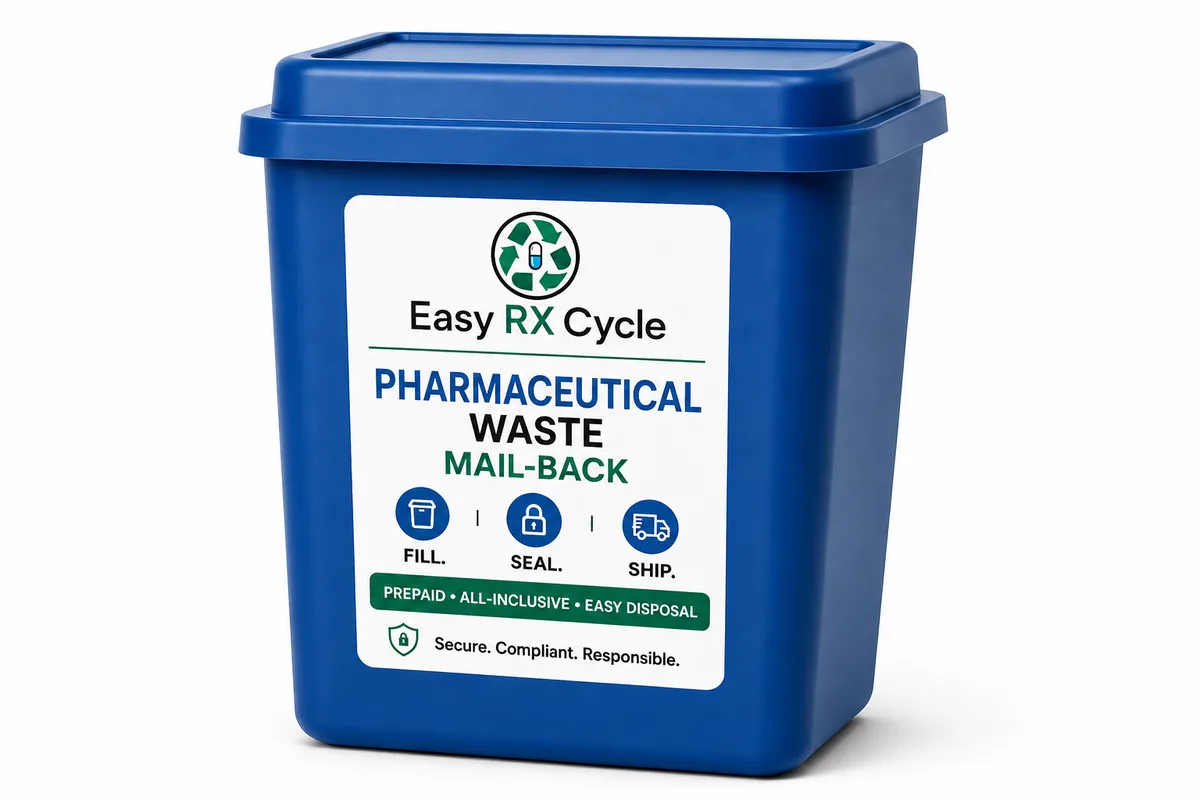
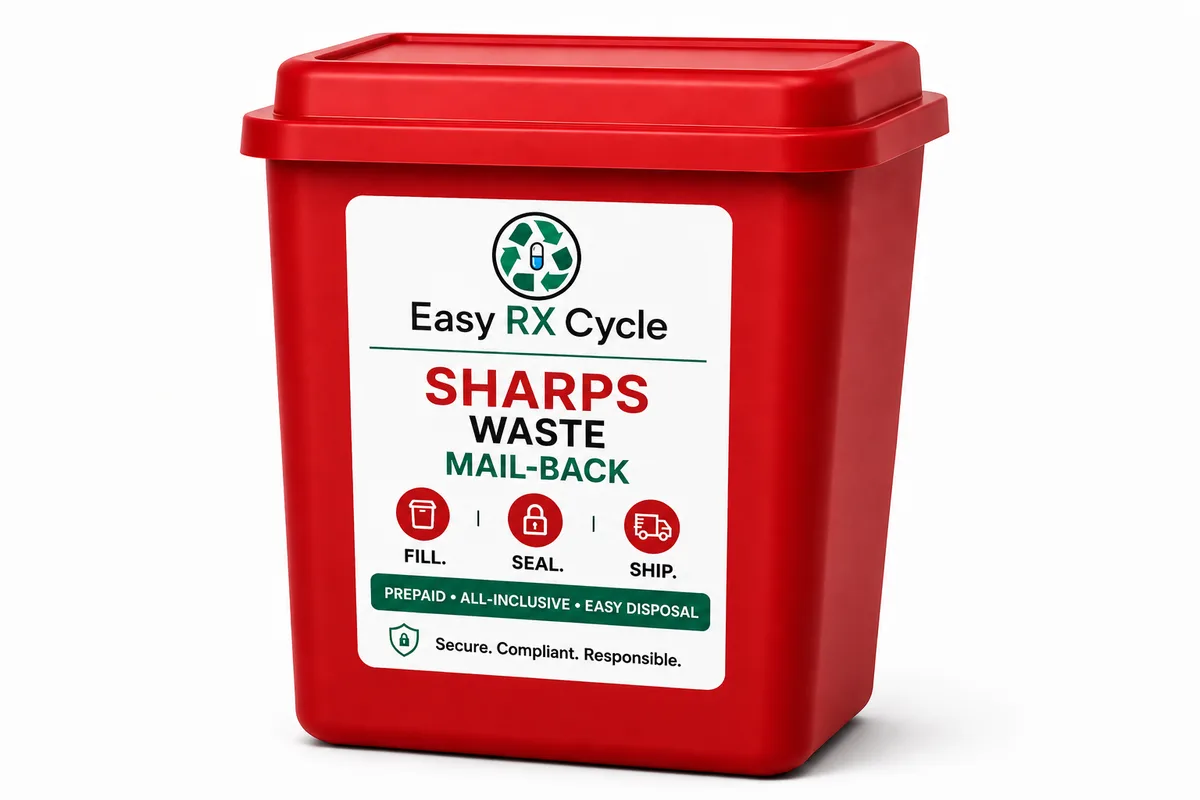
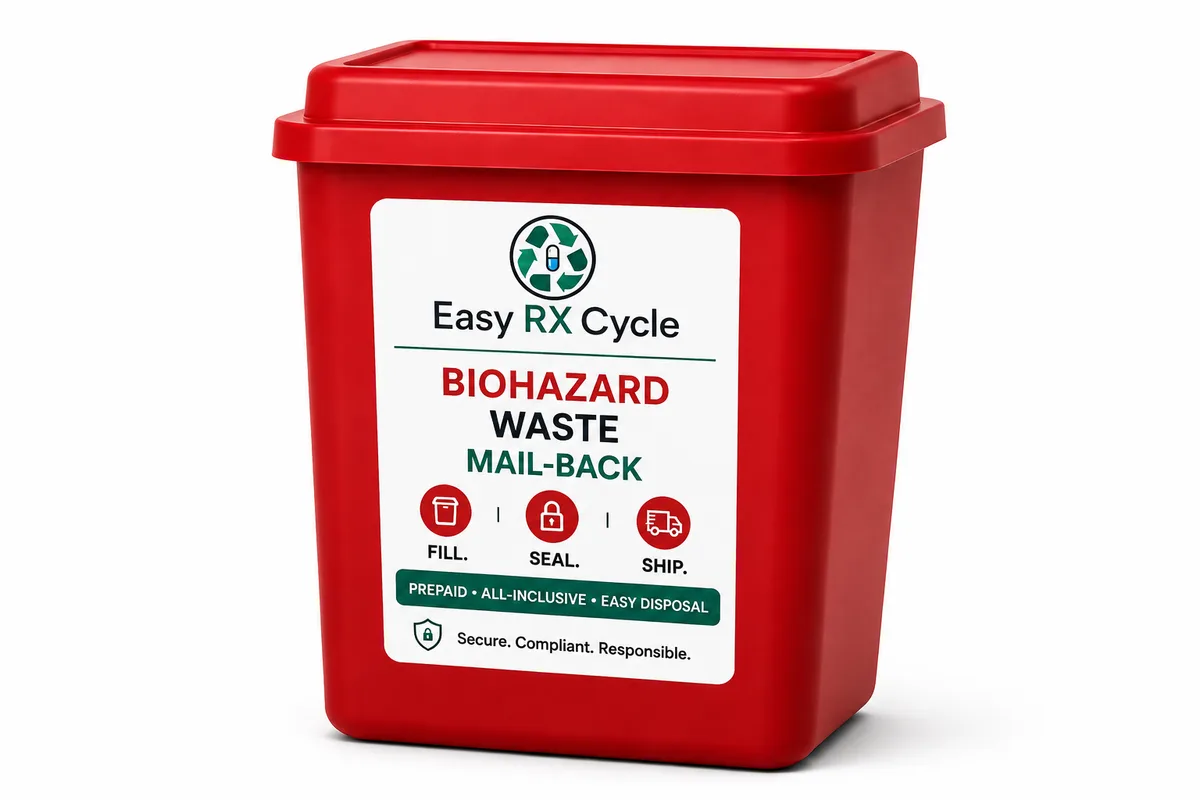
Comfort care means controlled substances.
Hospice relies on opioids and sedatives — and unused medication after a patient passes is a real diversion risk.
- Opioids & comfort-care controls
- Unused meds after a patient passes
- Expired & discontinued medications
- In-home & facility disposal
- DEA Form 41 & controlled-drug logs
- On-site mail-back kits
Every hospice waste stream, explained.
Hospice care leaves unused controlled substances — opioids especially — after a patient passes, in the home or the facility. Safely and promptly destroying them is both a DEA compliance duty and the single most important step in preventing diversion. This guide covers controlled-substance destruction and every other hospice waste stream.
Controlled substances
Unused opioids and controlled substances after a patient passes — the defining hospice compliance issue.
- Unused opioids & Schedule I–V meds
- Wasted & partial doses
- Discontinued controlled orders
- Non-controlled meds (pharmaceutical kit)
- Sharps
Pharmaceutical waste
Expired and unused non-controlled medications.
- Expired non-controlled meds
- Discontinued patient meds
- Comfort-care medications
- Controlled substances (own path)
- RCRA-hazardous drugs (own kit)
- Sharps
Sharps
In-home and facility injection sharps.
- Injection needles & syringes
- Subcutaneous & IM sharps
- Lancets
- Bloody gauze (biohazard)
- Expired meds (pharmaceutical)
- Non-sharp packaging
Biohazard / regulated medical waste
Wound-care and end-of-life care regulated waste.
- Blood-soaked dressings
- Contaminated PPE
- Wound-care biohazard
- Sharps (sharps kit)
- Lightly soiled everyday items
- Expired meds (pharmaceutical)
One DEA-registered vendor gives your team a compliant way to get rid of unused opioids — mail-back for incineration — plus sharps and meds, with documentation. No contract. Get the full guide (free PDF) →
The Hospice Guide to Compliant Waste Disposal
Safely destroy unused opioids after care ends — plus sharps and every stream. Includes a checklist, cheat sheet & FAQ.
Everything a hospice needs to dispose of.
Every stream you generate, routed to the right compliant process.
Simple, documented, on your schedule.
Set up your kits
On-site or in-home mail-back kits for controls plus sharps and RMW containers.
Fill & seal
Use the labeled containers; segregate each stream at the point of use.
Ship or pickup
Prepaid mail-back label or a scheduled pickup — whatever fits your volume.
Get your COD
We destroy it and email your Certificate of Destruction, archived to your account.
DEA compliance for end-of-life care.
- DEA-authorized collection & mail-back of controls
- DEA Form 41 & controlled-substance logs
- Prompt disposal of a patient’s unused meds (anti-diversion)
- Certificate of Destruction on every order
Related industries, solutions & guides.
Solutions you’ll use
Hospice disposal questions.
How does hospice dispose of a patient's unused controlled medications?
Secure them, log them, and seal them in a mail-back package for incineration, with a witness and a note in the clinical record. Unused opioids are never returned to family or flushed. Controlled stock your agency holds under its own DEA registration goes to a reverse distributor, which completes Form 41.
Can hospice use mail-back kits in the home?
Yes. DEA rules support authorized collection and mail-back of controlled substances, which works well for in-home hospice care.
What controlled drugs does hospice typically dispose of?
Opioids (morphine, hydromorphone, fentanyl), benzodiazepines, and other comfort-care controls in Schedules II–IV.
How quickly should unused meds be disposed of?
Promptly after care ends or a medication is discontinued, to minimize diversion risk — we help set that process up.
What documentation is provided?
DEA Form 41, controlled-substance logs, and a Certificate of Destruction, retained at least two years.
How do we destroy unused opioids after a patient passes?
Promptly seal them in a mail-back package at the home and ship them for incineration, with a witness and a record in the chart. Federal law (the 2018 SUPPORT Act, 21 U.S.C. 822(g)(5)) also lets trained staff of a qualified hospice dispose of a deceased patient's controlled substances at the home, subject to state law, but mail-back for incineration is the path we recommend. Prompt disposal is the key diversion-prevention step.
Can our nurses deactivate controls in the home?
The SUPPORT Act lets a trained employee of a qualified hospice program dispose of a patient's controlled substances at the home after death, when the drug has expired, or (for the patient's registered physician) when the plan of care changes. State law can narrow that. We recommend having your nurse or the family seal the drugs in a mail-back package for incineration instead, so nothing is destroyed at the bedside and you get a Certificate of Destruction.
What about sharps used in the home?
Prepaid mail-back sharps kits are ideal for distributed, in-home hospice care.
Do we need a contract?
No — no contract, no minimums.
Compassionate care, compliant disposal.
Safely destroy unused controlled meds with the DEA paperwork handled — in-home or facility.