
The Mail-Order Pharmacy's Guide to Compliant Waste Disposal
A plain-English reference to every regulated waste stream your mail-order pharmacy handles at volume — reverse distribution, controlled substances, hazardous drugs, and non-hazardous Rx — and how to sort returnable stock from what has to be destroyed.
What’s inside
- Systematic reverse distribution at volume
- Controlled substances: Form 222/41, non-retrievable
- Hazardous drugs (P/U-listed) — segregate at scale
- A mail-order pharmacy checklist, cheat sheet & FAQ
Who it’s for: Operations and compliance leads at mail-order pharmacies.
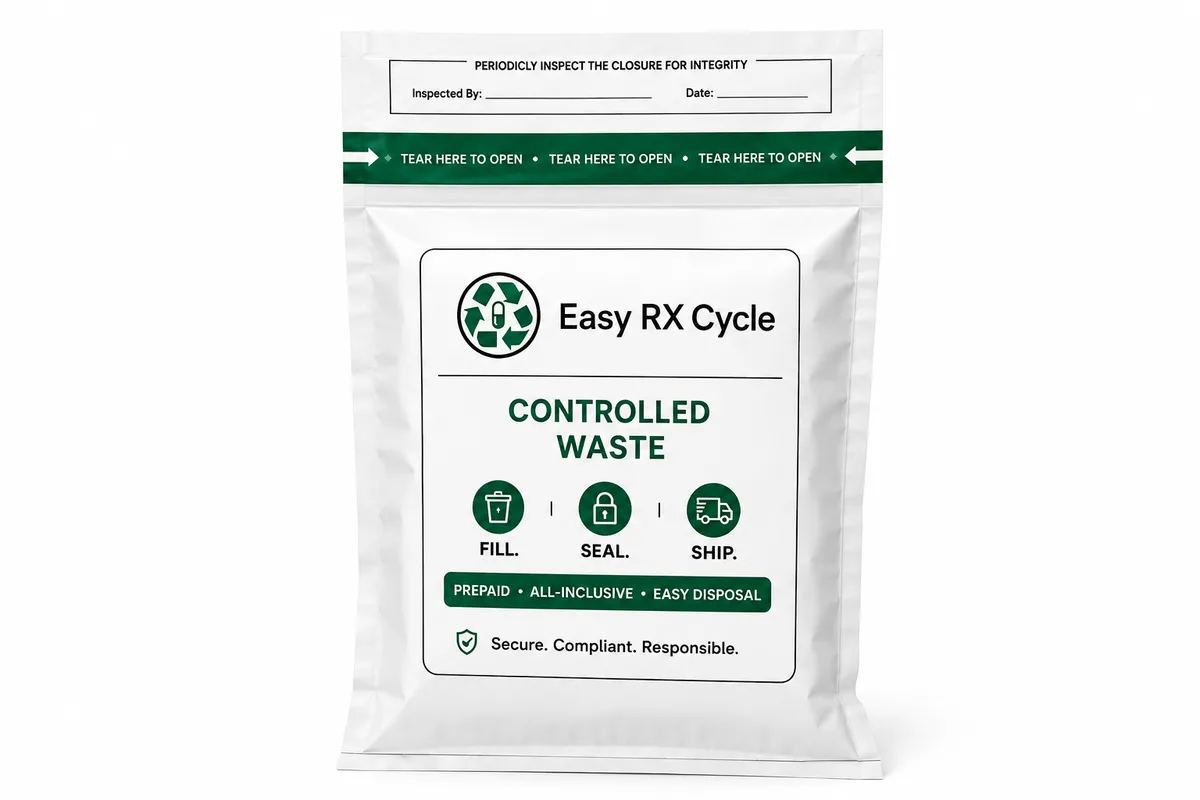
Schedules I–V, sized by weight. We do all the DEA paperwork and destroy it non-retrievably. Certificate of Destruction on every order. No contract.
At Volume, Small Leaks Become Large Ones
A mail-order pharmacy processes returns, recalls, and expirations at a scale where an ad-hoc disposal habit compounds fast. At thousands of units, small sorting mistakes add up, and a single mis-segregated hazardous or controlled drug, repeated at volume, becomes a systemic compliance problem rather than a one-off. The fix is a repeatable process built into intake, not case-by-case decisions made at the shelf by whoever happens to be pulling stock that day. When the same sorting logic runs every time inventory comes back, compliance becomes predictable. That predictability is the entire value of treating disposal as an operational pipeline instead of an afterthought handled at the loading dock.
The Rules That Scale With Your Volume
Controlled substances are governed by DEA 21 CFR 1317, with Form 222 for Schedule II transfers where applicable and Form 41 to document non-retrievable destruction. Hazardous drugs, including P-listed and U-listed wastes and characteristic wastes, fall under EPA RCRA in 40 CFR, with Subpart P governing healthcare pharmaceutical waste. Your generator status under RCRA depends on how much hazardous waste you accumulate, which at mail-order volume is a live question rather than a formality. These obligations do not relax at scale; they demand systematic segregation at the point product is received, before returnable, controlled, hazardous, and routine streams have a chance to mix together in a single bin.
Reverse Distribution for Destruction
At mail-order volume, the key decision is sorting returnable product from destroy-only product before anything ships. Some expired and unused returnable Rx, overstock and recalls can go to a returns company; the rest has to be destroyed. The trap is throwing pharmaceuticals in the trash because they look like waste. Opened or adulterated product and patient-owned medications cannot be returned and go straight to destruction, but the returnable pool is usually larger than staff assume. Sorting first, then sending destroy-only stock to a DEA-registered destruction company, is how a high-volume operation clears shelves on schedule with clean records.
Segregating Hazardous and Controlled at Intake
The two streams most likely to cause a citation are RCRA-hazardous drugs and controlled substances, and both are easiest to control at intake. Nicotine (outside OTC gum and patches, which EPA exempts) and epinephrine base are P-listed and slip through because staff don't associate common products with hazardous-waste rules; warfarin at or above 0.3 percent, U-listed drugs, and certain chemotherapy agents belong in the same segregated stream. Controlled Schedule I to V stock and returns need their own path to DEA standards. If your pharmacy also provides immunizations or point-of-care testing, the resulting sharps fall under OSHA 29 CFR 1910.1030 and need FDA-cleared containers. Building a segregation checklist into the receiving step, rather than sorting later, keeps these streams from ever commingling.
How Easy Rx Cycle Systematizes It
We run destruction as a repeatable pipeline (keep your returns company for credit; we destroy everything else), and as a DEA-registered destroyer we document controlled destruction on Form 41 with Form 222 handled where required. RCRA-hazardous drugs are segregated and manifested to a permitted facility, and all forms, chain-of-custody records and Certificates of Destruction are archived and audit-ready in one place. Scheduled pickup keeps high volume moving without waiting on kits to fill. We help you build segregation into intake so P-listed and U-listed drugs are pulled before they mix. Set up the streams once, and disposal scales with your order volume instead of fighting it, with no contract and no minimums.
Documentation That Survives a High-Volume Audit
At mail-order scale, the records are as important as the destruction itself, because an auditor reviewing thousands of units judges the process by its paper trail rather than by any single item. Form 222 for Schedule II transfers, Form 41 for non-retrievable destruction, manifests for RCRA-hazardous drugs, and chain-of-custody records all have to reconcile with each other. When these live in scattered inboxes and binders across shifts, a routine audit becomes a scramble. Centralizing them so every form and certificate for a given batch is retrievable together is what lets a high-volume pharmacy answer a DEA or state inquiry quickly. The Certificate of Destruction closes the loop on each load, and archiving it with the batch's forms gives you one defensible file.
Schedules I–V, sized by weight. We do all the DEA paperwork and destroy it non-retrievably. Certificate of Destruction on every order. No contract.
DEA, EPA and state rule changes that affect disposal, plus seasonal reminders. No spam, unsubscribe anytime.
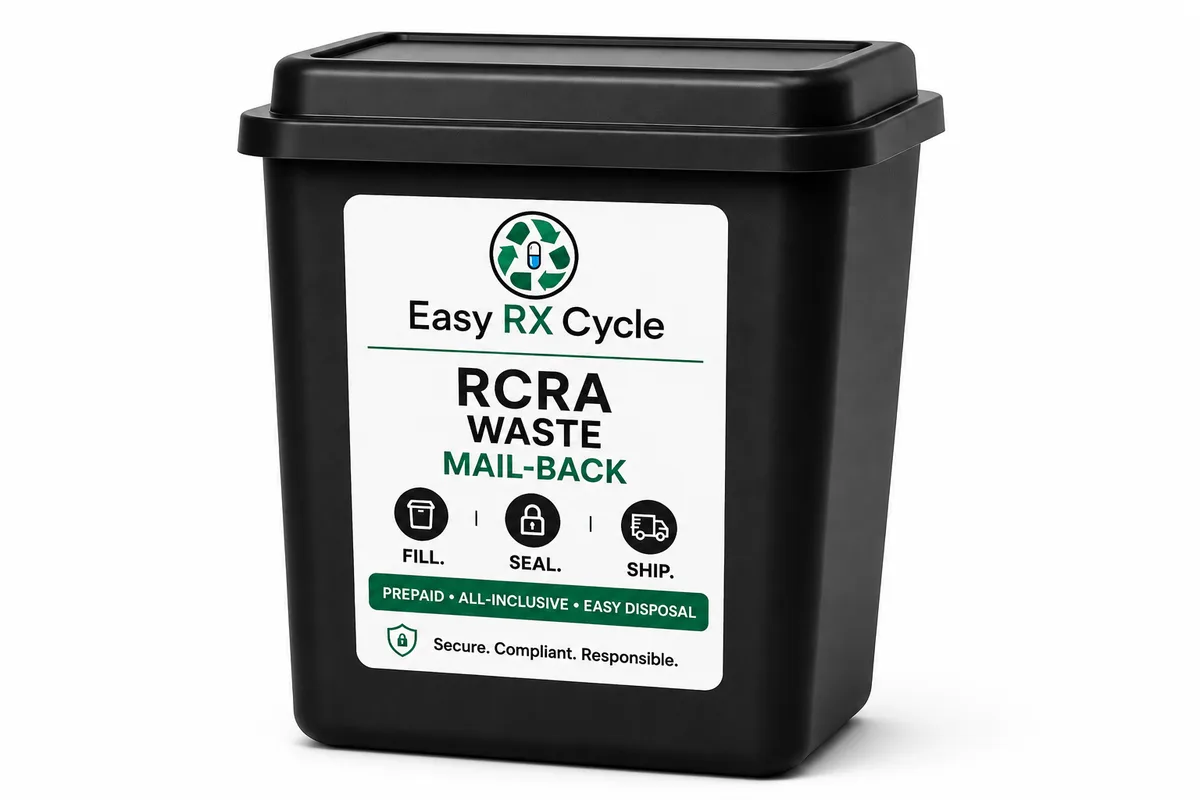
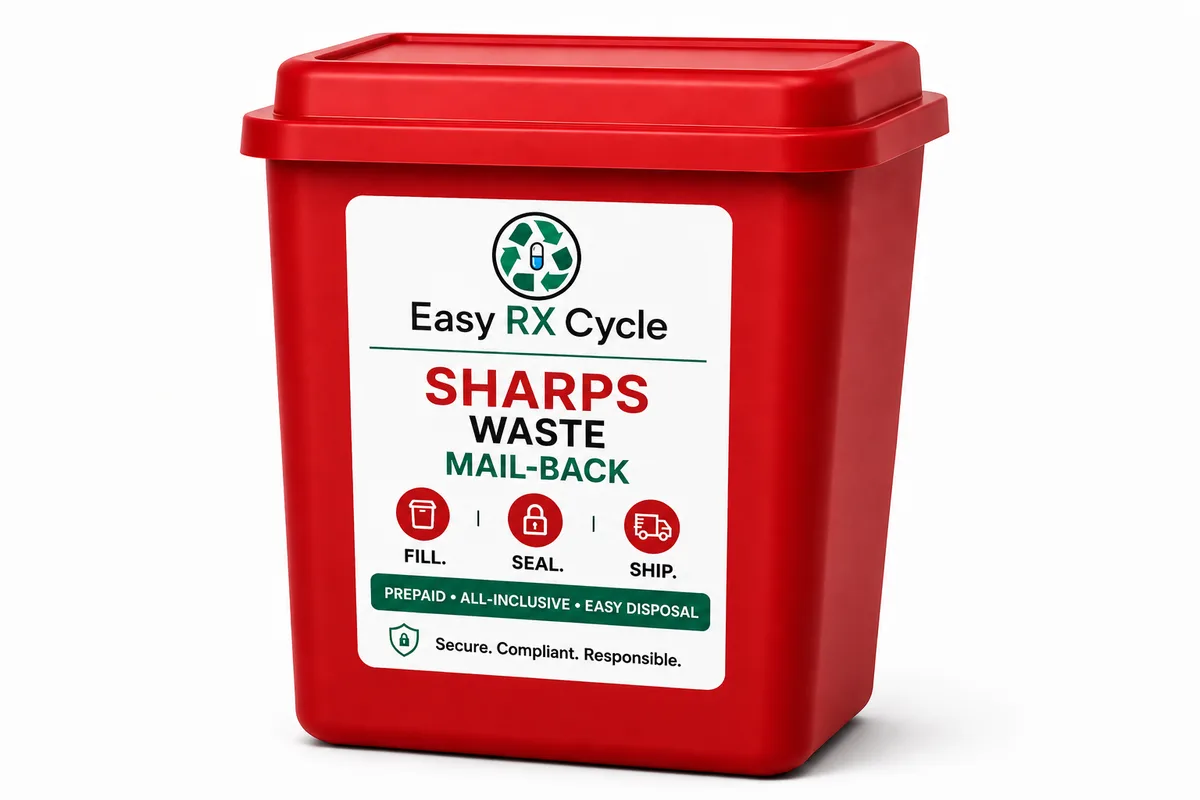
Kits for mail-order pharmacies
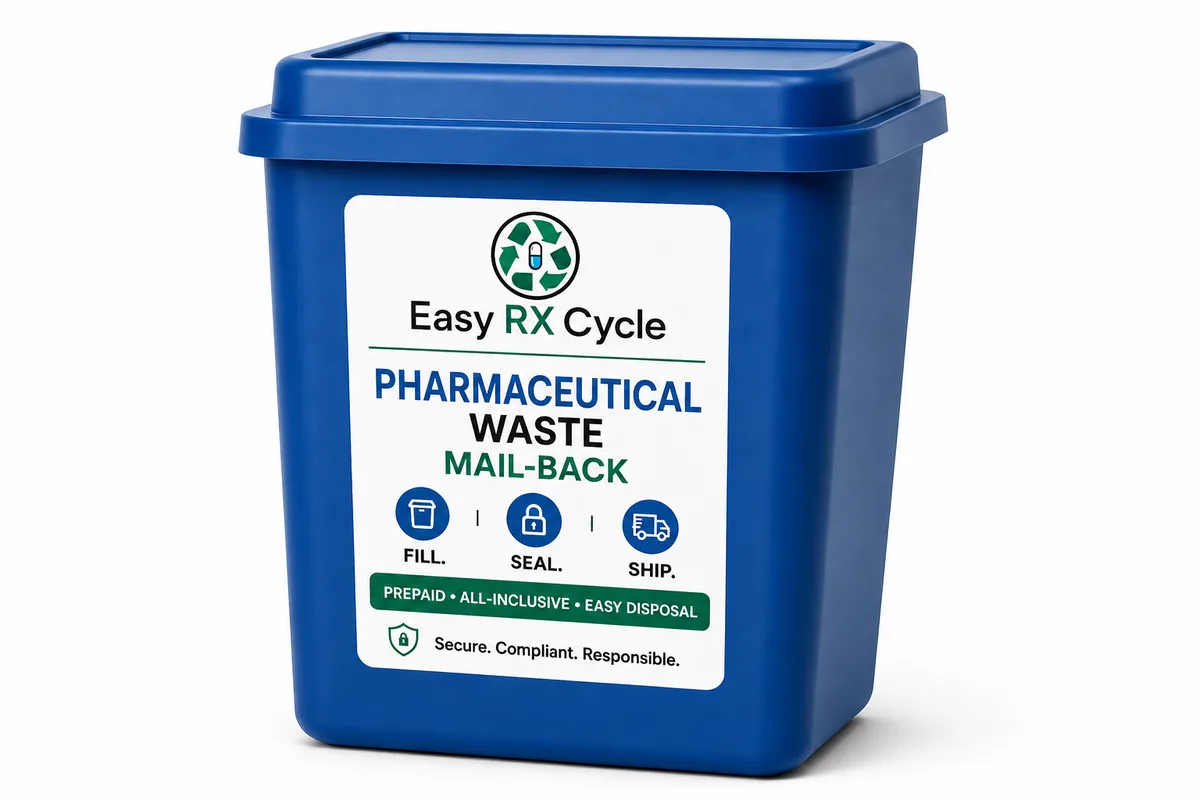
Prepaid both ways, one waste stream per kit, with a Certificate of Destruction on every mail-back order.
Ready to hand it off entirely?
Easy Rx Cycle handles every regulated waste stream — mail-back or pickup, with a Certificate of Destruction every time.