
The Nursing Home / LTC Guide to Compliant Waste Disposal
A plain-English reference to every regulated waste stream your nursing home or LTC facility generates — unused resident controls, med returns, insulin sharps, and biohazard — and how to handle each right.
What’s inside
- Unused resident controls: mail-back for incineration + Form 41
- Blister-pack & unit-dose med returns
- Insulin & injection sharps
- An LTC compliance checklist, cheat sheet & FAQ
Who it’s for: Directors of nursing, consultant pharmacists, and administrators at LTC facilities.
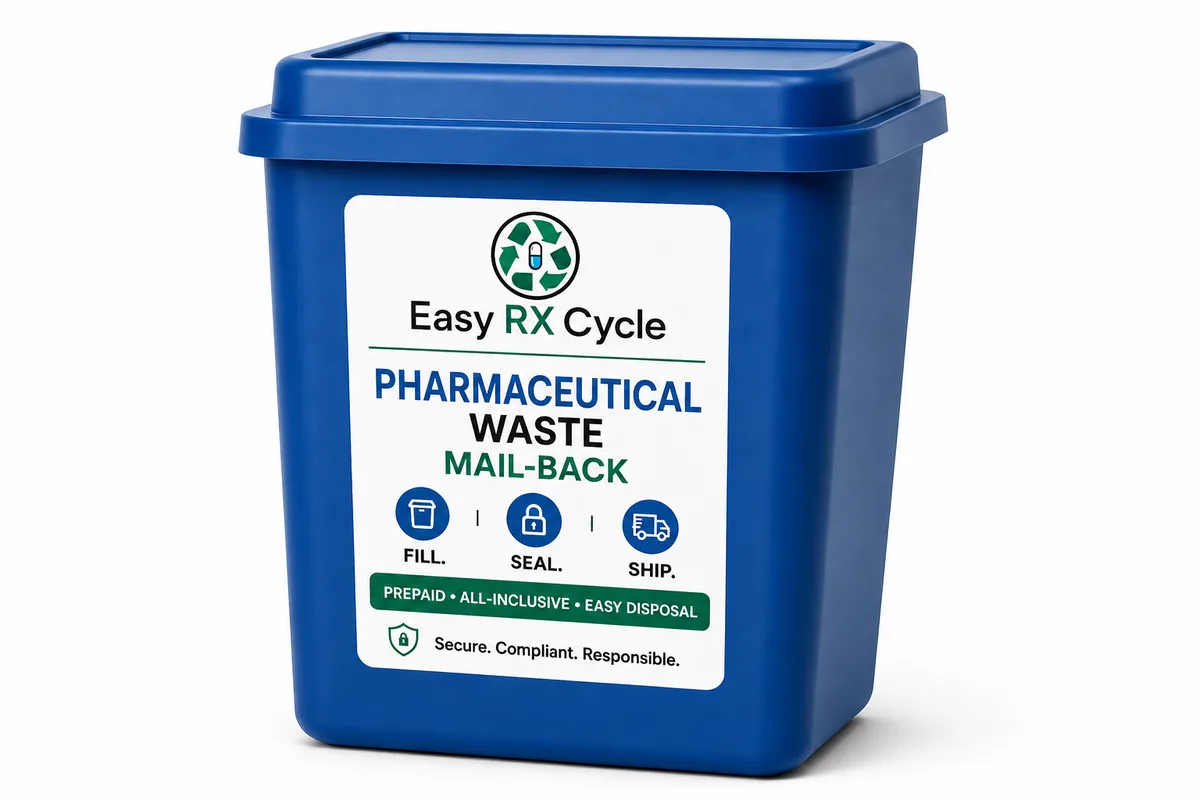
Expired, non-controlled medications. Prepaid both ways, destroyed and documented. Certificate of Destruction on every order. No contract.
Resident Turnover Means Constant Leftover Medication
In long-term care, residents pass away, transfer, or have prescriptions discontinued, leaving unused medications behind daily — including opioids, benzodiazepines, and other controlled substances. Uncontrolled leftover drugs are a diversion magnet, and flushing or trashing them is no longer defensible. Add insulin and injection sharps, blister-pack and unit-dose returns, and wound-care biohazard, and a nursing home is managing several regulated streams at once, each with its own paper trail. What makes LTC distinct from a clinic is that the medication belongs to residents, not to the facility as registrant stock, and it accumulates continuously rather than in scheduled batches. The moment a resident's order is discontinued or the resident leaves, the clock starts on securing and destroying what's left — the longer it sits in a cart or a returns bin, the larger the diversion risk grows.
The Compliance Framework for LTC
Unused controlled substances fall under DEA 21 CFR 1317, which permits authorized on-site collection or mail-back with witnessed, documented destruction and Form 41 records for registrant stock, ending in destruction that renders drugs non-retrievable. Insulin needles, lancets, and injection sharps are regulated under OSHA's Bloodborne Pathogens Standard, 29 CFR 1910.1030, in FDA-cleared containers. Non-controlled med returns are pharmaceutical waste that still requires destruction preventing recovery and reuse — never the drain. Wound-care and incontinence-related regulated waste follows OSHA plus your state's medical-waste rules. State law adds wrinkles worth knowing: gabapentin is federally unscheduled but classified as a Schedule V controlled substance in a number of states, and where it's scheduled it must be logged and destroyed under controlled-drug protocols rather than tossed as ordinary pharmaceutical waste. Knowing your state's list is part of the job.
Destroying a Deceased Resident's Controls
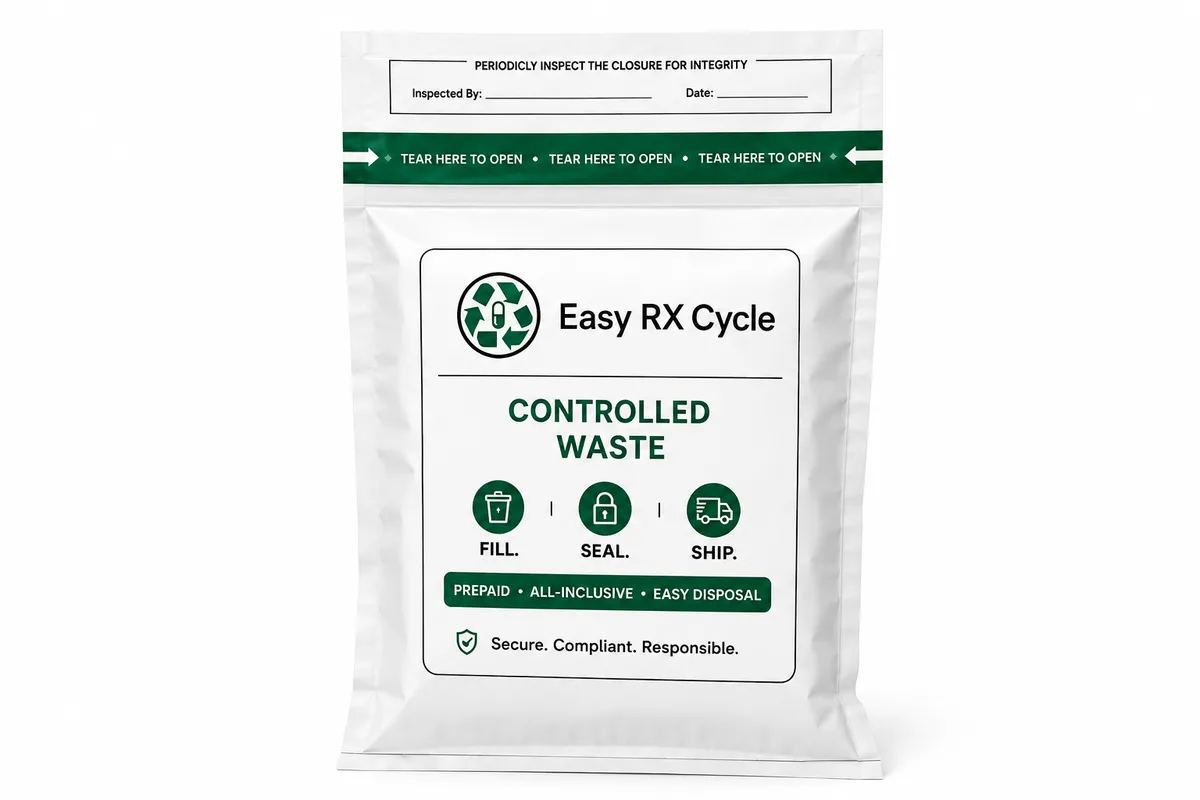
The highest-stakes moment in an LTC medication program is a resident's death or discharge with controlled substances still on the cart. Those drugs are never returned to family and never flushed. The compliant sequence is to secure them immediately, log them, and send them by DEA-compliant mail-back to a DEA-registered destruction company for incineration, with the Form 41 documentation handled by that company and the chain of custody recorded. Keeping them locked and logged until they ship is what keeps the paperwork clean. Prompt action is what prevents diversion: the standard practice is to destroy discontinued and leftover controls promptly rather than letting them accumulate, and to run scheduled disposal every 30 to 90 days so nothing lingers.
Sharps and Blister-Pack Returns
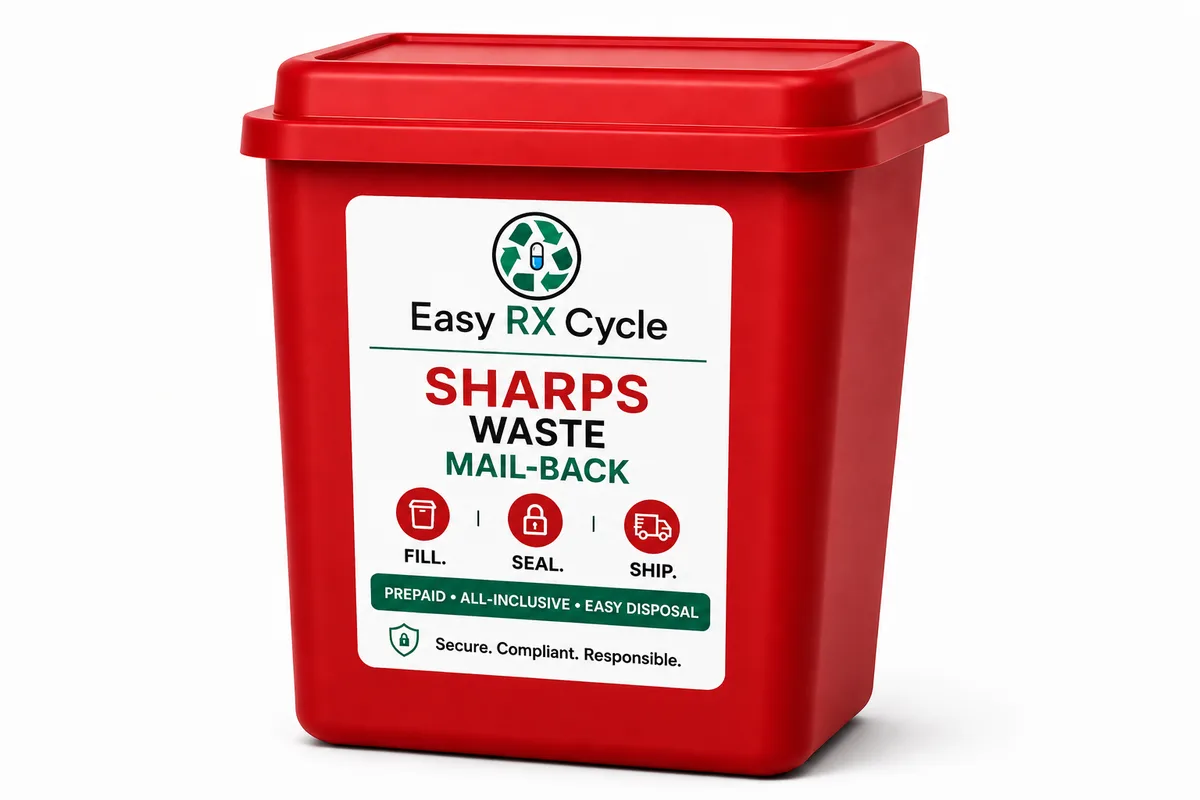
Beyond controls, LTC facilities run a steady sharps stream from insulin pens and needles, injection syringes, and finger-stick lancets used across the resident census. These go into FDA-cleared, puncture-resistant containers replaced at the fill line and kept upright, closable, and out of reach — in a setting with residents who may have cognitive impairment, secure placement matters more than it does in a staff-only clinic. Blister-pack and unit-dose returns are their own routine: non-controlled discontinued and expired resident medications are destroyed as pharmaceutical waste with documentation, but hazardous drugs and any controlled substances have to be pulled out and routed to their own paths first. The discipline that keeps an LTC program clean is segregating at the point of return — the med cart and the returns bin — so controls never end up mixed into a general pharmaceutical container where they can't be reconciled.
A Documented Program Per Facility
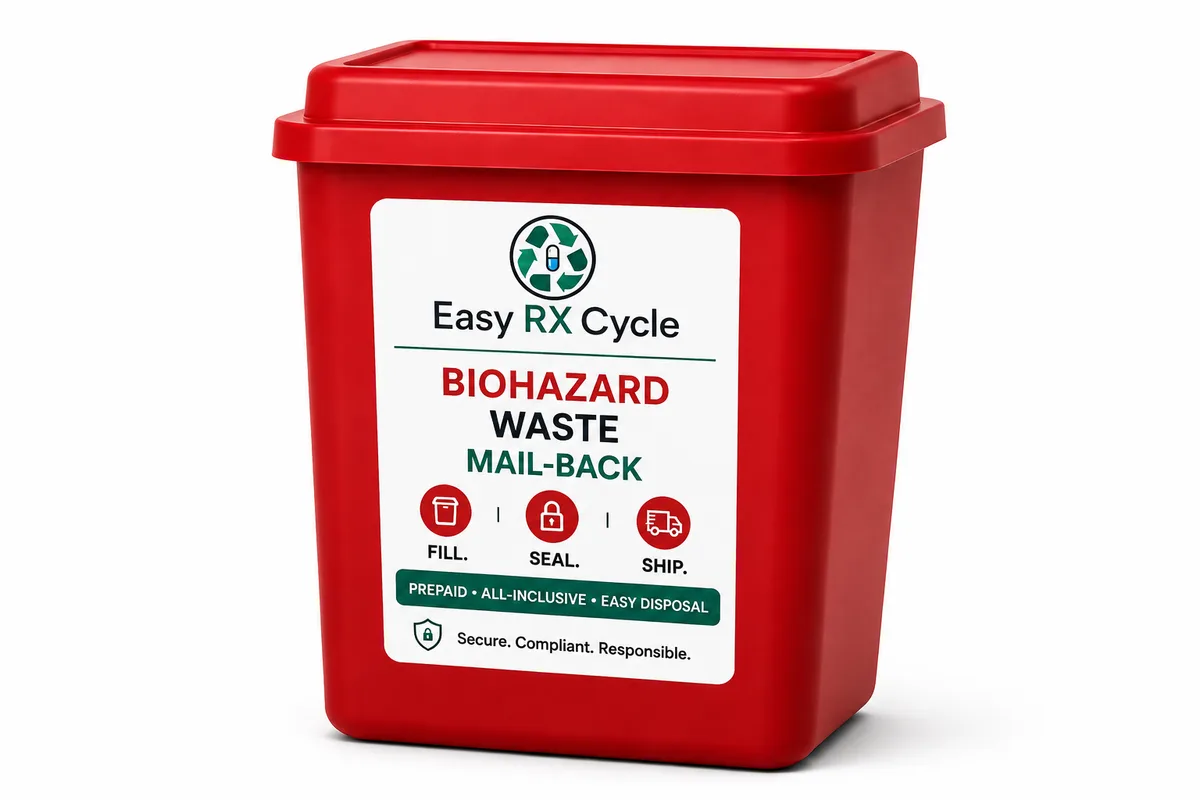
Easy Rx Cycle, DEA-registered, gives your nursing home prepaid mail-back for resident controls, incinerated with Form 41 documentation handled by us, sharps service for insulin and injection waste, a clear process for unit-dose and blister-pack returns, and biohazard handling to OSHA and state RMW rules — all under one vendor with a Certificate of Destruction on every order. That single-vendor structure matters in LTC because directors of nursing and consultant pharmacists have to show a defensible chain of destruction on demand, whether to a state surveyor, a board of pharmacy, or the DEA. Work your medication cart and returns bin against an LTC checklist sized to your census, keep destruction records aligned with your controlled-substance logs, and disposal becomes a documented routine rather than a monthly scramble — with one archived record set that proves nothing left the building undocumented.
Expired, non-controlled medications. Prepaid both ways, destroyed and documented. Certificate of Destruction on every order. No contract.
DEA, EPA and state rule changes that affect disposal, plus seasonal reminders. No spam, unsubscribe anytime.
Kits for nursing homes & ltc
Prepaid both ways, one waste stream per kit, with a Certificate of Destruction on every mail-back order.
Ready to hand it off entirely?
Easy Rx Cycle handles every regulated waste stream — mail-back or pickup, with a Certificate of Destruction every time.