
The Group Home's Guide to Compliant Waste Disposal
A plain-English reference to every regulated waste stream your group home generates — resident controlled substances, med returns, and insulin sharps — and how to handle each right.
What’s inside
- Resident controls: prepaid mail-back + Form 41
- Resident non-controlled med returns
- Insulin & injection sharps
- A group home checklist, cheat sheet & FAQ
Who it’s for: Group home administrators and residential-care staff.
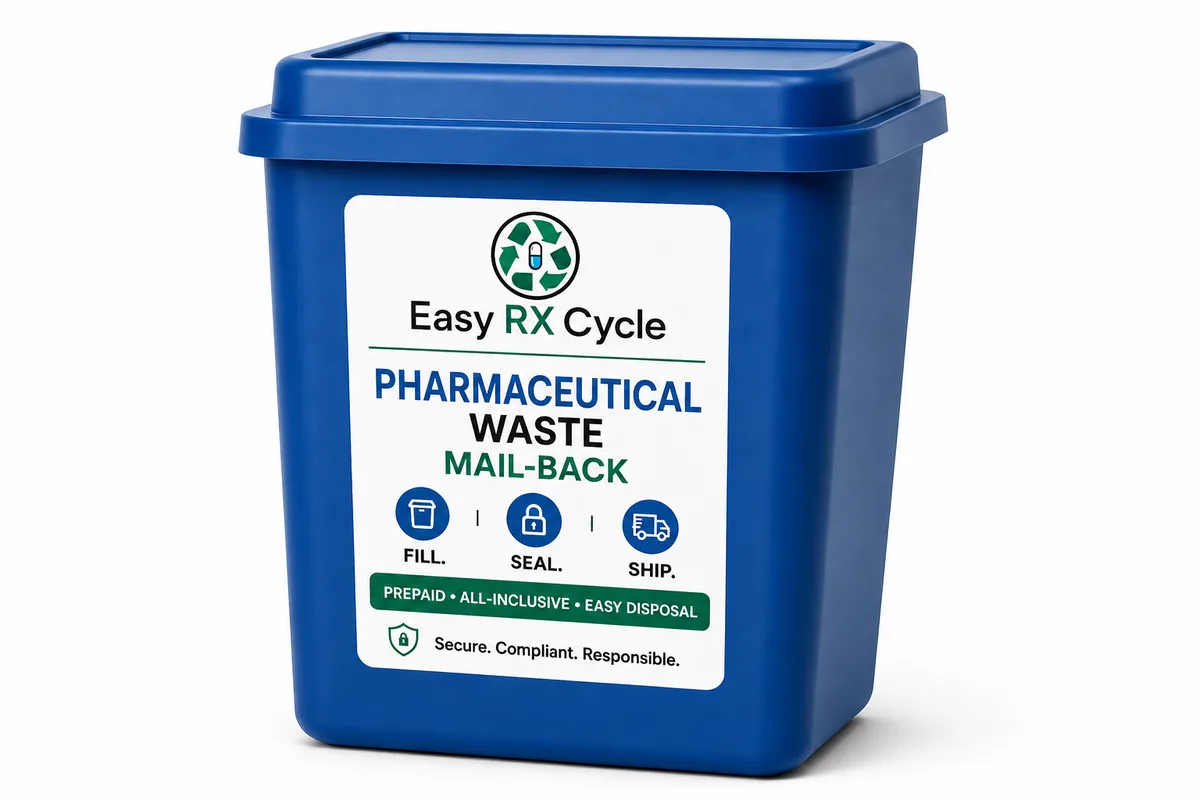
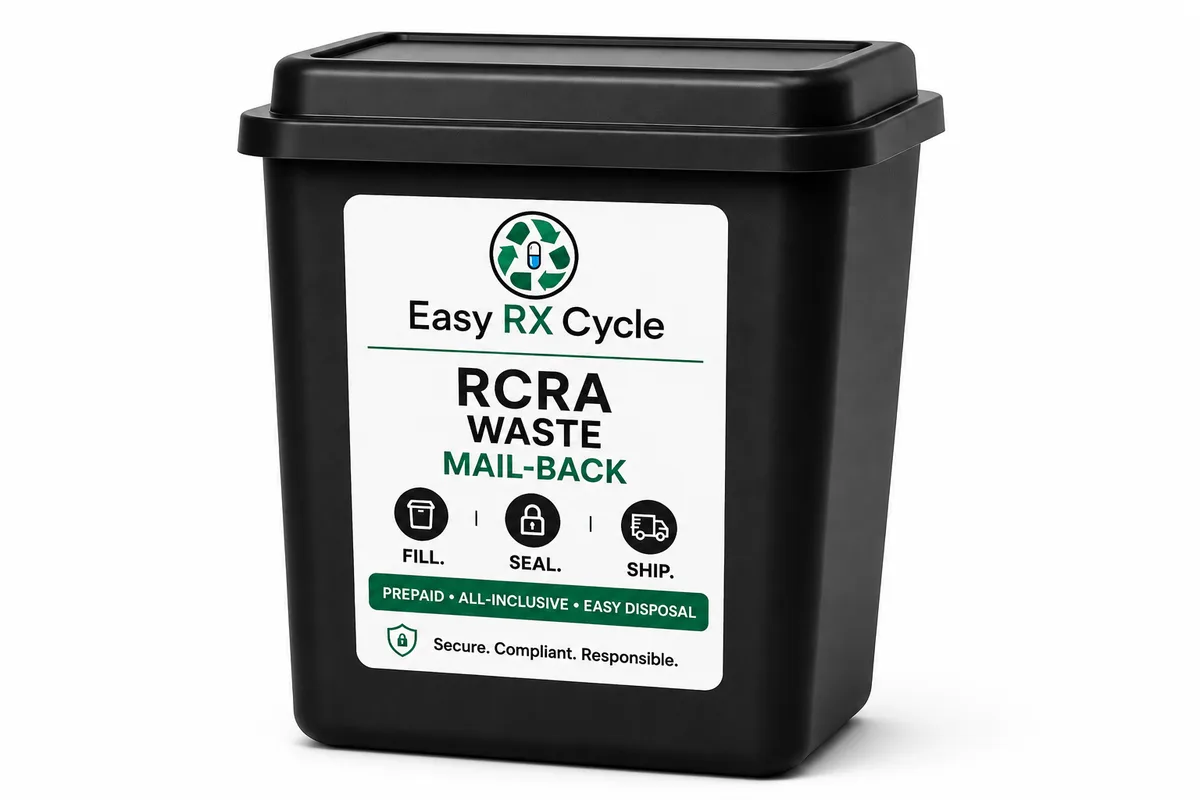
Expired, non-controlled medications. Prepaid both ways, destroyed and documented. Certificate of Destruction on every order. No contract.
Residential Care With Real Pharmacy Waste
Group homes are homes, but they manage medications like a facility. Resident prescriptions get discontinued or replaced, insulin is administered daily, and controlled substances sometimes sit in a med cabinet with access from staff who were never trained as pharmacy technicians. When a resident moves out or passes away, their leftover medications, including controls, have to go somewhere defensible. Without a defined destruction process, those drugs accumulate and become a diversion and safety risk for residents and staff alike. The core challenge is that residential-care staff are caregivers first, not compliance specialists, so the disposal program has to be simple enough to run correctly on a busy shift while still meeting DEA and OSHA standards. Every stream, from a discontinued controlled order to an insulin needle, needs a clear, documented endpoint.
The Rules That Apply to Residents' Meds
Resident controlled substances are disposed of under DEA 21 CFR 1317, using authorized collection or mail-back to a DEA-registered destruction company that renders the drug non-retrievable, with DEA Form 41 records for surrendered controls and witnessed logs for wasted doses. Non-controlled medication returns, expired and discontinued prescriptions, still must be destroyed with documentation rather than trashed or flushed, and any RCRA-hazardous drugs among them are segregated. Insulin pens and needles, injection syringes, and lancets are regulated under OSHA's Bloodborne Pathogens Standard, 29 CFR 1910.1030, requiring FDA-cleared puncture-resistant containers. The distinction that matters most for a group home is between a resident's controlled medications, which carry the DEA requirements, and their ordinary prescriptions, which are pharmaceutical waste. Getting that split right at the med cabinet is the foundation of the whole program.
Mail-Back for Controlled Returns
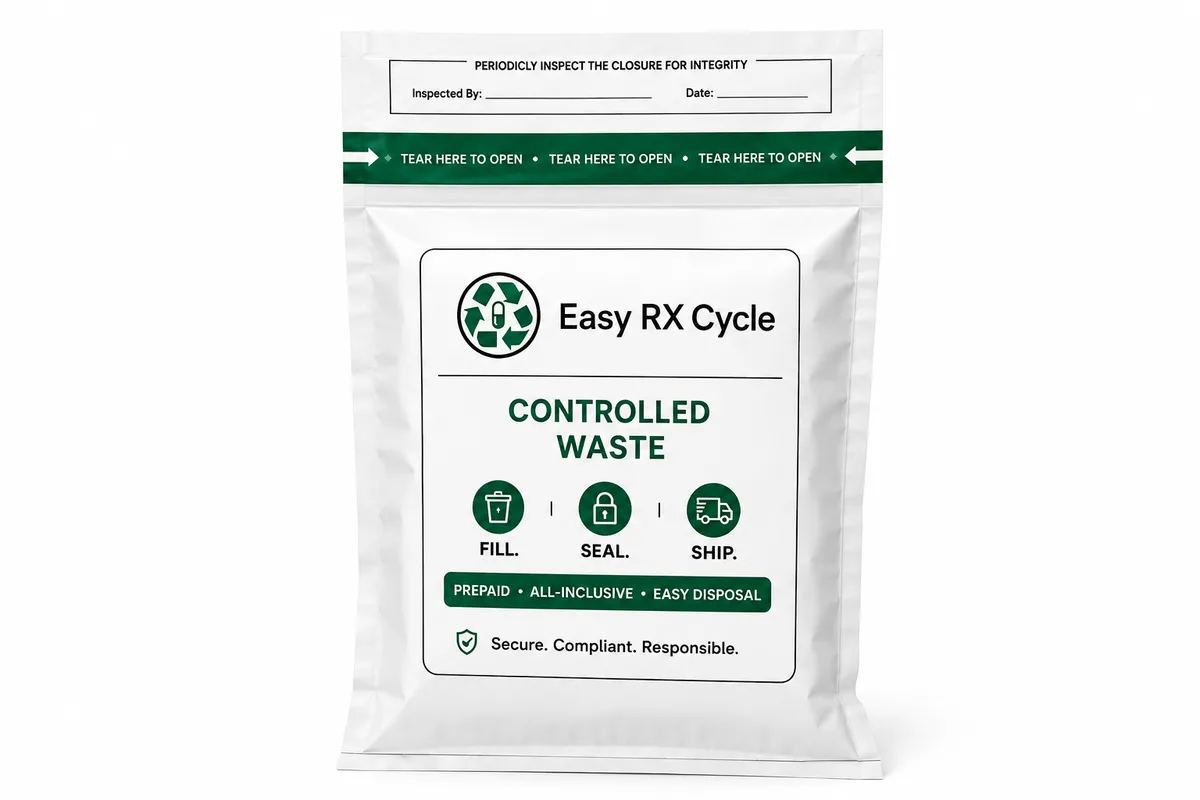
The most useful tool for a group home is a prepaid mail-back kit kept on hand, so a resident's leftover controlled medications can be packed and shipped for incineration as soon as they are identified. This matters in residential care because leftover controls sitting in a cabinet are the highest diversion risk in the house. The practical routine is to pull discontinued or leftover controlled medications promptly, log and witness them, seal them in the kit and ship it; the destruction company handles the Form 41 documentation. Keeping a kit on the shelf gives staff a fast, defensible answer for every scenario.
A Med-Cabinet Routine Staff Can Actually Run
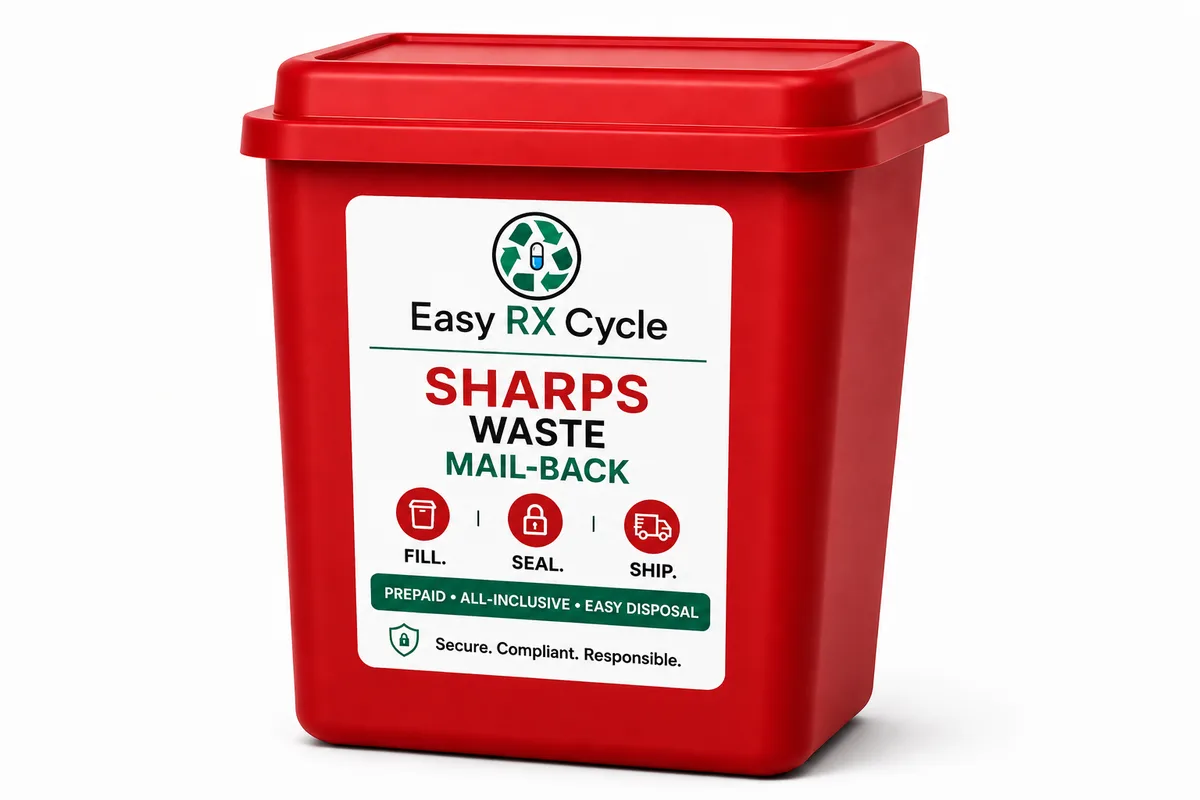
The goal for a group home is a routine any caregiver can follow without a pharmacy background. Walk the med cabinet on a set schedule and pull anything discontinued, expired, or belonging to a resident who has left. Sort each item at that moment: unused resident Schedule I to V medications, discontinued controlled orders, and wasted doses go into the controlled-substance mail-back kit; expired non-controlled prescriptions and returns go to pharmaceutical waste, with hazardous drugs kept separate; insulin pens, needles, and lancets go into the sharps container, kept upright, closable, and out of reach. The two failures to prevent are a controlled substance ending up in ordinary med returns and a needle ending up loose in the trash. A short written checklist at the cabinet turns this into a repeatable habit rather than a judgment call every shift.
Documentation and Diversion Protection
For a group home, documentation is both a compliance requirement and a safeguard against accusations of diversion. Easy Rx Cycle is DEA-registered and issues a Certificate of Destruction on every order, with a DEA Form 41 documenting non-retrievable destruction of controlled substances and your witnessed logs backing it up. Those records show a regulator, a licensing agency, or a family that a departed resident's medications were destroyed properly rather than disappearing unaccounted for. Keeping the logs and certificates organized, and archived to your account, means that when a question arises about a specific resident's controlled prescriptions, the answer is a document rather than a guess. In a setting where untrained access to a med cabinet is a real risk, the paper trail is what protects the staff who run the program in good faith.
One Simple Program From One Vendor
A group home does not need multiple vendors for what is, at its core, a medication-return problem plus some insulin sharps. Easy Rx Cycle, DEA-registered, sets residential-care teams up with prepaid mail-back for resident controls, a documented path for non-controlled returns, and sharps service for insulin and injections, all with a Certificate of Destruction and no long-term contract or minimums. That means one point of contact and one documentation trail for the whole house. Walk your med cabinet and returns process against a group home checklist to close the gaps before an audit finds them, then let a single partner handle the destruction. For a caregiving team, the value is a routine that is simple enough to run correctly every shift and defensible enough to survive scrutiny.
Expired, non-controlled medications. Prepaid both ways, destroyed and documented. Certificate of Destruction on every order. No contract.
DEA, EPA and state rule changes that affect disposal, plus seasonal reminders. No spam, unsubscribe anytime.
Kits for group homes
Prepaid both ways, one waste stream per kit, with a Certificate of Destruction on every mail-back order.
Ready to hand it off entirely?
Easy Rx Cycle handles every regulated waste stream — mail-back or pickup, with a Certificate of Destruction every time.