
The Hospice Guide to Compliant Waste Disposal
A plain-English reference to every regulated waste stream hospice care generates — unused opioids and controls after a patient passes, sharps, and medications — and how to handle each right.
What’s inside
- Unused opioids after death: prepaid mail-back
- DEA Form 41 & diversion prevention
- In-home & facility sharps
- A hospice compliance checklist, cheat sheet & FAQ
Who it’s for: Hospice clinical directors, nurses, and compliance leads.
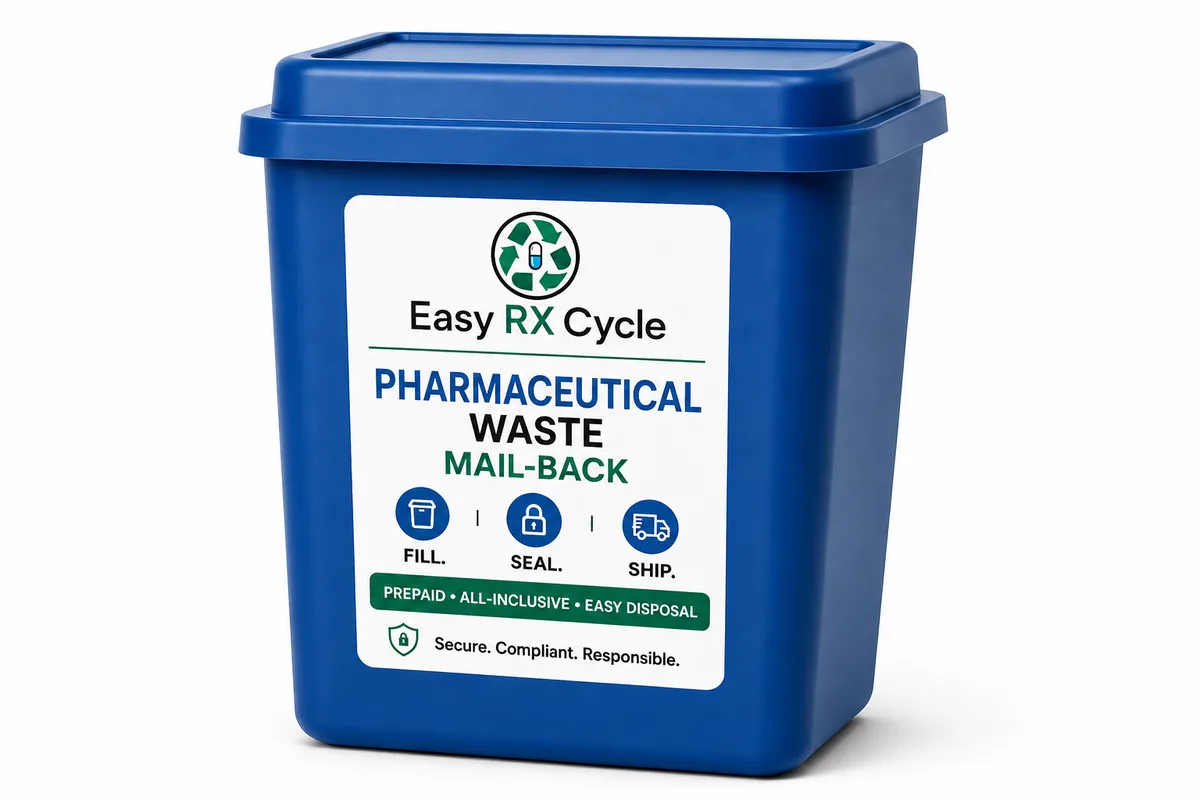
Expired, non-controlled medications. Prepaid both ways, destroyed and documented. Certificate of Destruction on every order. No contract.
When a Patient Passes, the Medications Remain
Hospice care leans on opioids and other controlled substances for comfort, and after a patient dies those medications are often still sitting in the home or the facility. That window, between death and destruction, is exactly when diversion happens, and it's the moment your compliance program is really being tested. Families and staff need a lawful, dignified way to render unused opioids non-retrievable quickly, alongside the sharps, wound-care biohazard, and non-controlled medications hospice generates in every setting. Because so much hospice care is delivered in distributed private homes rather than one central building, the challenge isn't just what to destroy but how to do it consistently at the bedside, wherever that bedside happens to be. A defined, documented process that any visiting nurse can follow is what turns a scattered, high-risk situation into a controlled one.
The DEA Rules Governing Unused Controls
Disposal of unused controlled substances is governed by DEA 21 CFR 1317, which requires destruction that renders drugs non-retrievable, through authorized collection or mail-back to a DEA-registered destruction company. For registrant-held stock, surrendered controls are documented on DEA Form 41, and each wasted or partial dose belongs in a witnessed controlled-substance log. Prompt disposal is not just good practice, it's the single most effective diversion-prevention step available to a hospice team: secure leftover controls, log them, and ship them in a prepaid mail-back kit for incineration rather than letting them sit. Retain your Form 41s, Certificates of Destruction and controlled-substance logs so your compliance leads can show a clean chain when asked.
Getting Leftover Controls Out by Mail-Back
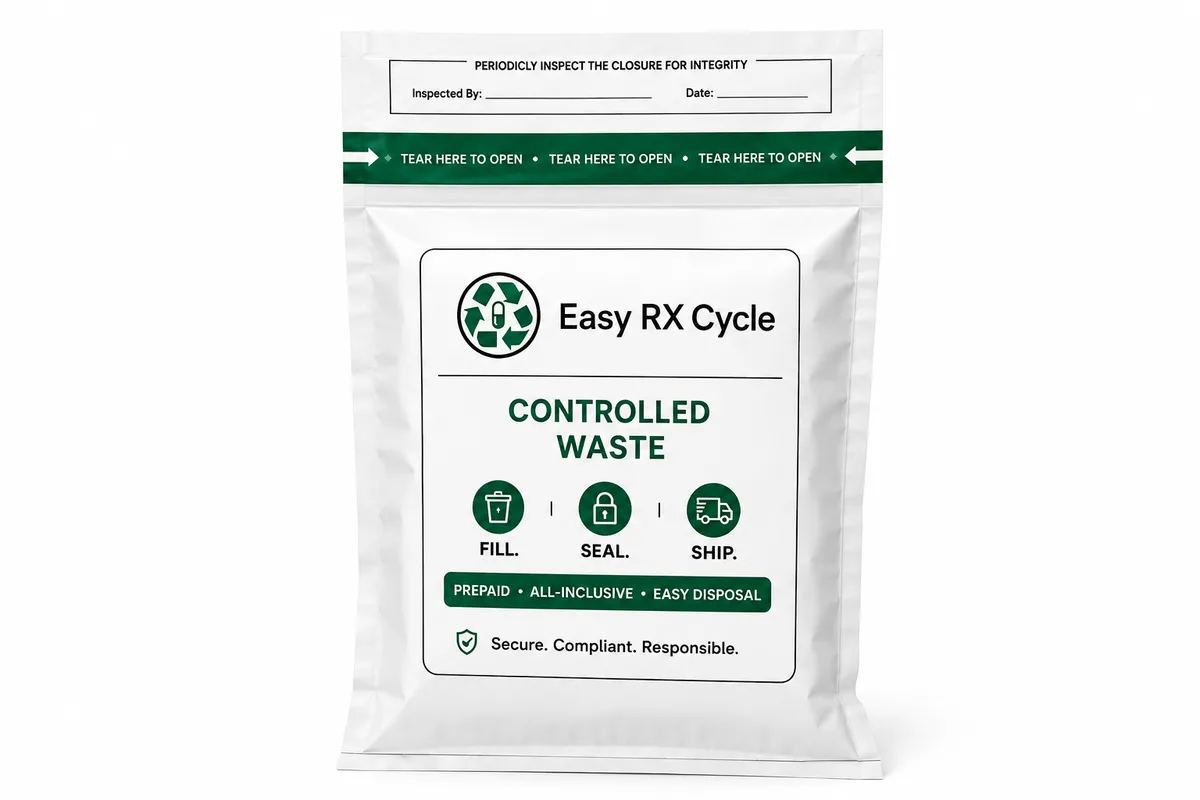
Mail-back kits are the practical path for hospice controls: leftover medications are secured, logged and shipped to a DEA-registered destruction company for incineration, which works across a distributed patient census where scheduling a pickup at every home isn't practical. Keep kits on hand so leftover opioids can be packed up promptly after a death or a discontinued order instead of sitting in the home. The documentation discipline is the same every time: witness and log the event, seal the kit, and keep the record. Defining in advance who handles what, when, and how it's witnessed turns an emotionally difficult moment into a routine, defensible step.
Sharps, Pharmaceutical Waste, and Wound-Care Biohazard
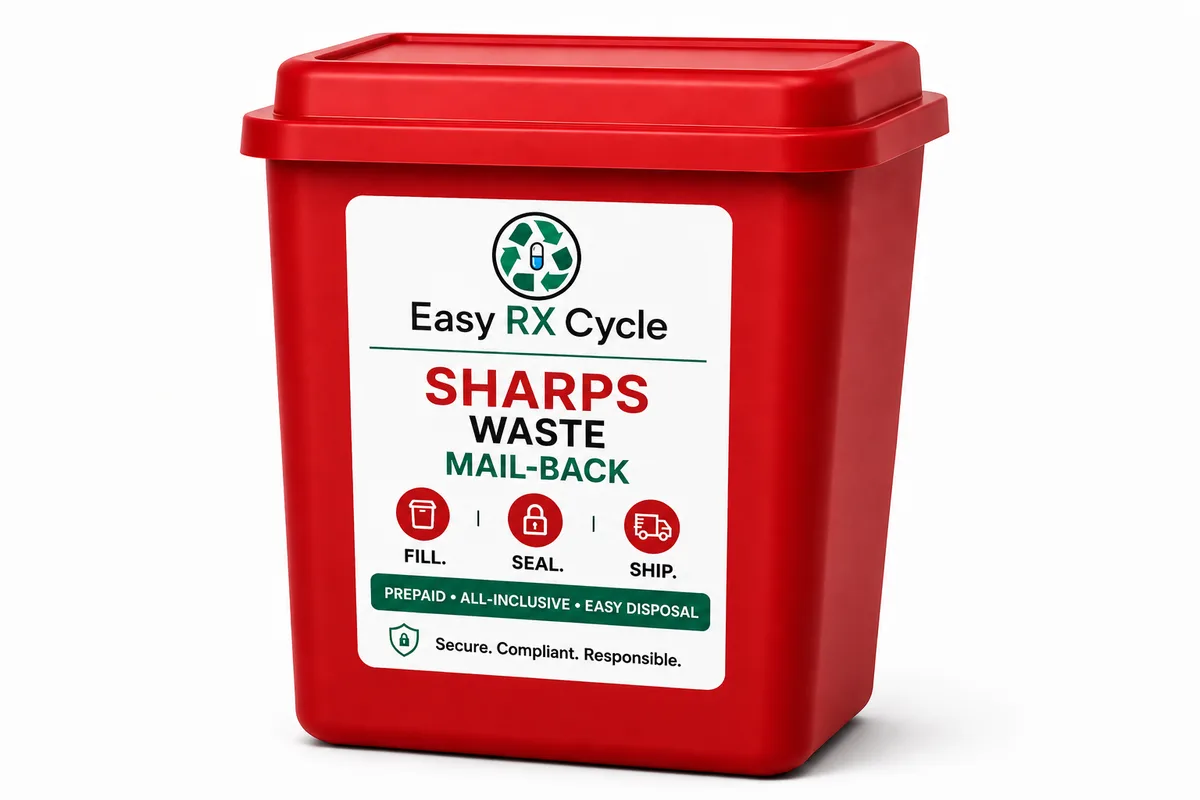
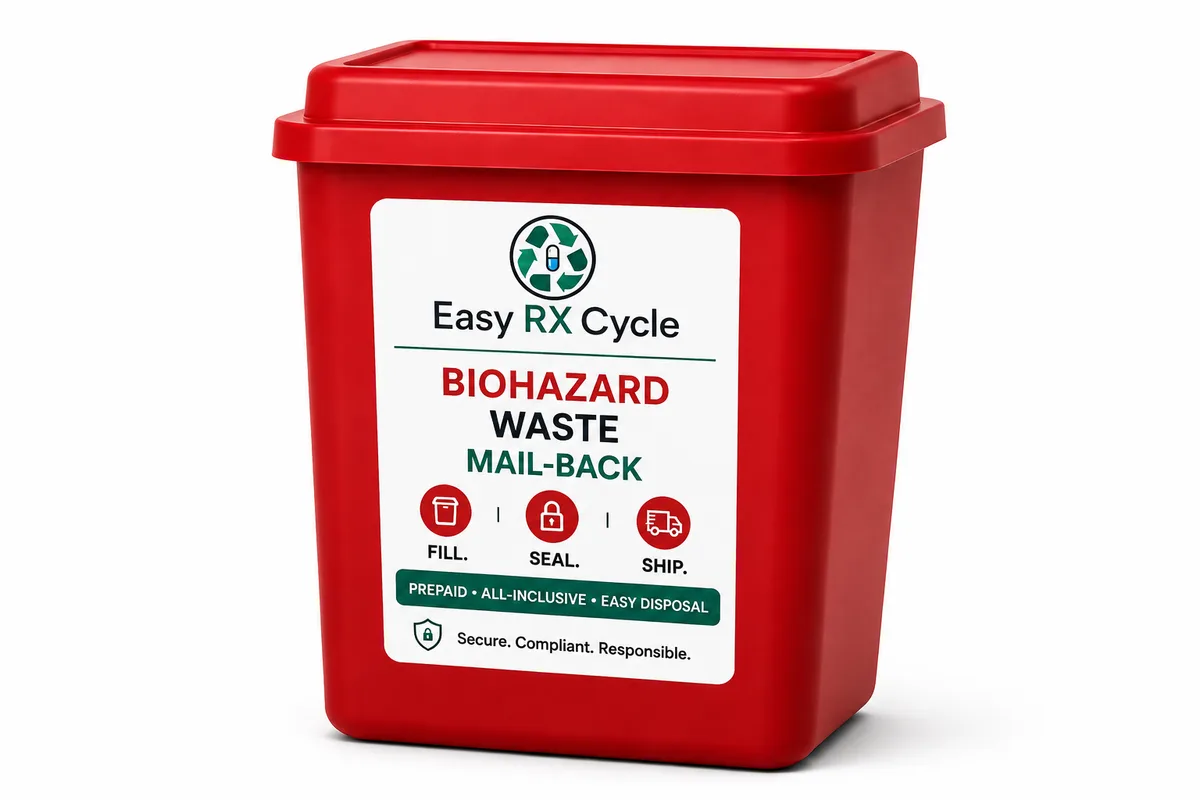
Beyond controls, hospice generates non-controlled expired and discontinued medications, in-home and facility injection sharps, and wound-care biohazard. Non-controlled meds are pharmaceutical waste, destroyed with documentation and never drained, and segregated from anything controlled or RCRA-hazardous. Subcutaneous, IM, and injection needles, syringes, and lancets are sharps under OSHA's Bloodborne Pathogens Standard, 29 CFR 1910.1030, requiring FDA-cleared, puncture-resistant, closable containers, kept upright and out of reach in what is often a private home with family and sometimes children present. Blood-soaked dressings and contaminated PPE from wound care are regulated medical waste under OSHA and state rules. The in-home setting raises the stakes on container security specifically, because these streams aren't sitting in a locked clinical utility room, they're in someone's house, which is another argument for prompt, scheduled removal.
One DEA-Registered Partner Across Every Setting
The cleanest way to run hospice disposal is one DEA-registered partner covering controls, meds, sharps, and biohazard, whether care happens in a home, a facility, or an inpatient unit. As a DEA-registered destruction company, Easy Rx Cycle equips hospice teams with prepaid mail-back kits for controls and non-controlled meds, incinerated with the paperwork handled by us, and sharps and biohazard handling for distributed care, all returning a Certificate of Destruction your compliance leads can stand behind. Set up your kits before you need them, define who packs what and when it's witnessed, and keep the documentation flowing back to a single archived account. No contract and no minimums keep it workable whether you're a small home-based program or a multi-team agency covering a wide territory.
Expired, non-controlled medications. Prepaid both ways, destroyed and documented. Certificate of Destruction on every order. No contract.
DEA, EPA and state rule changes that affect disposal, plus seasonal reminders. No spam, unsubscribe anytime.
Kits for hospice
Prepaid both ways, one waste stream per kit, with a Certificate of Destruction on every mail-back order.
Ready to hand it off entirely?
Easy Rx Cycle handles every regulated waste stream — mail-back or pickup, with a Certificate of Destruction every time.