
The Independent Pharmacy's Guide to Compliant Waste Disposal
A plain-English reference to every regulated waste stream an independent pharmacy generates — controlled returns, hazardous drugs, expired stock, and immunization sharps — and how to sort and destroy each.
What’s inside
- Expired & returned controlled stock (Form 41)
- RCRA-hazardous drugs (warfarin, nicotine)
- Expired non-controlled stock
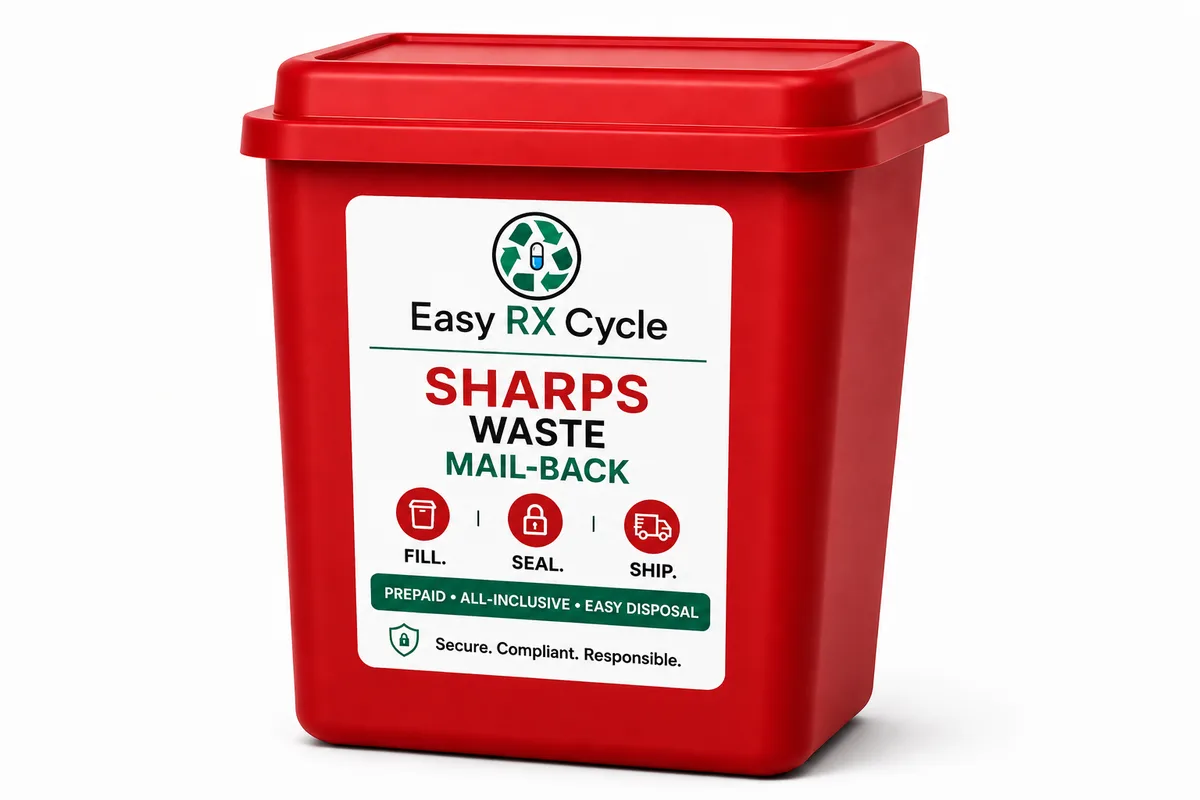
- Immunization sharps & patient take-back
Who it’s for: Independent pharmacy owners, PICs, and staff.
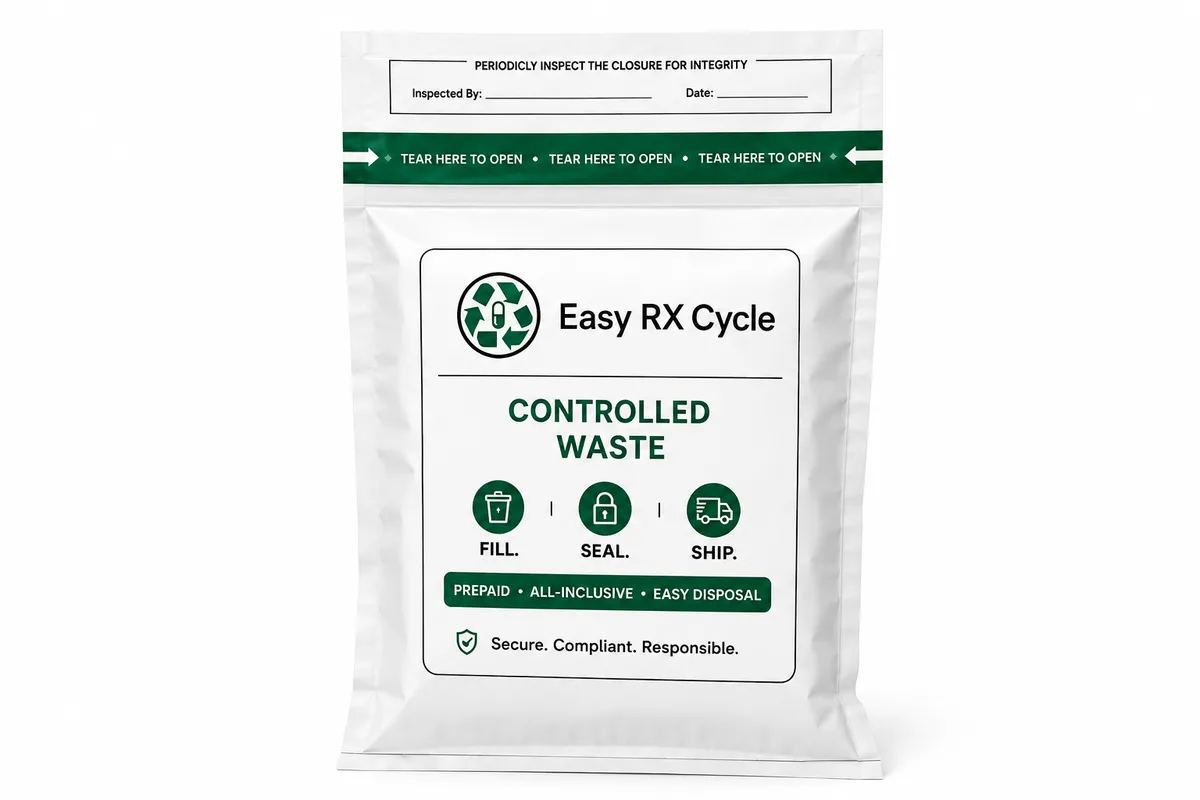
Schedules I–V, sized by weight. We do all the DEA paperwork and destroy it non-retrievably. Certificate of Destruction on every order. No contract.
One Store, Several Regulated Waste Streams
An independent pharmacy quietly accumulates four very different problems: expired and returned controlled stock, RCRA-hazardous drugs, expired non-controlled inventory, and immunization sharps. Because you often run leaner than a chain, without a dedicated compliance department to catch mistakes, a single mis-sorted bin or an undocumented controlled destruction can become the exact finding an inspector writes up. The same lean setup is also an advantage: a small team can build a clean sort into daily routine more easily than a sprawling operation can. Sorting at the point of generation, as items leave the shelf rather than at an annual cleanout, is what keeps the whole operation defensible and stops returnable stock from being destroyed alongside genuine waste.
Handling Expired Stock
Independents leave real money on the table when they treat every expired item as waste. Our destruction service has no high-volume minimums that lock small pharmacies out. Sealed, in-package overstock may be returnable through a returns company; opened, adulterated, or patient-owned product is destroy-only. The costly habit is pre-sorting borderline items into the trash out of caution, because product you assumed was worthless is frequently still eligible. Working destruction through a registered reverse distributor rather than case by case keeps the chain-of-custody consistent, so a single-location pharmacy gets the same records a chain would.
The Frameworks That Apply Behind the Counter
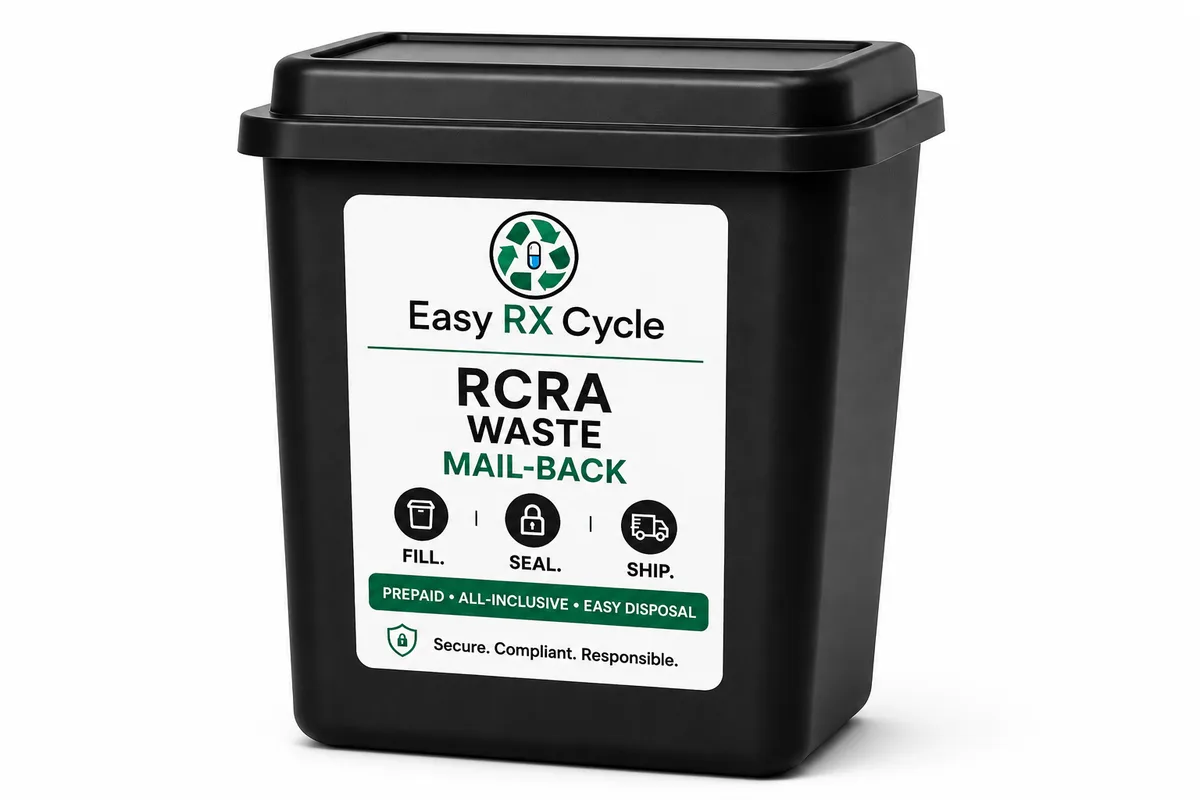
Expired or returned controlled stock must be destroyed to the DEA non-retrievable standard under 21 CFR 1317, documented on DEA Form 41, with Form 222 for Schedule II transfers. Certain drugs, such as warfarin at or above 0.3 percent (P001) and nicotine products (P075), are RCRA-listed hazardous waste under EPA's 40 CFR, now including the pharmaceutical-specific Subpart P at 40 CFR 266, which bars drain disposal of hazardous pharmaceutical waste. Immunization sharps fall under OSHA 29 CFR 1910.1030, requiring FDA-cleared, puncture-resistant containers and annual training. If you host a DEA-authorized collection receptacle, patient returns run through a DEA collector pathway and must be rendered non-retrievable, kept entirely separate from your own inventory.
The Hazardous Drugs Easy to Miss
The drugs most likely to trigger a citation are the ones that do not look hazardous. Warfarin, nicotine gum and patches, certain hormones, and some chemotherapy agents are RCRA-listed or characteristic hazardous waste, yet they sit on ordinary shelves and expire like anything else. Dropped into the general pharmaceutical container, they turn a routine disposal into a violation. The practical fix for a small pharmacy is a one-page segregation list kept at the dispensing bench, so whoever pulls expired stock knows on sight which items divert to the RCRA-hazardous container. Building that list once, and keeping a dedicated labeled container beside the workflow, prevents the commingling that inspectors look for and keeps the hazardous stream clean without slowing the counter down.
Supporting a Patient Take-Back Program
More independents are adding patient take-back, either a DEA-authorized collection receptacle in the store or mail-back envelopes for the community, and it is good for patient trust and for keeping unused medications out of the wrong hands. It also comes with rules. Collected take-back medications must be handled under DEA collector requirements, rendered non-retrievable, and never sorted, counted item by item, or returned to stock. The collected material stays physically and procedurally separate from your own pharmacy inventory at every step, so the two can never be confused during an audit. The inner liners from a receptacle, or returned mail-back envelopes, follow the compliant destruction path rather than your general pharmaceutical stream. Run correctly, take-back is a community service that adds a documented, defensible disposal lane rather than a liability.
How Easy Rx Cycle Keeps You Audit-Ready
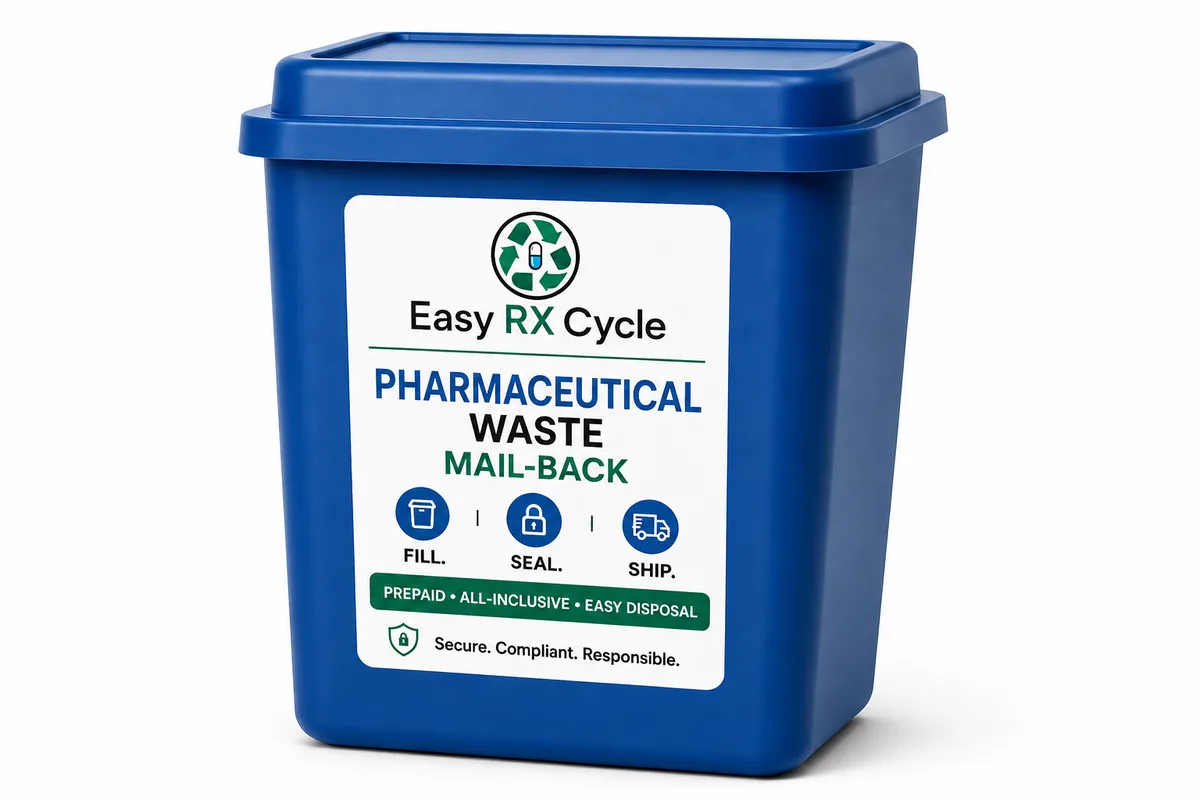
As a DEA-registered partner we destroy your controlled returns non-retrievably with Form 41 support, take your RCRA-hazardous drugs on the correct manifested pathway, and handle expired non-controlled stock and immunization sharps in one program. If you use a returns company for credit, keep them; we destroy everything else. Every order comes back with a Certificate of Destruction archived to your account, by prepaid mail-back kit or scheduled pickup, with no contract and no minimums, so independents get the same compliant service as chains. If you host patient take-back, we support the mail-back side under DEA collector rules. Start by segregating hazardous drugs and controls into separate, labeled containers at the point of use so nothing gets commingled, and we handle the rest.
Schedules I–V, sized by weight. We do all the DEA paperwork and destroy it non-retrievably. Certificate of Destruction on every order. No contract.
DEA, EPA and state rule changes that affect disposal, plus seasonal reminders. No spam, unsubscribe anytime.
Kits for independent pharmacies
Prepaid both ways, one waste stream per kit, with a Certificate of Destruction on every mail-back order.
Ready to hand it off entirely?
Easy Rx Cycle handles every regulated waste stream — mail-back or pickup, with a Certificate of Destruction every time.