
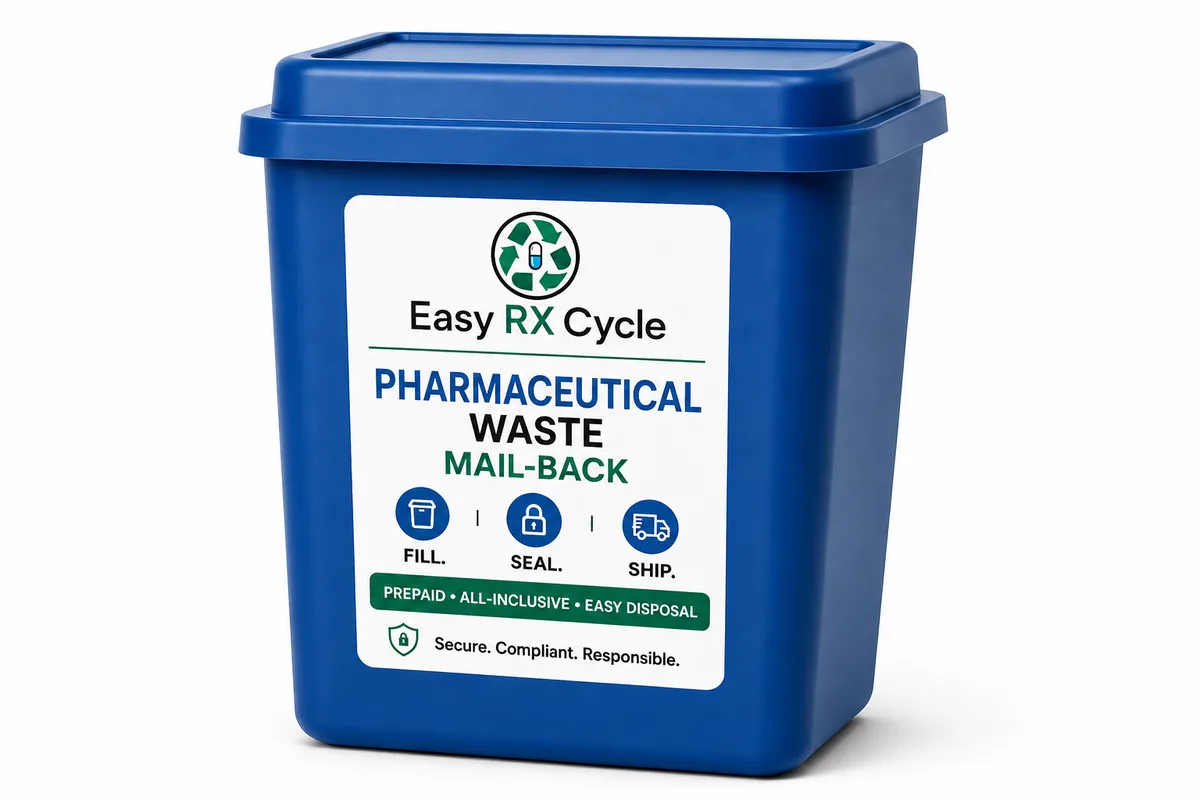
What non-hazardous pharmaceutical waste is
Medications that are neither DEA-controlled nor RCRA-hazardous: expired or unused prescription drugs, OTC drugs, samples, vitamins and supplements, compounding prep waste, and IV bags with no hazardous drug.
What goes in — and what never does
What goes in
- Expired non-controlled Rx
- OTC drugs and samples
- Unused or returned non-controlled medications
- Vitamins and supplements
- Compounding prep waste
- IV bags with no hazardous drug
Never goes in
- Controlled substances → Controlled Substance kit
- RCRA-hazardous drugs (P/U-listed, characteristic) → RCRA kit
- Trace chemo → Trace Chemo kit
Sizes and MSRP
| SKU | Size | MSRP |
|---|---|---|
| ERX-PHW-02G-EA | 2 Gallon | $100 |
| ERX-PHW-08G-EA | 8 Gallon | $200 |
| ERX-PHW-18G-EA | 18 Gallon | $285 |
When in doubt
If a customer isn't sure whether a drug is hazardous, treat it as hazardous and use the RCRA kit — or call us and we'll help classify it.
How it works
- Segregate non-controlled, non-hazardous drugs into the blue container.
- Seal and ship with the prepaid label.
- We destroy it by regulated incineration.
- Drug waste never goes down a drain or toilet.
The rules behind it
EPA (no sewering of drug waste), the state Board of Pharmacy and state environmental rules.
What the customer receives
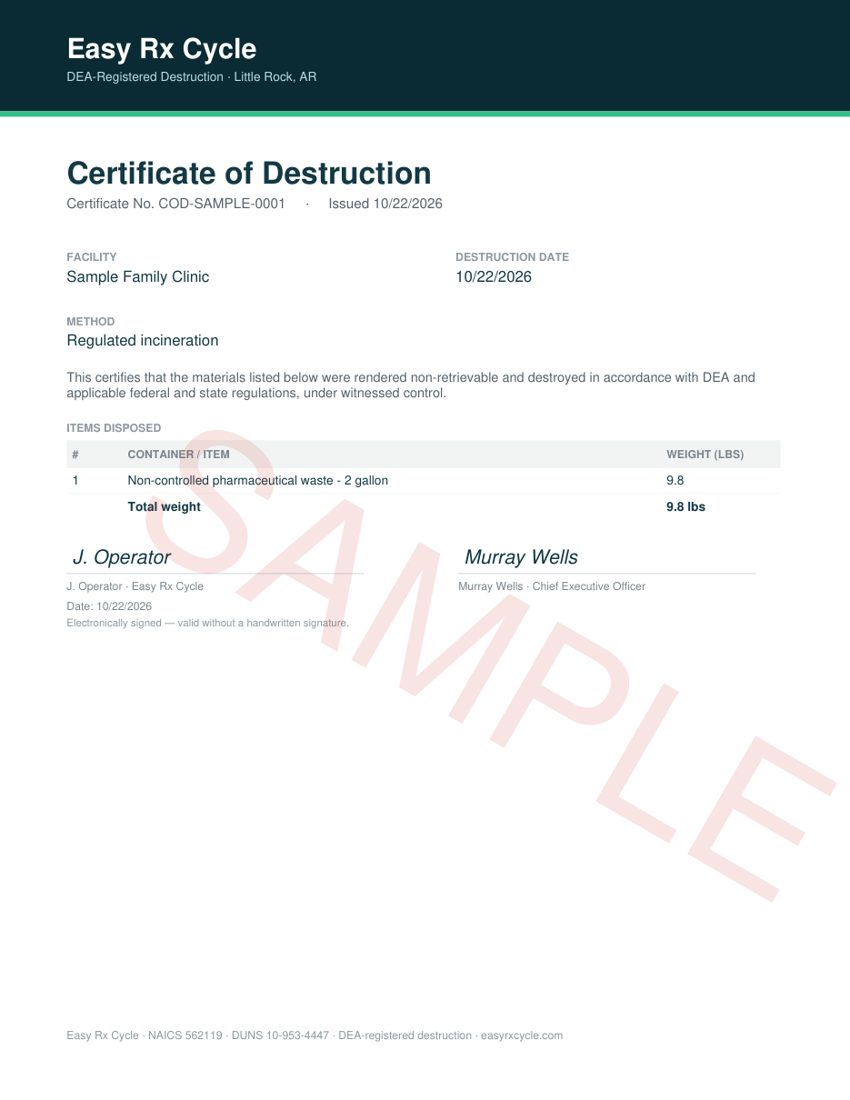
A Certificate of Destruction listing the containers and their weights (individual drugs aren't itemized).
- Blue container.
- Not controlled, not hazardous.
- Unsure if hazardous? Treat it as hazardous.
- Regulated incineration.
- COD lists containers by weight.