
Controlled Substance & Rx Disposal for closed-door / institutional pharmacies.
Closed door pharmacy pharmaceutical waste disposal has to satisfy the same DEA and EPA rules as any pharmacy, with institutional-scale volume. As a DEA-registered reverse distributor we destroy controls non-retrievably (DEA paperwork prepared by us) and segregate RCRA-hazardous drugs — with audit-ready documentation and a Certificate of Destruction.
Questions? Talk to a specialist · 501-904-2929
Kits for closed-door / institutional pharmacies
Order online. Each kit ships with a prepaid return label and a Certificate of Destruction.
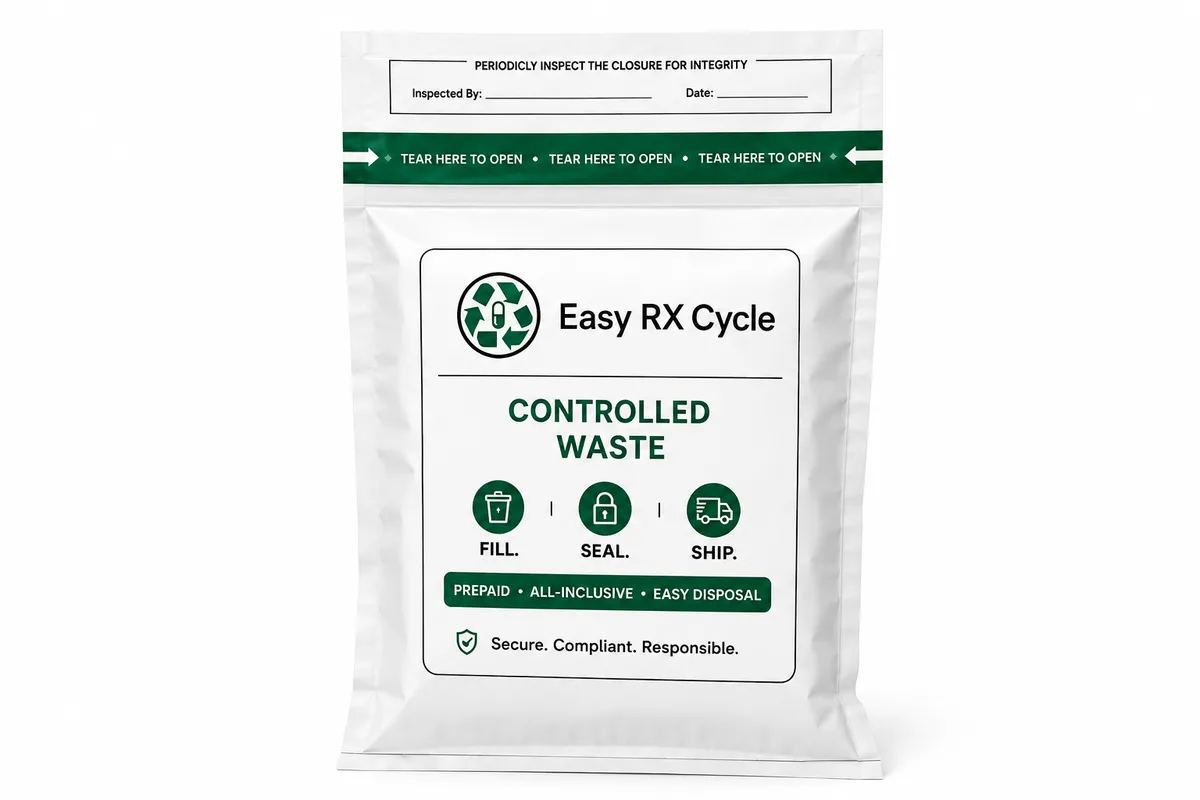
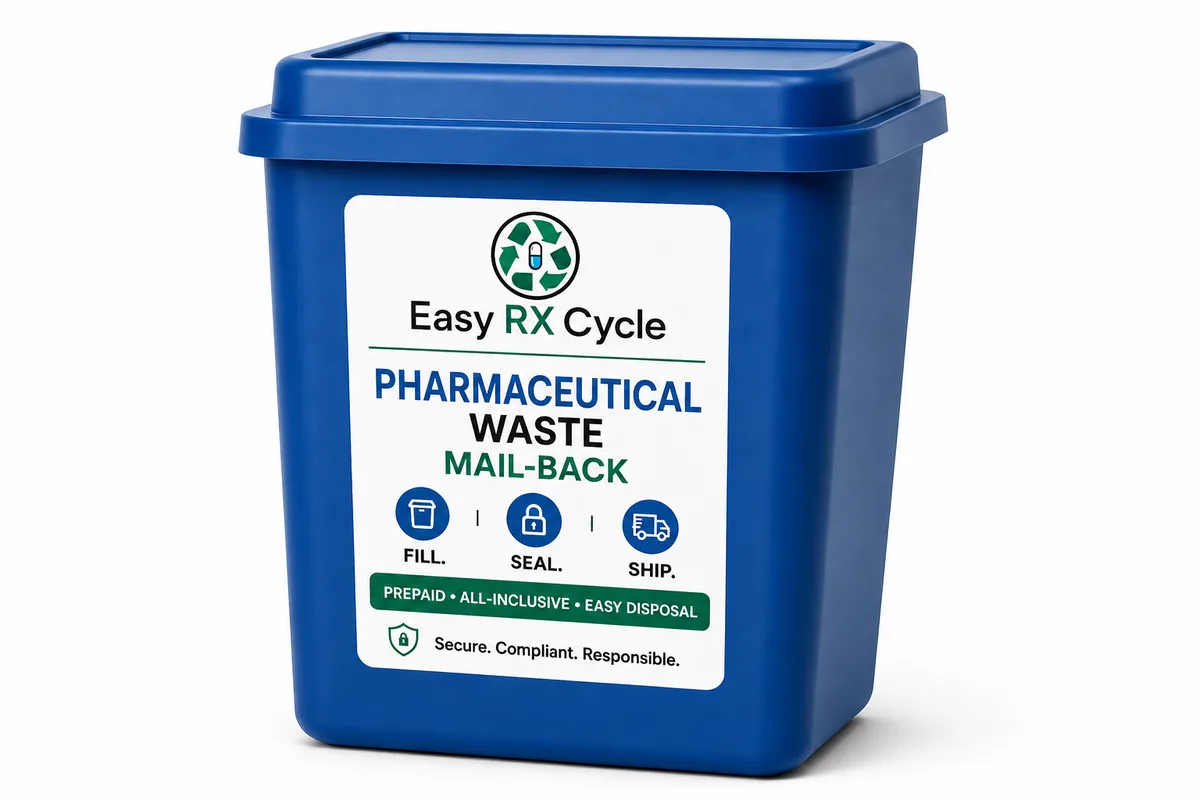
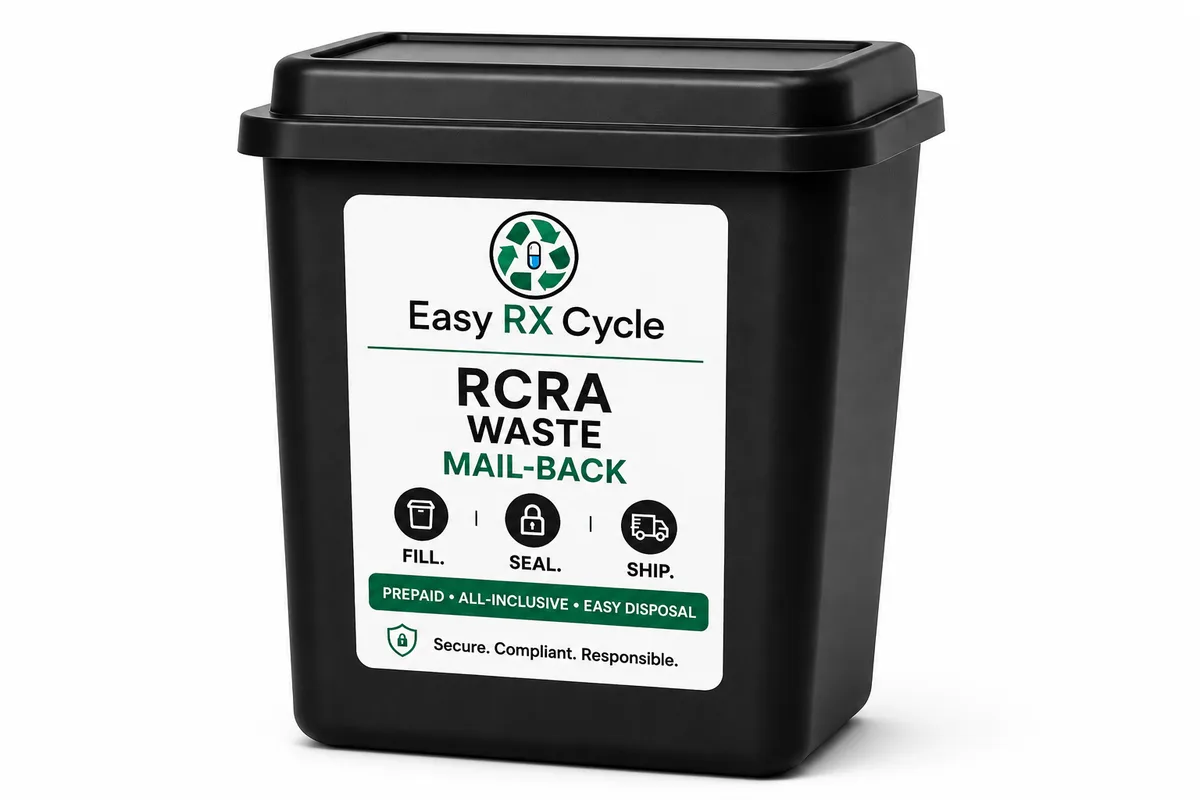
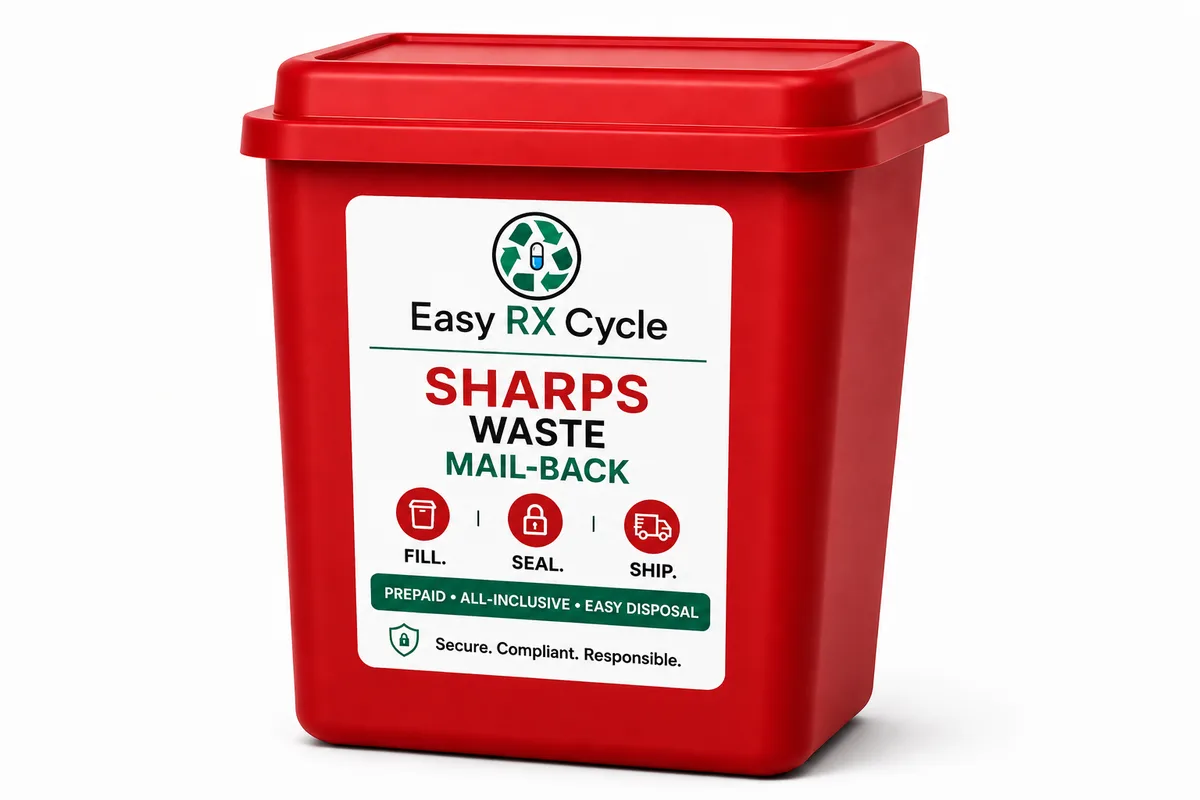
What you actually throw out.
From Controlled substances (Schedules II–V) to Expired & unsellable Rx — here’s what closed-door / institutional pharmacies generates — and how each stream stays compliant.
- Controlled substances (Schedules II–V)
- Expired & unsellable Rx
- Stock your returns company won't take
- RCRA-hazardous drugs (segregated)
- Audit-ready DEA & EPA documentation
Every closed-door pharmacy waste stream, explained.
Closed-door and institutional pharmacies serve long-term care — which means resident medication returns, blister-pack and unit-dose waste, and controlled substances with strict audit requirements. The volume of returns from facilities makes systematic, documented destruction essential. This guide covers every stream.
Controlled substances
Resident controlled-substance returns from LTC facilities — the stream with the strictest audit trail.
- Expired / unused Schedule I–V stock
- Returns of controls (per program)
- Partial & wasted doses
- Non-controlled meds (pharmaceutical kit)
- Sharps
Pharmaceutical waste (non-hazardous)
Blister-pack, unit-dose, and resident medication returns (non-controlled, non-hazardous).
- Expired non-controlled, non-hazardous Rx
- OTC & compounded non-haz product
- Samples
- Controlled substances
- RCRA-hazardous drugs
- Sharps
Reverse distribution & returns
Expired and unused stock your returns company won't take, destroyed with documentation.
- Expired / unused Rx your returns company won't take
- Overstock & discontinued inventory
- Manufacturer recalls
- Brand & generic stock
- Opened / adulterated product (destroy only)
- Patient-owned meds
- Sharps
RCRA-hazardous drugs
P/U-listed and characteristic hazardous drugs from returns.
- P-listed (warfarin ≥0.3%, nicotine, epinephrine)
- U-listed drugs
- Characteristic waste (ignitable, toxic)
- Certain chemotherapy agents
- Non-hazardous pharmaceuticals
- Controlled substances (own path)
Sharps
From any facility-administered injectables you handle.
- Immunization needles & syringes
- Lancets
- Point-of-care testing sharps
- Non-sharp meds
- Bloody gauze (biohazard)
We handle LTC resident returns and pharmacy waste — controlled and non-controlled — with non-retrievable destruction, DEA paperwork prepared by us, and audit-ready Certificates of Destruction. No contract. Get the full guide (free PDF) →
The Closed-Door Pharmacy's Guide to Compliant Waste Disposal
Resident returns, blister packs & controls — audit-ready, chain-of-custody destruction for LTC. Includes a checklist, cheat sheet & FAQ.
Everything you generate, handled.
Every stream you generate, routed to the right compliant process.
Simple, documented, on your schedule.
Set up your program
We size containers to your volume and set a mail-back or pickup cadence.
Fill & seal
Use the labeled containers; segregate each stream at the point of use.
Ship or pickup
Prepaid mail-back label or a scheduled pickup — whatever fits your volume.
Get your COD
We destroy it and email your Certificate of Destruction, archived to your account.
Compliance, covered.
- DEA-registered non-retrievable destruction (Form 41)
- Certificate of Destruction on every order
Related industries, solutions & guides.
Related industries
Solutions you’ll use
Closed-door / institutional pharmacies disposal questions.
How does a closed-door or institutional pharmacy dispose of controlled substances?
Through a DEA-registered reverse distributor — controls destroyed non-retrievably with the DEA paperwork prepared by us, with audit-ready documentation.
Do you process returns for manufacturer credit?
No — we are destruction only. Keep your returns company for credit; we destroy everything else.
Do you segregate RCRA-hazardous drugs?
Yes — hazardous pharmaceuticals are segregated and manifested to a permitted facility.
Is documentation audit-ready?
Yes — Form 222, Form 41, chain-of-custody, and Certificates of Destruction are archived for DEA, state, and institutional audits.
How do we handle controlled-substance returns from LTC facilities?
Through DEA-registered reverse distribution — logged, rendered non-retrievable, with Form 41 and full chain-of-custody documentation.
What about blister packs and unit-dose returns?
Non-controlled, non-hazardous returns are destroyed as pharmaceutical waste with documentation.
Do you provide audit-ready records?
Yes — Certificates of Destruction and return documentation for every batch.
Do we need a contract?
No — no contract, no minimums.
Get a compliant quote.
Pharmaceutical waste, Controlled substance destruction, Reverse distribution — segregated, destroyed, and documented, with no contract.