
The School Health Office's Guide to Compliant Waste Disposal
A plain-English reference to every regulated waste stream a school health office generates — student sharps, expired EpiPens, and unclaimed medications — and how to handle each right.
What’s inside
- Student diabetic & emergency sharps
- Expired EpiPens — which container your state expects
- Unclaimed & year-end student medications
- A school health checklist, cheat sheet & FAQ
Who it’s for: School nurses, district health coordinators, and administrators.
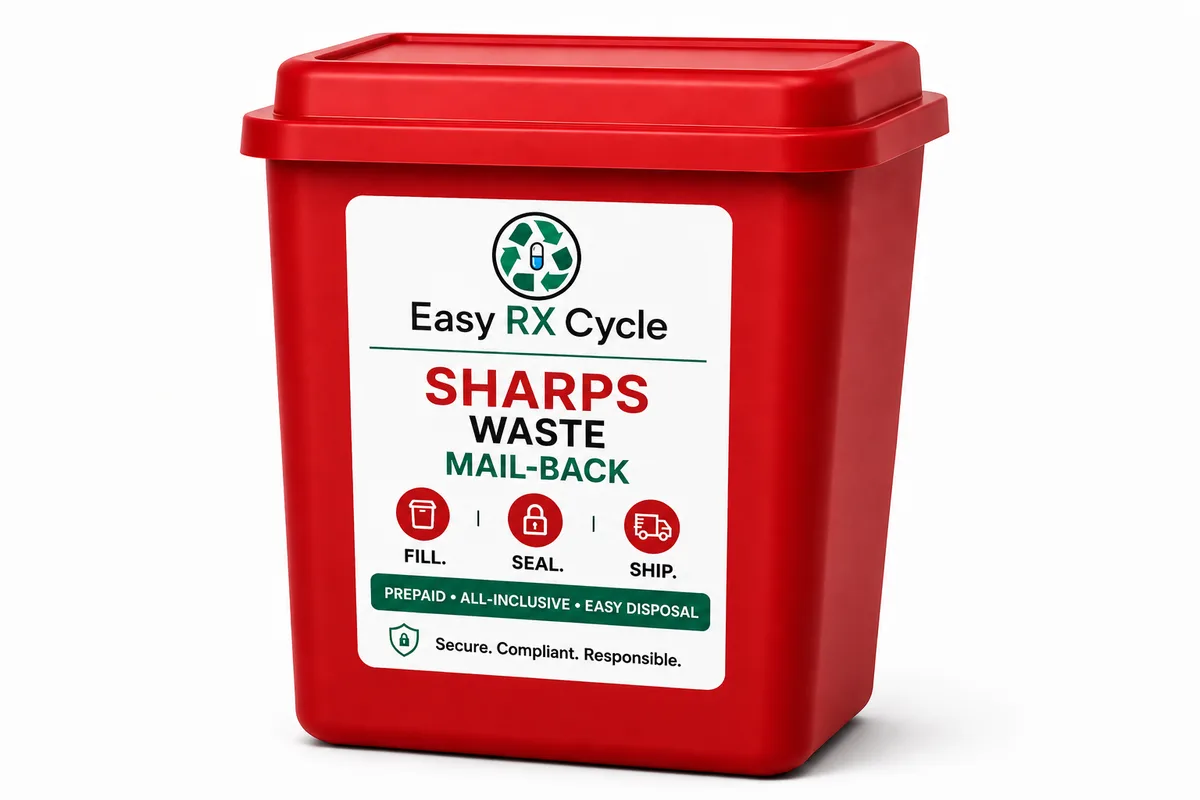
Needles, syringes, lancets and pen needles. FDA-cleared container, prepaid both ways. Certificate of Destruction on every order. No contract.
The Health Office Is a Small Clinic
A school nurse manages diabetic students' insulin pens, needles, and lancets; emergency epinephrine; and a drawer of student medications that families never pick up. It looks low-volume, but the obligations are real: needlesticks endanger staff and students, and expired EpiPens are the stream schools most often mishandle, dropping them in the trash when federal rules say otherwise. Any controlled student medication kept in the office adds a DEA obligation on top. Each of these needs its own container and its own endpoint, and the fact that it all happens in one small office — rather than a hospital — is exactly why the requirements get overlooked. Treating the nurse's office like the small clinic it functionally is closes most of the risk.
Which Regulations Reach the School Office
Student diabetic and emergency sharps are regulated under OSHA's Bloodborne Pathogens Standard, 29 CFR 1910.1030, which governs FDA-cleared sharps containers and exposure control. Expired EpiPens contain epinephrine, which appears on EPA's RCRA P-list (P042) under 40 CFR; EPA has said that listing does not cover epinephrine salts, and states differ on how unused auto-injectors are managed, so they must be routed the way your state directs rather than tossed in the trash or mixed with ordinary medications. Unclaimed student medications require destruction that prevents reuse; non-controlled meds are handled as pharmaceutical waste, while any controlled student medications fall under DEA 21 CFR 1317 and go out through an authorized path, such as mail-back for incineration. Three federal frameworks reach a single office drawer, which is more than most schools expect and the reason a documented routine matters.
The EpiPen Mistake Schools Make Most
The most common school-health error is treating an expired epinephrine auto-injector like regular waste. Epinephrine appears on the RCRA P-list, and many programs manage an expired, unused EpiPen as hazardous waste once it is discarded; EPA has said the listing does not reach epinephrine salts, so the exact route depends on your state. Either way, it does not belong in the classroom trash, and it does not belong in the general medication take-back bin. It has to be segregated and sent to the destruction path your state requires. Schools accumulate these as auto-injectors reach expiry across many students, so the pile is predictable and worth a dedicated container held apart from both the sharps and the medication waste. Getting this one stream right is often the single biggest compliance improvement a district can make, because it is the item most often mishandled in the office. When in doubt about whether an item is P-listed, segregate it and confirm rather than let it default into the trash, since the cost of over-segregating a hazardous drug is trivial next to the cost of a RCRA violation for sewering or landfilling one.
Sharps, Meds, and On-Site Options
The sharps stream is straightforward: student insulin pens, needles, lancets, and any emergency injection sharps go into an FDA-cleared, puncture-resistant container kept upright, closable, and out of student reach, swapped at the fill line. Expired and unclaimed non-controlled student medications — especially the end-of-year cleanout — route to pharmaceutical waste, destroyed with documentation rather than flushed or trashed. For any controlled student medications, follow your district's policy for returning them to the family; anything left behind goes out in a mail-back package for incineration, with documented destruction. Keeping hazardous drugs like epinephrine and any controls segregated first means everything else falls cleanly into the sharps or pharmaceutical bucket without a judgment call under pressure.
District-Wide Disposal Made Routine
Easy Rx Cycle provides compliant, FDA-cleared sharps containers, correct hazardous-waste routing for expired EpiPens, and a documented process for unclaimed and year-end student medications — all as a DEA-registered company that keeps the streams separate and returns a Certificate of Destruction. Schools order kits as needed with no contract or monthly minimum, which fits the low, uneven volume of a nurse's office. District health coordinators can standardize the same setup across every building so one school isn't managing sharps correctly while another drops EpiPens in the trash. That standardization is what turns a scattered set of office habits into a defensible, district-wide program.
Start With a Building-by-Building Inventory
The practical first step is a simple inventory of each office before the school year starts or ends. Walk each building and account for the sharps container in use, the expired auto-injectors accumulating in the cabinet, and the leftover and unclaimed medications in the drawer, noting anything controlled. That inventory almost always surfaces the two gaps that matter: expired EpiPens sitting with ordinary waste, and end-of-year medications with no documented destruction endpoint. Fixing those first, then standardizing the containers and the routine across the district, gives every nurse the same compliant setup. A coordinator who runs this check each year keeps the whole district ahead of the problem rather than reacting to it.
Needles, syringes, lancets and pen needles. FDA-cleared container, prepaid both ways. Certificate of Destruction on every order. No contract.
DEA, EPA and state rule changes that affect disposal, plus seasonal reminders. No spam, unsubscribe anytime.
Epinephrine auto-injectors (EpiPens): disposal FAQ
Where does a used EpiPen go?
In the sharps container. A used auto-injector carries a needle that has been in a person, so it is a contaminated sharp and goes in the same FDA-cleared container as insulin pen needles and lancets. EPA has said epinephrine left in a syringe after an injection is not a P-listed waste (RCRA Online 13718), so a used pen does not need a hazardous waste container.
Where does an expired, unused EpiPen go?
Never in the trash. Epinephrine appears on EPA's RCRA P-list as P042, but EPA has said that listing does not cover epinephrine salts (RCRA Online 14778, 2007), and states take different positions on unused auto-injectors. Depending on your state, an expired pen goes in the sharps container, a pharmaceutical waste container, or a hazardous waste container. Ask your state environmental agency, or call us and we will tell you which container fits your state.
Can expired EpiPens go back with leftover student medications?
Keep them separate. The pen has a needle, and in some states it is managed as hazardous waste, so it should not ride along in a general medication bin. Hold expired pens in their own labeled container until they ship.
Who handles disposal of a student's own EpiPen?
Follow your district's medication policy, which may call for returning unused or expired student medications to the parent or guardian. Anything left in the office after that goes through the school's own sharps or pharmaceutical waste path, never the trash.
Sharps Mail-Back Kit
For used auto-injectors, insulin pen needles and lancets. FDA-cleared container, prepaid both ways, with a Certificate of Destruction. Not sure where your state puts expired, unused pens? Call 501-904-2929.
Shop the kit · from $55 →Kits for school & k-12 health
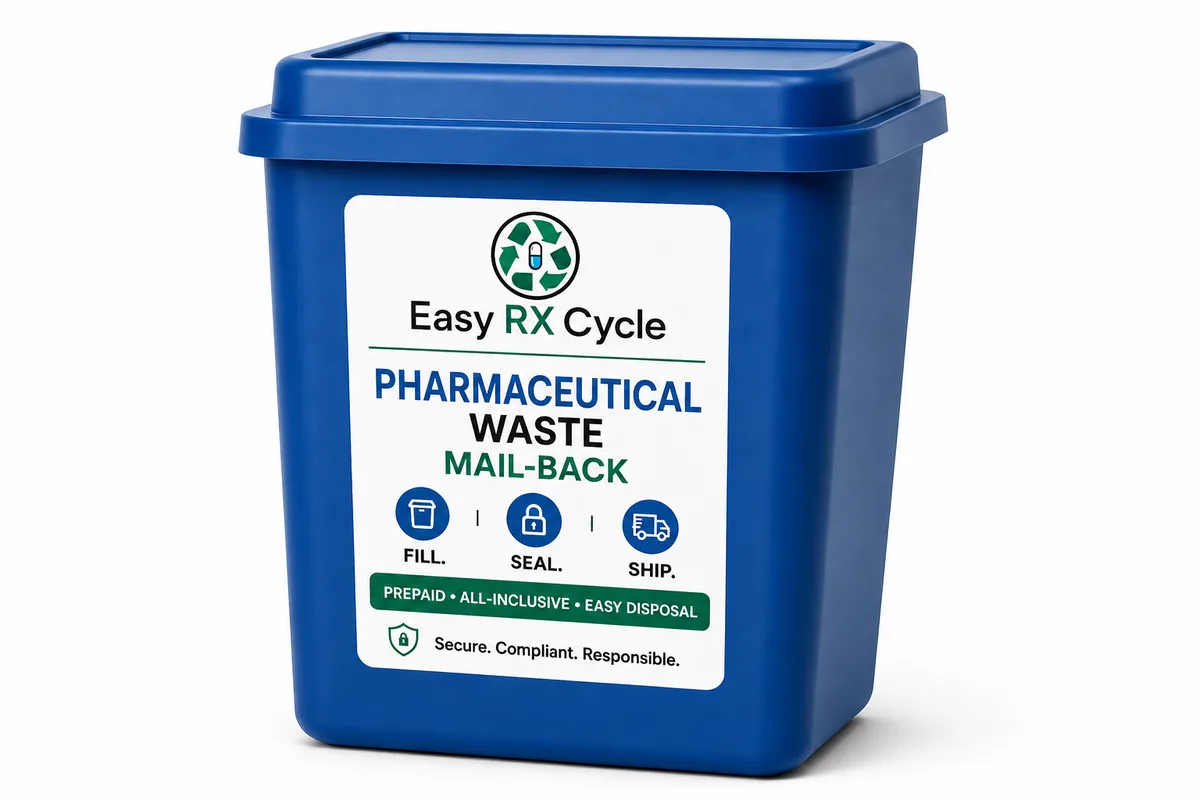
Prepaid both ways, one waste stream per kit, with a Certificate of Destruction on every mail-back order.
Ready to hand it off entirely?
Easy Rx Cycle handles every regulated waste stream — mail-back or pickup, with a Certificate of Destruction every time.