
Hazardous vs. Non-Hazardous Pharmaceutical Waste
Not all drug waste is the same — and the single biggest pharmaceutical-waste mistake is putting a hazardous drug in the non-hazardous bin. Here’s how to tell hazardous from non-hazardous pharmaceutical waste, and why it matters.
P-listed, U-listed and characteristic hazardous drugs, destroyed to EPA rules. Certificate of Destruction on every order. No contract.
In this guide
Hazardous pharmaceutical waste
Under EPA RCRA, certain drugs are hazardous waste: P-listed (warfarin, nicotine, epinephrine), U-listed, and characteristic drugs (ignitable, corrosive, toxic). These must be segregated, manifested, and destroyed as RCRA-hazardous pharmaceutical waste — and never sewered.
Non-hazardous pharmaceutical waste
Most medications — saline, antibiotics, OTC drugs, topicals, expired vitamins — aren’t RCRA-hazardous, but still can’t be flushed or trashed loosely. They go in designated pharmaceutical waste containers for compliant destruction.
Mail-back kits for each stream
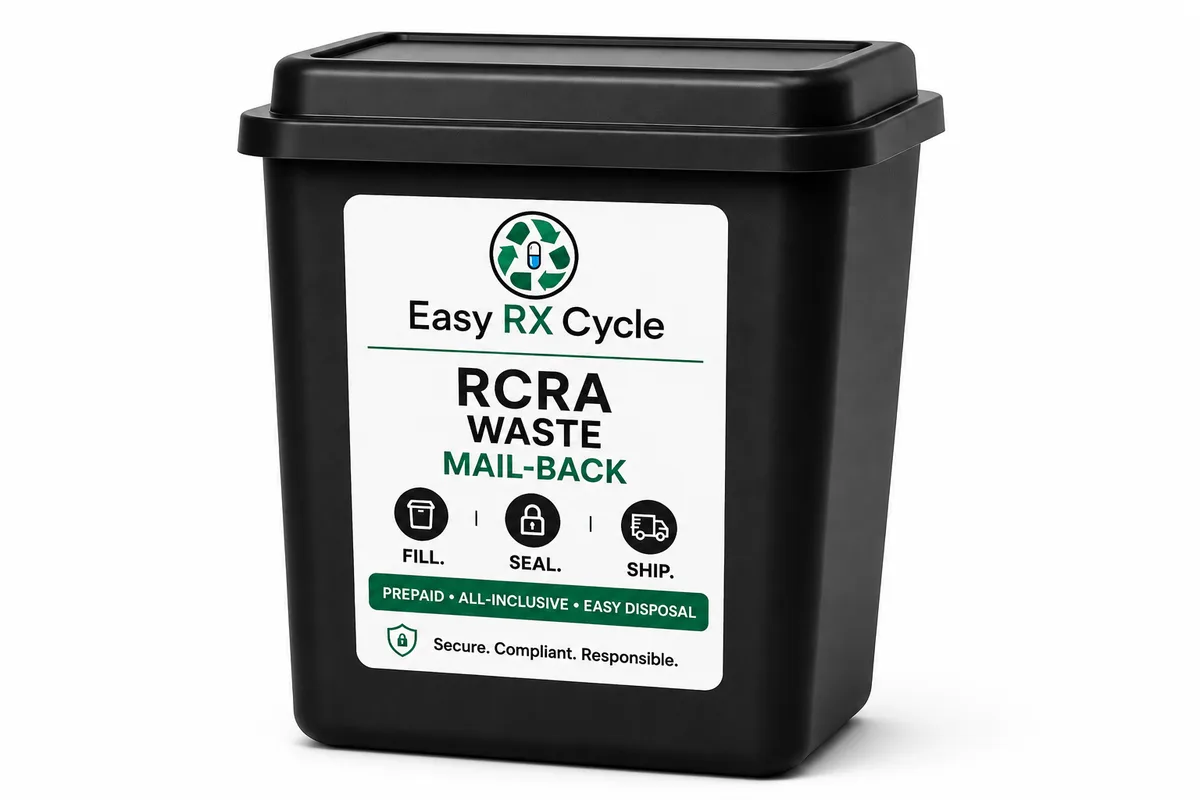
Non-hazardous drugs go in our Pharmaceutical Waste Mail-Back Kit, priced from $100. RCRA-hazardous drugs go in an RCRA hazardous kit, from $145. Controlled drugs go in a separate controlled substance kit (from $499), and we handle the DEA paperwork. Each kit includes a container, prepaid return shipping and instructions, and we send a Certificate of Destruction when the contents are destroyed. No contract.
Why the difference matters
Misclassifying a hazardous drug as non-hazardous (or sewering it) is the most common — and most cited — pharmaceutical-waste violation. We identify and route each stream correctly. See our pharmaceutical waste disposal service.
P-listed, U-listed and characteristic hazardous drugs, destroyed to EPA rules. Certificate of Destruction on every order. No contract.
DEA, EPA and state rule changes that affect disposal, plus seasonal reminders. No spam, unsubscribe anytime.
Segregate your pharmaceutical waste right.
We identify hazardous vs. non-hazardous vs. controlled, and route each to the right compliant process — documented every time.
Frequently asked questions
What's the difference between hazardous and non-hazardous pharmaceutical waste?
Hazardous pharmaceutical waste is RCRA-regulated (P-listed, U-listed, or characteristic drugs) and must be manifested; non-hazardous pharmaceutical waste isn't RCRA-hazardous but still needs compliant, non-sewer disposal.
How do I know if a drug is hazardous waste?
Check whether it's P-listed, U-listed, or exhibits a hazardous characteristic (ignitable, corrosive, toxic). Common hazardous drugs include warfarin, nicotine, and epinephrine. We help you identify them.
Can I flush non-hazardous medications?
No — flushing is discouraged for nearly all medications and prohibited for hazardous pharmaceuticals. Use compliant pharmaceutical waste disposal.
What happens if hazardous drugs go in the wrong bin?
It's a RCRA violation with real fines. Correct segregation at the point of generation is the key to compliance.