
How to Dispose of Controlled Drugs for Surgery Centers
Ambulatory surgery centers run on controlled substances — anesthesia and pain medications, much of it Schedule II. With limited staff wearing many hats, compliant disposal has to be simple and airtight. Here’s how to do it right.
Schedules I–V, sized by weight. We do all the DEA paperwork and destroy it non-retrievably. Certificate of Destruction on every order. No contract.
In this guide
What controlled drugs does surgery centers handle?
The DEA schedules the controlled substances surgery centers commonly stock:
- Schedule II: Fentanyl, morphine, hydromorphone, remifentanil
- Schedule III: Ketamine, buprenorphine
- Schedule IV–V: Midazolam, diazepam, lorazepam
All of these are strictly regulated under federal and state law, and each must be disposed of through a compliant, documented process.
Why proper disposal matters
Improper disposal is a licensure and liability problem, not just paperwork. The risks: DEA fines or license revocation, environmental contamination, drug diversion or theft, and failed audits with criminal exposure. High Schedule II volume and wasted partial vials from procedures make accurate logging and disposal especially important.
DEA-compliant disposal options
1. Use a DEA-registered reverse distributor (recommended)
The most reliable, compliant option. A DEA-registered reverse distributor collects, transports, and destroys your controls — handling DEA Form 222 for Schedule II, preparing Form 41, tracking chain of custody, and issuing a Certificate of Destruction. See our controlled substance destruction service.
2. Mail-back programs
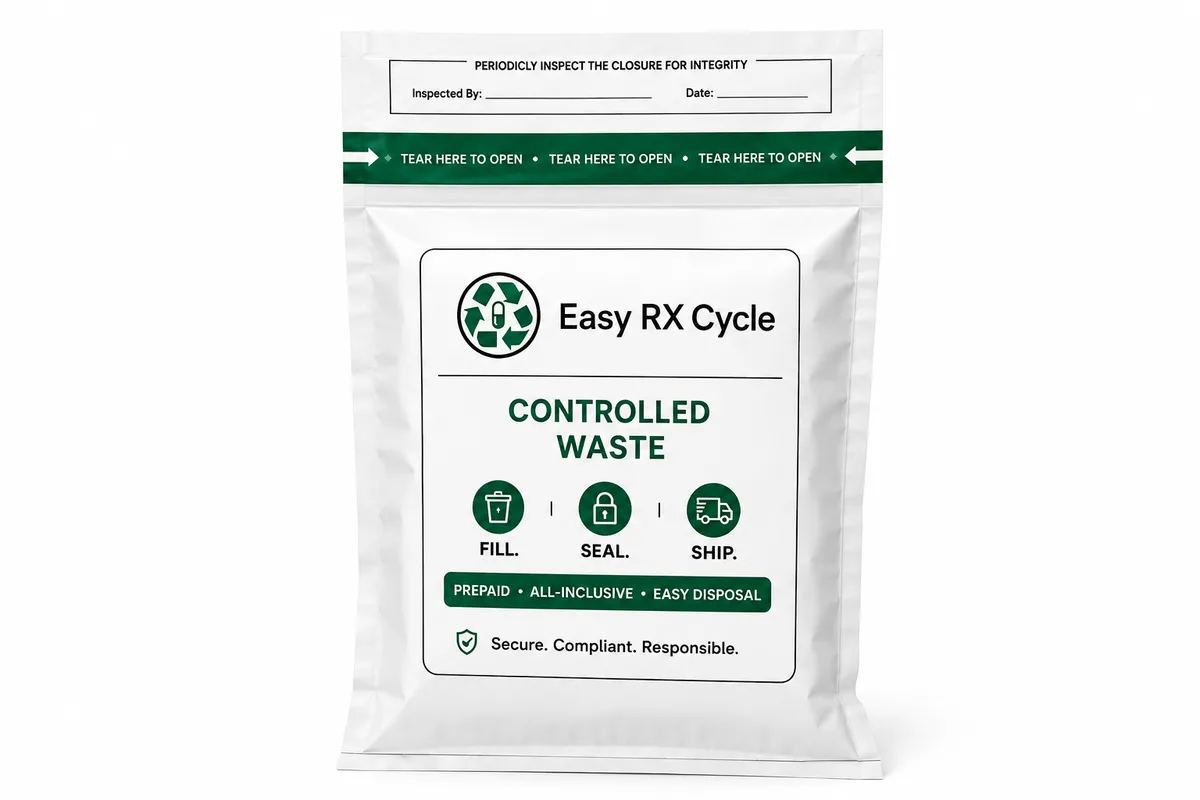
Secure, tamper-evident controlled substance mail-back kits with prepaid shipping — ideal for lower-volume or distributed sites. Fill it, seal it, ship it; we handle the DEA paperwork.
Mail-back kits for surgery centers
For expired or damaged controlled stock at a single-site surgery center, our Controlled Substance Mail-Back Kit is the simplest compliant option, priced from $499. Each kit includes a tamper-evident mailer, prepaid return shipping and instructions. We handle the DEA paperwork, complete the Form 41 when we destroy the contents, and send your Certificate of Destruction. No contract.
The DEA forms you must know
Two forms cover you: DEA Form 41 and Form 222. When you use Easy Rx Cycle, we handle the DEA paperwork, including Form 222 for Schedule II transfers and Form 41 for destruction of any Schedule I–V drug. Keep the forms and your Certificates of Destruction for at least two years, and log everything in your controlled-substance log.
Common mistakes that fail audits
- Flushing controlled drugs (prohibited by DEA and EPA)
- Mixing them into general or regulated medical waste
- Missing or incomplete DEA Form 222 or 41
- Failing to log witness signatures or destruction events
- Working with an unlicensed vendor
Controlled-drug disposal checklist for surgery centers
- Maintain an accurate controlled-substance log
- Review inventory regularly for expired stock
- Segregate expired controls securely
- Use a DEA-registered reverse distributor
- Complete DEA Forms 222 and 41
- Retain records and CODs for two years
- Schedule disposal every 30 to 90 days based on volume
Schedules I–V, sized by weight. We do all the DEA paperwork and destroy it non-retrievably. Certificate of Destruction on every order. No contract.
DEA, EPA and state rule changes that affect disposal, plus seasonal reminders. No spam, unsubscribe anytime.
Get a DEA-compliant quote for surgery centers.
We handle the forms, render your controls non-retrievable, and send a Certificate of Destruction — nationwide, flat-rate, no contracts.
Frequently asked questions
How do surgery centers dispose of wasted anesthesia drugs?
Partial vials and wasted controlled substances are logged, witnessed, and routed to a DEA-registered reverse distributor for non-retrievable destruction — never flushed or trashed.
Do ASCs need DEA Form 222?
Yes, for transferring Schedule II drugs like fentanyl and morphine to a reverse distributor. Form 41 documents the destruction.
What's the best disposal option for a small surgery center?
A DEA-registered reverse distributor with scheduled pickup or mail-back kits — compliant, documented, and low-overhead for limited staff.
How long do we keep disposal records?
At least two years — DEA Forms 222 and 41, Certificates of Destruction, and controlled-drug logs.
What should we do with expired controlled substances?
Transfer them to a DEA-registered reverse distributor for incineration. The reverse distributor handles the Form 222 for Schedule II, completes DEA Form 41, and returns a Certificate of Destruction, so your team never has to destroy inventory itself.