
Drug Diversion in Healthcare: Prevention, Detection & Disposal
Drug diversion — controlled substances slipping away from their intended patient or purpose — is one of the biggest DEA and patient-safety risks a facility carries. Most programs focus on dispensing and wasting, and overlook the disposal step. Here’s where diversion happens, how to prevent and detect it, and why documented, non-retrievable destruction is the control that closes the loop.
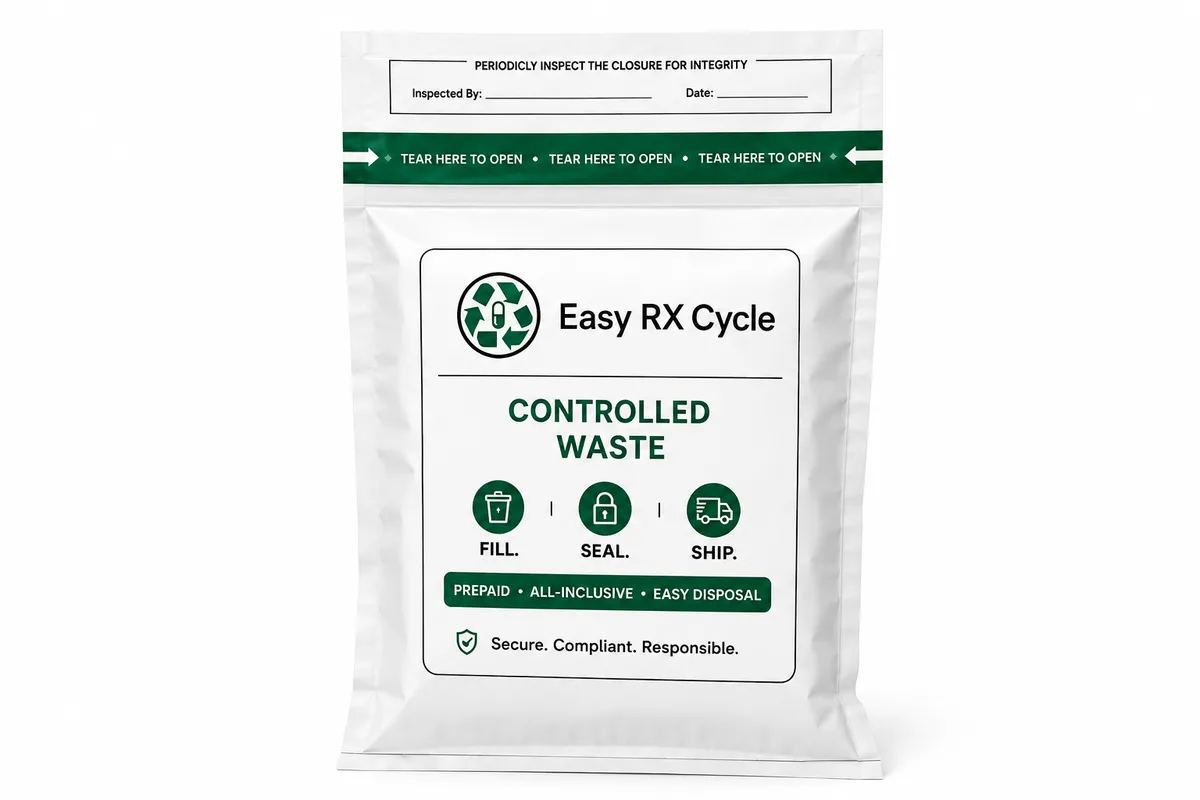
Schedules I–V, sized by weight. We do all the DEA paperwork and destroy it non-retrievably. Certificate of Destruction on every order. No contract.
In this guide
What is drug diversion?
Drug diversion is the transfer of a controlled substance away from the patient or purpose it was legally intended for. In healthcare, that usually means a staff member taking medication meant for a patient — but it also covers falsified wasting, inventory shrinkage, and unaccounted-for stock. Beyond the human cost, every diversion event is a DEA compliance failure that lands on the facility’s registrant.
Where diversion happens in a facility
Diversion clusters around a handful of predictable weak points:
- Wasting. Partial doses that aren’t fully witnessed or are documented after the fact — the most common gap.
- Automated dispensing cabinets. Overrides, discrepancies, and transactions that never get reconciled.
- Procurement & inventory. Counts that don’t match records, and expired stock that lingers on the shelf.
- Disposal. Expired and wasted controlled substances destroyed without documentation — a gap a diverter can hide inside.
Prevention & detection strategies
No single control stops diversion; layered controls do:
- Two-person witnessed wasting recorded in real time — not reconstructed later.
- Reconcile dispensing-cabinet transactions and follow up on every discrepancy.
- Routine inventory audits with documented investigation of variances.
- Restricted access and role separation so no one person controls a drug end to end.
- Documented destruction of expired and wasted controls, so the disposal step is closed, not open.
The disposal blind spot
Most diversion programs stop at wasting and never look at disposal — yet expired and wasted controlled substances waiting to be destroyed are a live diversion risk until they’re gone. The DEA requires controls to be rendered non-retrievable (21 CFR 1317) and documented on DEA Form 41 (with Form 222 for Schedule II transfers). A DEA-registered destruction partner and a Certificate of Destruction on every event give you an unbroken chain of custody from the shelf to final destruction — no gap for a diverter to exploit.
Building a defensible program
If the DEA ever asks, what protects you is documentation: witnessed-wasting logs, reconciliations, audit records, and destruction paperwork that ties every controlled substance to a documented end. Easy Rx Cycle handles the disposal side — non-retrievable controlled-substance destruction with Form 41/222 and a Certificate of Destruction, plus reverse distribution for returnable stock — so the last link in your diversion-control chain is airtight.
Schedules I–V, sized by weight. We do all the DEA paperwork and destroy it non-retrievably. Certificate of Destruction on every order. No contract.
DEA, EPA and state rule changes that affect disposal, plus seasonal reminders. No spam, unsubscribe anytime.
Close the disposal gap in your diversion program.
DEA-registered, non-retrievable controlled-substance destruction with Form 41/222 and a Certificate of Destruction on every event.
Frequently asked questions
What is drug diversion?
Drug diversion is the transfer of a legally prescribed controlled substance from the person or purpose it was intended for to someone else — for example, a healthcare worker taking medication meant for a patient. In healthcare it most often happens around wasting, dispensing discrepancies, and unaccounted-for inventory.
Where does drug diversion happen in a facility?
The highest-risk points are drug wasting (partial doses not fully witnessed or documented), automated dispensing cabinet discrepancies, procurement and inventory gaps, and the disposal step — where undocumented destruction of expired or wasted controlled substances creates an opening. Tight documentation at each step is the defense.
How do you prevent drug diversion?
Layer controls: two-person witnessed wasting recorded in real time, reconciliation of automated dispensing cabinet transactions, routine inventory audits and discrepancy follow-up, restricted access, and — critically — documented, non-retrievable destruction of expired and wasted controlled substances so nothing leaves the facility unaccounted for.
How does disposal relate to diversion?
Disposal is a diversion control point people overlook. Expired, unusable, and wasted controlled substances must be rendered non-retrievable and documented on DEA Form 41 (with Form 222 for Schedule II transfers) and a Certificate of Destruction — so there's a clean chain of custody from the shelf to final destruction, with no gap a diverter can exploit.
What are the penalties for drug diversion?
Diversion exposes a facility and its DEA registrant to DEA enforcement, civil monetary penalties, loss of registration, and reputational and patient-safety harm. Strong witnessed-wasting logs, reconciliations, and documented destruction records are what demonstrate a good-faith compliance program if the DEA ever asks.