
How to Dispose of Controlled Drugs for Dental Clinics
Dental practices handle more controlled substances than you’d think — sedation and anti-anxiety drugs, plus the occasional post-op opioid — which makes a dental clinic a DEA registrant. Here’s how to dispose of controlled drugs compliantly.
Schedules I–V, sized by weight. We do all the DEA paperwork and destroy it non-retrievably. Certificate of Destruction on every order. No contract.
In this guide
What controlled drugs does dental clinics handle?
The DEA schedules the controlled substances dental clinics commonly stock:
- Schedule II: Occasional post-operative opioids
- Schedule III: Ketamine (oral surgery)
- Schedule IV–V: Diazepam, triazolam, midazolam (sedation)
All of these are strictly regulated under federal and state law, and each must be disposed of through a compliant, documented process.
Why proper disposal matters
Improper disposal is a licensure and liability problem, not just paperwork. The risks: DEA fines or license revocation, environmental contamination, drug diversion or theft, and failed audits with criminal exposure. Sedation and anti-anxiety controls that expire between uses are an easy thing to let accumulate — and a diversion risk if they do.
DEA-compliant disposal options
1. Use a DEA-registered reverse distributor (recommended)
The most reliable, compliant option. A DEA-registered reverse distributor collects, transports, and destroys your controls — handling DEA Form 222 for Schedule II, preparing Form 41, tracking chain of custody, and issuing a Certificate of Destruction. See our controlled substance destruction service.
2. Mail-back programs
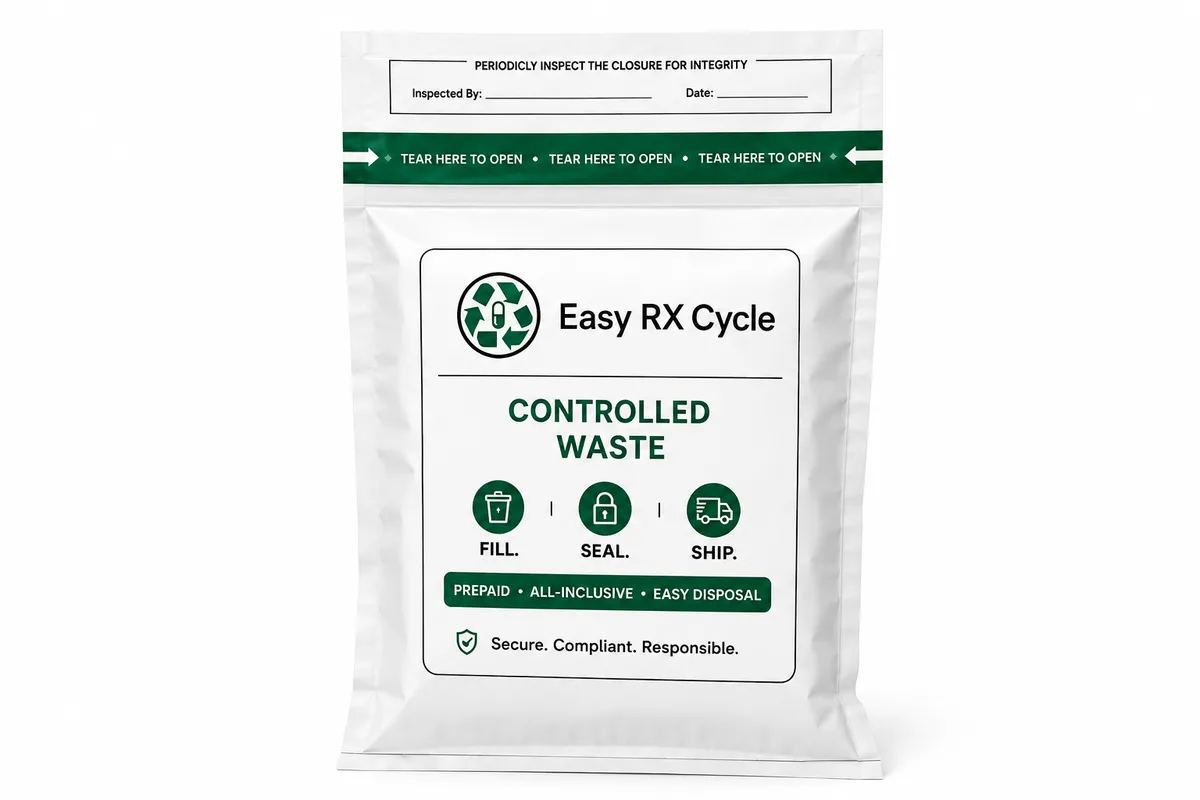
Secure, tamper-evident controlled substance mail-back kits with prepaid shipping — ideal for lower-volume or distributed sites. Fill it, seal it, ship it. We incinerate the contents and complete the DEA Form 41 as the destroying registrant.
3. On-site pickup for larger cleanouts
Retiring a sedation program, selling the practice, or consolidating offices in a DSO? A reverse distributor can pick up at your office. It’s the same end result as mail-back: incineration, Form 41 completed by the reverse distributor, and a Certificate of Destruction. Get a quote or call 501-904-2929.
Benzodiazepines and sedation drugs
Oral and IV sedation is where most dental offices hold controlled substances. Midazolam, diazepam, triazolam, lorazepam and alprazolam are all Schedule IV (21 CFR 1308.14). Ketamine for oral surgery is Schedule III. Any post-op opioid you stock may be Schedule II.
- Expired or unwanted stock is inventory. It stays on your controlled-substance log and in locked storage until it leaves. Then it goes to a DEA-registered reverse distributor for incineration.
- Paperwork by schedule. Schedule III–V drugs, including every benzodiazepine above, move on a written transfer record that lists each drug and quantity. Only Schedule II drugs need a DEA Form 222. The reverse distributor completes Form 41 either way, and you get a Certificate of Destruction.
- Wasted IV doses are different. Leftover midazolam from a dose drawn for a patient is wastage. DEA’s 2014 disposal rule says it is recorded under 21 CFR 1304.22(c), not on Form 41. Record it and have it witnessed under your state dental board’s rules.
Small sedation inventories fit a Controlled Substance Mail-Back Kit, priced from $499.
Anesthetic carpules: partially used, expired and broken
Lidocaine, articaine, mepivacaine and prilocaine aren’t controlled substances, but carpules still trip up dental offices. Sort them by what’s in them:
| Carpule | Where it goes |
|---|---|
| Partially used (drug still in it) | Pharmaceutical waste container, for incineration |
| Expired, unused | Pharmaceutical waste container, for incineration |
| Broken | Sharps container |
| Blood aspirated into it | Sharps or biohazard container |
The federal floor. OSHA’s January 9, 2007 interpretation letter says intact carpules don’t have to go in a sharps container, carpules with visible blood are regulated waste, and broken contaminated carpules fall under the sharps-container rules. OSHA leaves the drug itself to municipal, state and federal pharmaceutical waste rules.
States differ. California’s medical waste program, for example, says a carpule with a pourable amount of anesthetic left is managed as pharmaceutical waste, and that pharmaceutical waste stays out of sharps and red-bag containers because it must be incinerated (CDPH dental waste chart, 2018). Check your state’s medical waste program.
The simple office rule: if there’s drug in it, it goes in the pharmaceutical waste kit. If it’s broken or bloody, it goes in the sharps container. It never goes in the trash with drug still in it.
The DEA forms you must know
Two forms cover you: DEA Form 41 and Form 222. When you use Easy Rx Cycle, we handle the DEA paperwork, including Form 222 for Schedule II transfers and Form 41 for destruction of any Schedule I–V drug. Keep the forms and your Certificates of Destruction for at least two years, and log everything in your controlled-substance log.
Common mistakes that fail audits
- Flushing controlled drugs (prohibited by DEA and EPA)
- Mixing them into general or regulated medical waste
- Missing or incomplete DEA Form 222 or 41
- Failing to log witness signatures or destruction events
- Working with an unlicensed vendor
Controlled-drug disposal checklist for dental clinics
- Maintain an accurate controlled-substance log
- Review inventory regularly for expired stock
- Segregate expired controls securely
- Use a DEA-registered reverse distributor
- Let your reverse distributor handle the DEA paperwork (Form 222 for Schedule II and Form 41)
- Retain records and CODs for two years
- Schedule disposal every 30 to 90 days based on volume
Schedules I–V, sized by weight. We do all the DEA paperwork and destroy it non-retrievably. Certificate of Destruction on every order. No contract.
DEA, EPA and state rule changes that affect disposal, plus seasonal reminders. No spam, unsubscribe anytime.
Get a DEA-compliant quote for dental clinics.
We handle the forms, render your controls non-retrievable, and send a Certificate of Destruction — nationwide, flat-rate, no contracts.
Frequently asked questions
What controlled substances do dental clinics have to dispose of?
Mainly sedation and anti-anxiety drugs (diazepam, triazolam, midazolam), sometimes ketamine for oral surgery, and occasional post-op opioids — all DEA-controlled and requiring compliant disposal.
Do dental offices need a DEA disposal process?
Yes — any practice stocking controlled substances is a DEA registrant and must dispose of them non-retrievable with Form 41 documentation.
How do dental clinics dispose of expired sedatives?
Through a DEA-registered reverse distributor or mail-back kit — rendered non-retrievable, logged, and documented with a Certificate of Destruction.
Is nitrous oxide a controlled substance?
No — nitrous oxide isn't a DEA-scheduled controlled substance, but the sedatives and opioids a dental office stocks are.
How do we dispose of partially used or expired anesthetic carpules?
Lidocaine, articaine and other local anesthetics aren't controlled, but a carpule with drug left in it is pharmaceutical waste. Put partially used and expired carpules in a pharmaceutical waste container for incineration, not the trash or the red bag. Broken carpules and carpules with aspirated blood go in the sharps container. State rules vary, so check yours.
Do anesthetic carpules have to go in a sharps container?
Not when they're intact. OSHA's 2007 interpretation letter says intact carpules don't have to go in a sharps container, carpules with visible blood are regulated waste, and broken contaminated carpules fall under the sharps-container rules. The drug inside is governed by state and federal pharmaceutical waste rules.
What schedule are midazolam, diazepam and triazolam?
Schedule IV (21 CFR 1308.14). Expired or unwanted stock is controlled inventory: keep it logged and locked, then transfer it to a DEA-registered reverse distributor on a transfer record. No Form 222 is needed for Schedule IV; the reverse distributor completes Form 41.