
The Medical Cannabis Guide to DEA-Compliant Disposal
A plain-English guide to disposal now that medical cannabis is Schedule III: what DEA registration requires, how unsellable product gets destroyed with records, and the other regulated streams around it.
What’s inside
- What Schedule III and DEA registration mean for disposal
- Destroying expired, damaged and returned product with records
- The November 29 trading-partner checklist
- Extraction solvents and vape hardware, plus a compliance checklist
Who it’s for: Compliance and operations leaders at medical cannabis dispensaries, manufacturers and distributors.
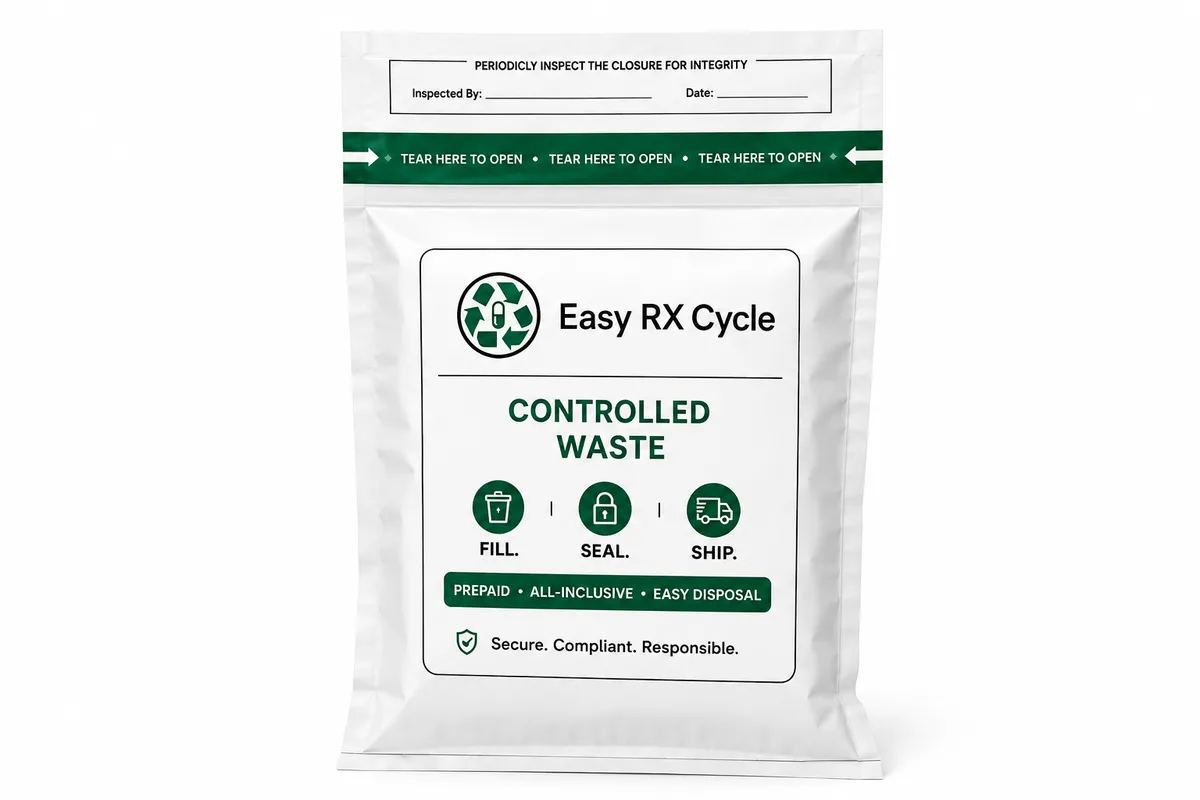
Schedules I–V, sized by weight. We do all the DEA paperwork and destroy it non-retrievably. Certificate of Destruction on every order. No contract.
Medical Cannabis Is Now a Controlled Substance
DEA's final rule published April 28, 2026 moved marijuana, marijuana extract and naturally-derived delta-9-THC handled under a state medical marijuana license into Schedule III. On October 30, 2026 DEA announced its first registrations: more than 900 medical dispensaries in Alabama, Florida, Mississippi, South Dakota, Texas, Virginia and West Virginia. About 6,000 other medical operators are timely applicants, allowed to keep operating under their state license while DEA reviews them. For every one of them, expired, damaged, recalled and returned medical product is now controlled-substance inventory, with federal recordkeeping attached. Adult-use product was not rescheduled and stays in Schedule I.
The Rules That Now Apply
DEA's guidance says registrants handling Schedule III medical marijuana must keep every record required for Schedule III controlled substances under 21 CFR Part 1304: initial and biennial inventories and a record of each receipt, sale and disposal, kept for two years. Registrants and timely applicants may handle medical product only with other registrants and timely applicants, and timely applicants are expected to have verified every trading partner by November 29, 2026. Your state program's tracking and reporting rules still apply on top of the federal ones, so disposal has to reconcile in both systems.
Schedule III Medical Cannabis Product
Expired and out-of-date product, failed-testing and quarantined batches, recalls, customer returns, damaged product and discontinued SKUs make up your controlled-substance stream. It leaves your inventory the way a pharmacy's expired controls do: transferred to a DEA-registered reverse distributor, documented with an invoice or transfer record (Schedule III needs no DEA Form 222), destroyed by incineration to DEA's non-retrievable standard, with the reverse distributor completing DEA Form 41 and returning a Certificate of Destruction. File the transfer record and certificate with your Part 1304 records and use them to close the product out in your state tracking system. Choose a reverse distributor whose DEA certificate covers Schedule III, and keep a copy in your trading-partner file.
Extraction Solvents as RCRA-Hazardous Waste
Extraction and processing generate the most technically demanding stream: spent solvents such as ethanol, processing and lab chemicals, and other characteristic hazardous chemicals. These have to be characterized before disposal, because the RCRA listing or characteristic sets the path. Under EPA 40 CFR and DOT rules they are segregated by compatibility, manifested and destroyed at a permitted facility. Keep them out of the controlled-substance kit; they ship on their own manifest.
Vape Hardware and Lithium Battery Waste
Vape cartridges, pens, damaged hardware and their lithium batteries are e-waste and universal waste, not general trash. Under EPA universal-waste rules, batteries and electronics must be diverted from the trash and handled correctly, and lithium batteries are a genuine fire risk in a compactor or hauler truck. Segregate battery-bearing hardware at the source, away from product and general waste, and route it to universal-waste handling.
How Easy Rx Cycle Supports Your Registration
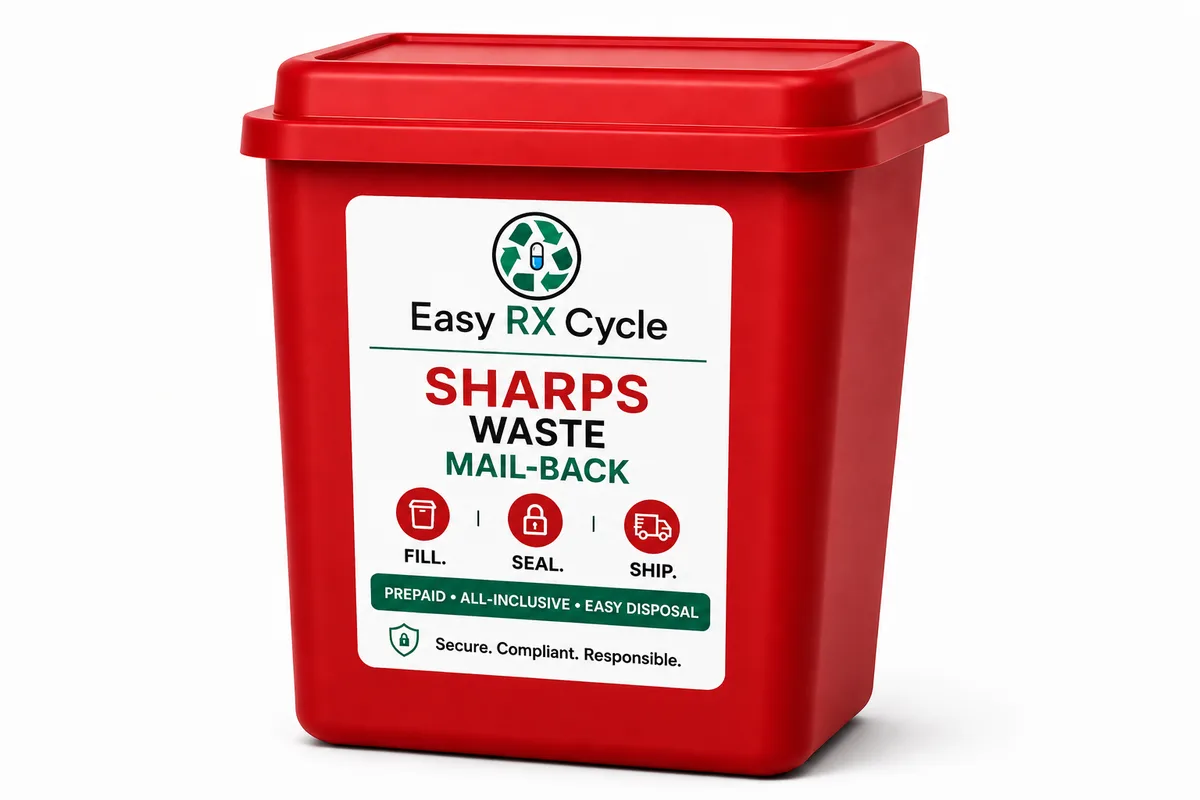
Easy Rx Cycle is a DEA-registered reverse distributor licensed for Schedules 1 through 5, including Schedule III, and serves all 50 states. Our Controlled Substance Mail-Back Kit is priced by weight, from $499 for up to 5 lbs, with prepaid shipping both ways, destruction by incineration, DEA Form 41 completed by us and a Certificate of Destruction on every kit; auto-ship saves 20%. For your November 29 file, ask for our DEA verification packet: a copy of our DEA certificate of registration, our W-9, a sample Certificate of Destruction and a due-diligence record page. We also handle the streams around your product: extraction solvents on the RCRA pathway and any clinical sharps.
Schedules I–V, sized by weight. We do all the DEA paperwork and destroy it non-retrievably. Certificate of Destruction on every order. No contract.
DEA, EPA and state rule changes that affect disposal, plus seasonal reminders. No spam, unsubscribe anytime.
Kits for cannabis operators
Prepaid both ways, one waste stream per kit, with a Certificate of Destruction on every mail-back order.
Ready to hand it off entirely?
Easy Rx Cycle handles every regulated waste stream — mail-back or pickup, with a Certificate of Destruction every time.