
Medication Take-Back Programs for Pharmacies & Facilities
A medication take-back program is one of the highest-trust, lowest-cost services a pharmacy can offer — and it keeps patients coming back to your counter. Here’s how to set one up, what the DEA allows, and why it’s worth doing.
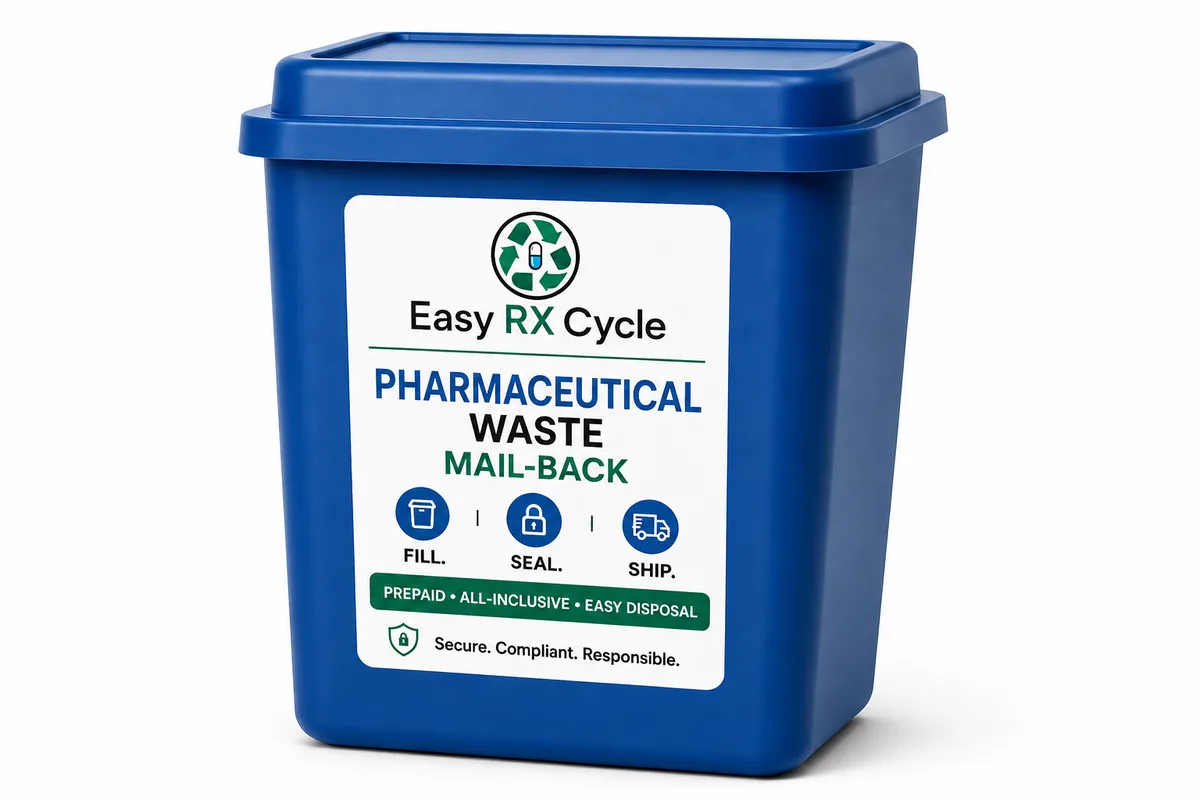
Expired, non-controlled medications. Prepaid both ways, destroyed and documented. Certificate of Destruction on every order. No contract.
Your options: mail-back kits vs. kiosks
Two main models: mail-back kits and envelopes that patients fill and mail for destruction, and an on-site collection receptacle (kiosk). Mail-back is the simplest to start — stock the kits, patients do the rest — while a kiosk is a bigger commitment with more foot-traffic benefit. Many pharmacies offer both.
What the DEA allows
The DEA take-back framework (21 CFR 1317) lets patients dispose of unused medications — including controlled substances — through authorized mail-back packages and collection receptacles, rendered non-retrievable. Offering authorized mail-back packages does not require becoming a full DEA collector; installing a receptacle that takes controlled substances does have collector requirements, which we help you navigate. See how take-back works in general.
Why offer take-back
- Patient trust & loyalty — a reason to return to your counter.
- Opioid stewardship — supports community-health and safety goals.
- Differentiation — a service many competitors don’t offer.
- Low cost, high reputation — flat-price kits with destruction included.
Setting up your program
Start with prepaid mail-back kits at the counter, train staff on what patients can bring, and promote it in-store — then add a kiosk if the volume justifies it. Each kit is a flat price with non-retrievable destruction and a Certificate of Destruction included, so the program is predictable to run and easy to explain to patients.
Expired, non-controlled medications. Prepaid both ways, destroyed and documented. Certificate of Destruction on every order. No contract.
DEA, EPA and state rule changes that affect disposal, plus seasonal reminders. No spam, unsubscribe anytime.
Launch a compliant take-back program.
Pharmaceutical Waste and Controlled Substance mail-back kits for your pharmacy’s own stock: prepaid, documented, Certificate of Destruction included.
Frequently asked questions
How can a pharmacy offer a medication take-back program?
The simplest way is to stock DEA-authorized mail-back envelopes and kits that patients fill and mail for destruction, and/or install a collection receptacle (kiosk). Both let a pharmacy accept unused medications — including controlled substances — for non-retrievable destruction, without becoming a full DEA collector for every method.
Do you need to be a DEA collector to offer take-back?
Offering DEA-authorized patient mail-back packages does not require becoming a registered collector — you supply the compliant kits and a partner handles destruction. Installing an on-site collection receptacle that accepts controlled substances does have DEA authorized-collector requirements, which a disposal partner can help you navigate.
Can take-back programs accept controlled substances?
Yes — the DEA take-back framework (21 CFR 1317) allows controlled substances (Schedules II–V) in authorized mail-back packages and collection receptacles, rendered non-retrievable, right alongside non-controlled medications.
Why should a pharmacy offer medication take-back?
It builds patient trust and loyalty, supports opioid-stewardship and community-health goals, differentiates you from competitors, and creates a recurring reason for patients to return to your counter. It's a low-cost service with an outsized reputation benefit.
How much does a take-back program cost?
Prepaid mail-back envelopes and kits are inexpensive per unit; larger kits and in-store kiosks scale up. Because each kit is a flat price with destruction and documentation included, you can offer take-back at a predictable cost or pass it through as a patient service.