
How to Switch Medical Waste Companies
Switching medical waste vendors is mostly paperwork. The hard parts are reading the agreement you signed, hitting the notice window, and making sure there’s no gap in pickups or records. Here’s how to do it cleanly.
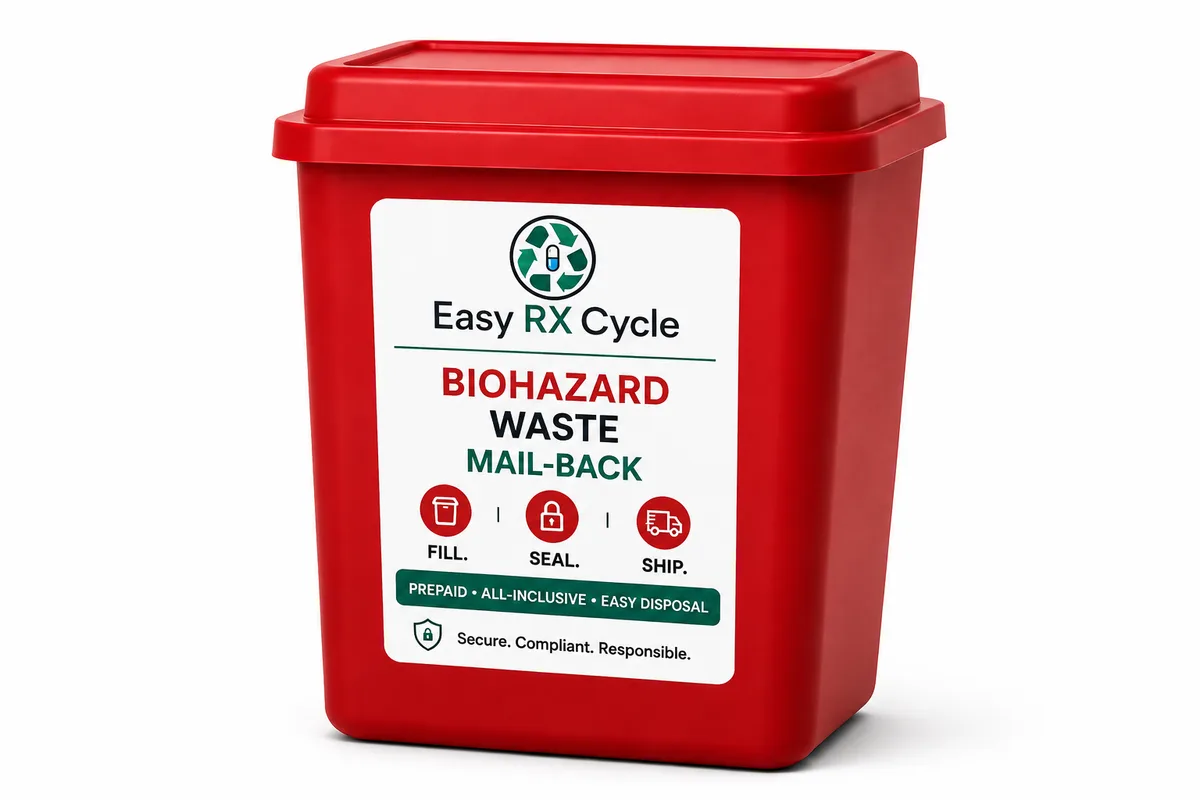
Red-bag waste: blood-soaked gauze, gloves and PPE. Prepaid both ways, no pickup schedule. Certificate of Destruction on every order. No contract.
In this guide
Stericycle is now part of WM
WM (formerly Waste Management) completed its acquisition of Stericycle in November 2024. The medical waste business is gradually moving to the WM Healthcare Solutions name, so you may see “Stericycle, now part of WM” on invoices, ads, and the website in the meantime.
The practical point: the owner changed, your agreement didn’t. Your term, renewal date, pricing terms, and cancellation window stay as written. A change like this is a good moment to reread the agreement and decide whether it still fits your volume. If you’re weighing options, see our Stericycle alternative comparison.
How to read your service agreement
Get the signed agreement and every amendment or renewal. Your account rep or online portal can send copies. Then find these clauses. The agreement is the final word, so read your own, not a summary.
Term
How long the agreement runs from the start date. Note the exact end date. Multi-year terms are common for route pickup service.
Auto-renewal
Many service agreements renew automatically for another full term unless you cancel. Check how long the renewal term is. If you miss the window, you may be committed to another term.
Notice window
The agreement usually says how many days before the renewal date you must give notice, and how. Look for:
- The number of days, and whether it’s counted from the renewal date or the anniversary.
- Whether notice must be written, and the required method (certified mail, email to a specific address, a portal form).
- The address or department notice goes to.
Put the last day to give notice on the calendar, with a reminder two weeks earlier.
Price escalation and surcharges
Read how the price can change during the term. Common items:
- Annual increases, either a fixed percentage or tied to an index.
- Fuel or energy surcharges that move with fuel prices.
- Environmental, regulatory, or compliance fees added as separate lines.
- Minimum charges per pickup or per month, billed even when you have little waste.
- Extra-service fees for off-schedule pickups, overweight containers, or document requests.
Compare the price in the agreement with your last few invoices. The difference tells you what the add-ons really cost.
Early termination fees
Some agreements charge a fee for ending before the term is up. Some calculate it from the months left on the term, sometimes based on your average monthly invoice. If the fee is significant, time your exit to the renewal date instead.
Container ownership
Reusable tubs, carts, and sharps containers are often the vendor’s property. Check whether you must return them, what happens to containers left on site, and whether unreturned containers are billed.
Exclusivity and volume minimums
Look for language that requires you to use only that vendor or to meet a minimum volume. Most agreements don’t stop you from using another vendor for some streams, but check before you run two services side by side.
The switch checklist
- List your waste streams and volumes. Sharps, biohazard, pharmaceutical, controlled substances, RCRA hazardous, trace chemo. Use your last few months of invoices or manifests.
- Find the agreement and note the key dates: end of term, renewal date, last day to give notice.
- Price the replacement. Get written prices for each stream, with shipping, containers, and documentation included.
- Set up the new service first. Order containers or kits and confirm the first pickup or ship date before you give notice.
- Send written notice inside the window, by the method the agreement requires. Keep proof of sending and ask for written confirmation of the end date.
- Download your records while you still have portal access: manifests, tracking documents, and certificates of destruction.
- Schedule the final pickup close to the end date. Make sure it collects every container and that you get the final manifest.
- Return the vendor’s containers and get a receipt.
- Train staff on the new containers and update your exposure control plan and any posted instructions.
- Stop autopay after the final invoice, and dispute any charges dated after the end date.
Avoiding a gap in service and records
Service
The safest switch overlaps. Start the new service a few weeks before the old one ends so waste never sits without a destination. Mail-back makes overlap easy because there’s no route to set up. You order kits, and they ship to your door. Sharps kits start at $55 and biohazard kits at $75.
Watch storage limits while you transition. Many states limit how long regulated medical waste can be stored on site, so don’t let containers pile up between vendors.
Records
Your old vendor’s records are still your records. An inspector can ask for them after you switch. Before access ends, save:
- Shipping papers, manifests, and tracking documents for every pickup.
- Certificates of destruction or treatment.
- For controlled substances, DEA transfer records and Form 41 copies. Keep these at least two years.
- For RCRA hazardous waste, manifests. EPA requires at least three years.
State medical-waste rules set their own retention periods. Check yours, and keep everything in one folder so the new vendor’s records continue the same file.
Comparing your options
Route pickup fits high, steady volume. Mail-back often fits small and mid-size sites with lower volume, because you pay per container when you ship, with no monthly service fee. Our medical waste disposal cost guide lists published prices by stream, and how to choose a medical waste company covers the questions to ask any vendor.
Easy Rx Cycle has no contract, no auto-renewal, and no monthly minimum. If you’re mid-contract, you can start with us for any stream today and move fully over at renewal. For multiple sites or high volume, request a quote.
Red-bag waste: blood-soaked gauze, gloves and PPE. Prepaid both ways, no pickup schedule. Certificate of Destruction on every order. No contract.
DEA, EPA and state rule changes that affect disposal, plus seasonal reminders. No spam, unsubscribe anytime.
Switch without a contract.
Prepaid mail-back for every regulated stream, sharps from $55. Certificate of Destruction on every order. No auto-renewal, no minimum.
Frequently asked questions
Is Stericycle now part of WM?
Yes. WM completed its acquisition of Stericycle in November 2024, and the business is gradually moving to the WM Healthcare Solutions name. The change in ownership doesn't change your agreement by itself. Your term, renewal date, and cancellation terms still apply as written.
How do I cancel a medical waste contract?
Find the signed agreement and any renewals, note the renewal date and the cancellation notice window, and send written notice the way the agreement requires (often to a specific address or by a specific method). Keep proof that you sent it, and ask for written confirmation of the end date.
Will I pay an early termination fee?
It depends on your agreement. Some service agreements charge a fee for ending before the term is up, and some calculate it from the months left on the term. Read the termination clause before you send notice, and time your exit to the renewal date if the fee is significant.
Can I use a new medical waste company before my contract ends?
Usually, yes. Most agreements cover the service you buy from that vendor, not a promise to use no one else, but check for exclusivity or minimum-volume language. Many facilities start a mail-back program alongside the old service and move fully over at renewal.
What records should I keep when I switch?
Download manifests, tracking documents, and certificates of destruction before you lose portal access. Keep DEA disposal records at least two years and hazardous waste manifests at least three years under EPA rules. State medical-waste rules vary, so check yours.
Who owns the containers?
Read the agreement. Reusable tubs and carts are often the vendor's property, with fees for containers that aren't returned. Plan a final pickup that collects them, and get a receipt.
This guide is general information, not legal advice. Your agreement controls; have counsel review it if the terms are unclear.