
How Pharmacies Dispose of Hazardous Waste
A surprising number of the drugs on a pharmacy shelf aren’t just pharmaceutical waste when discarded — they’re hazardous waste under EPA rules. Here’s how a pharmacy identifies them, what Subpart P requires, and how to set up disposal that passes an inspection.
P-listed, U-listed and characteristic hazardous drugs, destroyed to EPA rules. Certificate of Destruction on every order. No contract.
In this guide
The hazardous drugs on your shelf
Every pharmacy stocks RCRA-hazardous drugs, often without flagging them: warfarin (P001/U248), nicotine products (P075), certain epinephrine forms, physostigmine, and a long U-list — plus many appear on the NIOSH list. The first step to compliance is a formulary-based hazardous-drug list so staff know which discarded items are hazardous.
What Subpart P requires of pharmacies
Retail, long-term-care, and specialty pharmacies fall under the EPA’s Subpart P management standard: hazardous drugs go in a labeled, dated black container, are accumulated up to a year, shipped under DOT with a manifest, and destroyed at a permitted facility. Subpart P also banned sewering hazardous pharmaceutical waste — no flushing.
Generator status — simplified for pharmacies
One of the reliefs of Subpart P is that hazardous waste pharmaceuticals managed under it generally don’t count toward your VSQG/SQG/LQG generator category the way they used to — though non-pharmaceutical hazardous waste still does. A disposal partner can help you confirm and document your status so you’re not over- or under-reporting.
Setting up disposal that passes inspection
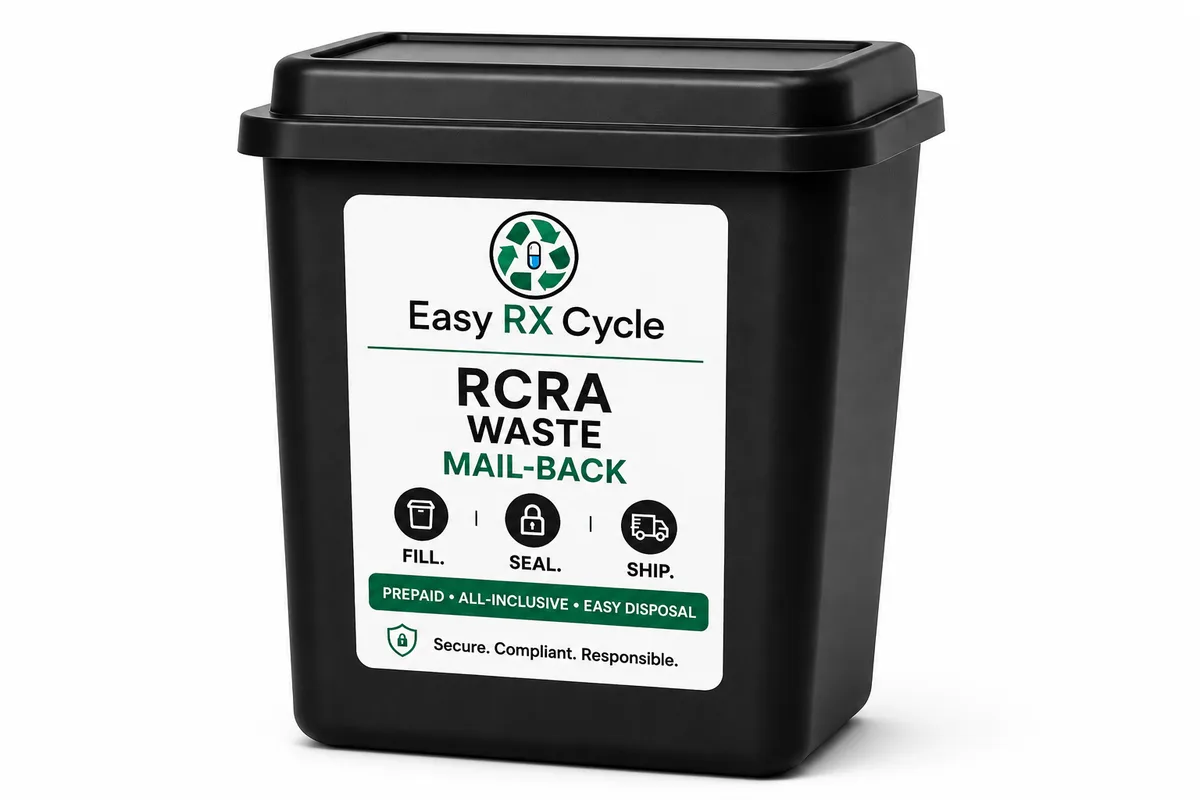
Put a black hazardous-waste container where returns are processed, keep the formulary list posted, train staff on what’s hazardous, and set a shipping cadence. For most pharmacies, a prepaid RCRA mail-back program is the simplest compliant setup — container, manifest, permitted-facility incineration, and documentation in one flat price, with no contract. Pair it with your non-hazardous pharmaceutical and controlled-substance disposal so one vendor covers the whole shelf.
P-listed, U-listed and characteristic hazardous drugs, destroyed to EPA rules. Certificate of Destruction on every order. No contract.
DEA, EPA and state rule changes that affect disposal, plus seasonal reminders. No spam, unsubscribe anytime.
Set up compliant hazardous-drug disposal for your pharmacy.
RCRA mail-back and pickup, plus every other stream a pharmacy generates — one vendor, published pricing, documented, no contract.
Frequently asked questions
How should pharmacies dispose of hazardous waste?
Identify which drugs on the shelf are RCRA-hazardous (P-listed, U-listed, or characteristic), segregate them into a black hazardous-waste container, and never put them in regular pharmaceutical (blue) or trash. Ship them under DOT rules with a hazardous-waste manifest to a permitted facility, under the Subpart P management standard, with documentation on every shipment.
What hazardous drugs do pharmacies commonly stock?
Warfarin (P001/U248), nicotine products (P075), certain epinephrine forms, physostigmine, and a range of U-listed drugs and chemotherapy agents. Many also appear on the NIOSH hazardous drug list. A pharmacy should keep a formulary-based list of which of its drugs are hazardous.
Does Subpart P apply to pharmacies?
Yes. 40 CFR Part 266 Subpart P is the EPA's management standard for hazardous waste pharmaceuticals at healthcare facilities — including pharmacies — covering how these drugs are accumulated, labeled, shipped, and the sewering (flushing) ban. Retail and long-term-care pharmacies are squarely within scope.
What is a pharmacy's generator status?
Under Subpart P, healthcare facilities that manage hazardous waste pharmaceuticals largely operate under the streamlined standard rather than the traditional VSQG/SQG/LQG counting for those drugs — but non-pharmaceutical hazardous waste still counts toward generator status. A disposal partner can help you determine and document your status.
Can a pharmacy use mail-back for hazardous drug waste?
Yes — DOT-compliant mail-back is a common, compliant way for pharmacies with low-to-moderate volume to ship RCRA-hazardous pharmaceutical waste, with the manifest and destruction handled. Higher-volume pharmacies may prefer scheduled pickup.