
Chemotherapy Waste Disposal: The Complete Guide
Chemotherapy waste is one of the most mishandled streams in healthcare, because it splits by how much drug remains — and the two halves go to completely different places. Get it right and it’s routine; get it wrong and it’s both a safety and a hazardous-waste violation. Here’s the complete breakdown.
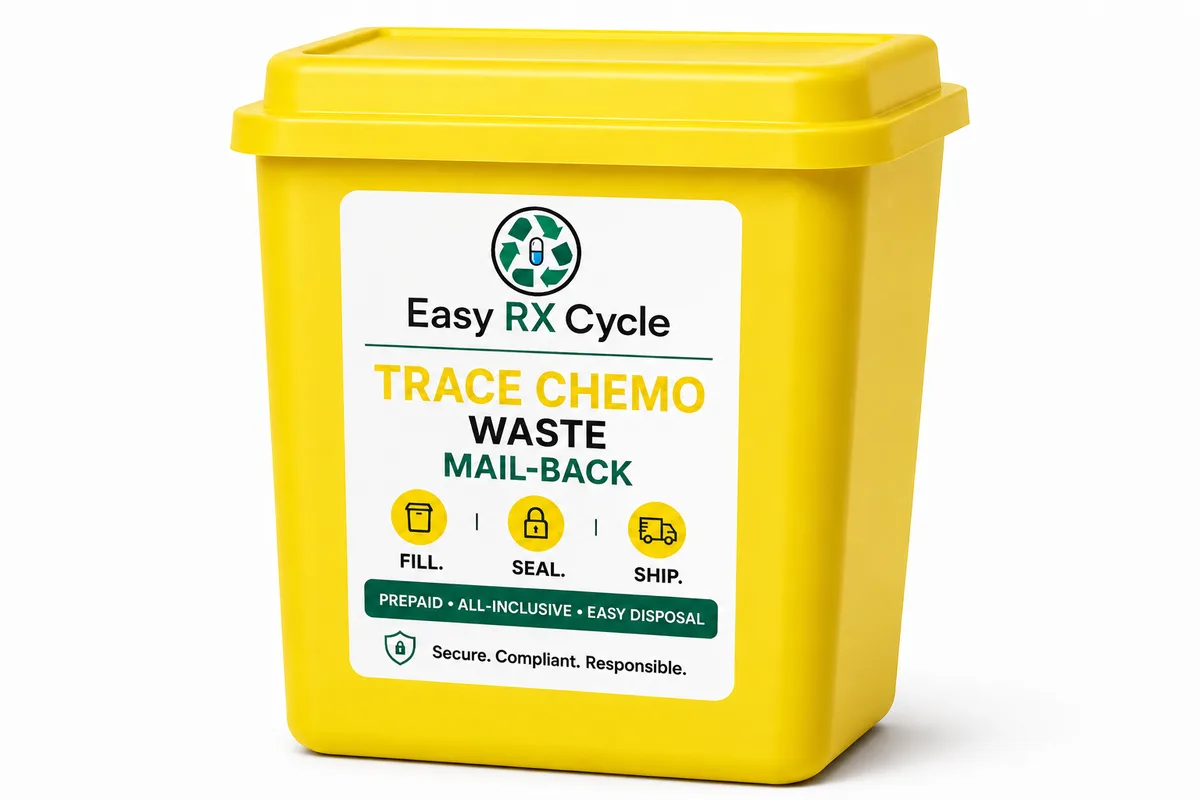
Trace (RCRA-empty) chemo waste: vials, tubing, gowns and gloves. Certificate of Destruction on every order. No contract.
In this guide
Trace vs. bulk — the split that decides everything
Trace chemo is RCRA-empty: the drug has been removed to the extent practical, leaving only residue — empty vials and syringes, trace-contaminated PPE and IV sets. It’s incinerated as trace waste. Bulk chemo is different: usable drug remains, or the agent is P-listed, so it’s a RCRA-hazardous waste with stricter handling and a manifest. Deciding which is which, at the point of generation, is the whole job. Our trace vs. bulk breakdown goes deeper.
The yellow container
Trace chemo goes in yellow — the color that signals trace chemotherapy waste bound for incineration, separate from red (RMW), black (RCRA-hazardous), and blue (pharmaceutical). Bulk/P-listed chemo goes in black, not yellow. Our yellow-container guide lists exactly what belongs.
USP <800> handling
Chemotherapy agents are hazardous drugs, so handling is governed by USP General Chapter <800> — the standard for receiving, storing, compounding, and disposing of hazardous drugs to protect staff and patients. A compliant chemo program layers USP <800> handling on top of the EPA and DOT disposal rules. See our USP 800 guide for the details.
How each type is disposed of
Trace chemo — collect in yellow containers, ship by prepaid trace-chemo mail-back or scheduled pickup, and incinerate, with documentation. Bulk / P-listed chemo — manage as RCRA-hazardous waste: black container, manifest, permitted-TSDF incineration. One vendor should handle both so nothing gets mis-routed between the two.
What chemo waste disposal costs
Trace chemo mail-back kits run from about $105 to $445 by container size — flat, one-time, including the yellow container, shipping, incineration, and documentation. Bulk/RCRA-hazardous chemo is quoted by volume and waste profile. Full pricing context is in our cost guide.
Trace (RCRA-empty) chemo waste: vials, tubing, gowns and gloves. Certificate of Destruction on every order. No contract.
DEA, EPA and state rule changes that affect disposal, plus seasonal reminders. No spam, unsubscribe anytime.
Handle trace and bulk chemo the right way.
Yellow-container trace chemo mail-back plus RCRA-hazardous handling for bulk — USP <800>-aware, incinerated, documented, no contract.
Frequently asked questions
How do you dispose of chemotherapy waste?
Segregate it by type: trace chemo waste (RCRA-empty vials, syringes, and trace-contaminated PPE) goes in yellow containers for incineration, while bulk or P-listed chemo — where usable drug remains — is a RCRA-hazardous waste destroyed under EPA rules with a manifest. Both are handled by prepaid mail-back or scheduled pickup and documented.
What is the difference between trace and bulk chemotherapy waste?
Trace chemo is RCRA-empty — the drug has been removed to the extent practical, leaving only residue — and it's incinerated as trace waste in yellow containers. Bulk chemo contains usable drug or is P-listed (like some hazardous agents) and must be managed as RCRA-hazardous waste. Mixing them up is the most common chemo compliance error.
What color container is chemotherapy waste?
Yellow. Yellow containers signal trace chemotherapy waste bound for incineration — separate from red (biohazard/RMW), black (RCRA-hazardous), and blue (non-hazardous pharmaceutical). Bulk/P-listed chemo goes in black, not yellow.
What is USP 800 and how does it relate to chemo waste?
USP General Chapter <800> sets standards for safely handling hazardous drugs — including many chemotherapy agents — to protect workers and patients, covering receipt, storage, compounding, and disposal. A compliant chemo waste program follows USP <800> handling alongside the EPA and DOT disposal rules.
How much does chemotherapy waste disposal cost?
Trace chemo mail-back kits run from about $105 to $445 depending on container size, flat and one-time, including the yellow container, shipping, incineration, and documentation. Bulk/RCRA-hazardous chemo is quoted based on volume and profile.